Top Marketing Trends in Legal Industry

Top Marketing Trends in Legal Industry

The year 2020-2021 have brought tremendous change in our lifestyle. Covid Panademic brought new normal, which forced companies & their employees to adopt the work from home concept. This new technique must be adopted at the earliest & as this addresses the common business challenges in attracting new clients & attracting existing ones. To be more specific, law firms have seen shifts in the way they manage work & meet the changing requirement of clients. So here comes the billion-dollar question how to manage the work shift & meet the changing needs of clients in a cost-efficient manner? In this post, we’ll review the popular trends they faced in 2020 & how they aim to overcome those challenges in 2021.

A recent study by Econsultantcy in association with the Lawyer showed digital marketing approaches are increasing & it is encouraged by top firms to attract new customers. Technology continues to drive business growth & 2021 created an opportunity to evaluate your capabilities to grow into the domestic & international markets.  With the serious shift in the law, the legal industry is offshoring primary work such as document review, research & legal writing to preserve their profit & margins.

Flexibility is the key for law firms to emerge stronger with digital marketing content & willingness to create a new strategy for new clients. Here are a few marketing strategies must any law firm must follow to ensure continuous progress & perform well in the current economic condition.

Give First Priority To Clients

In terms of legal industry marketing, giving first priority to clients might look like, people-focused marketing, understanding the client needs, create an impact on their business. People-focused marketing mainly focuses on how you present your brand & speak to your clients. Always people are interested in the voice behind the brand rather than the marketing machine or bot.

Understanding Your Client:

The better you understand your client, the better empathize with their pains, frustration, and desired outcome. With deep connection, you can solve the complex & serious problems faced by clients.

Creating valuable content:

With the current & prospective marketing strategy, creating valuable content related to legal industry updates including new laws and regulations can strengthen your brand. Always populate your videos with blog entities & effectively attract clients to your law firm.

Local SEO:

Most of the small & medium-sized firms should be accessible to firms nearby locations. They are highly focused on geographical areas & convenient locations. With the help of local search, option marketing can be more specific to a particular group. These types of content make sure all necessary information & reviews are listed to meet the end goal of local businesses.

So here are a few actions that can help you to meet the local SEO:

Setting up new business listing:

There are many listings available, including Google, Yelp, Facebook listing & more. Based on your budget your listing can be focused on. If you’re on going with a limited marketing budget, then go for Google My Business Presence. Google my business is directly associated with the largest search engine which will improve your rating. Google data have been always up & reliable when it comes to location, operating hours & contact information.

Rating & Reviews:

Reviews are one of the most interesting browsed topics across any industry vertical. When it comes to local business search engines are highly regarded by clients & customers. Have a habit of developing a review management system that encourages every client to leave a review, which improves your reputation & visibility.

Build Your Backlinks:

Backlinking is an important factor for determining rankings. Always focus on content strategy about what a local audience wants & how existing services can be improved.  Stay ahead of your competitors by keeping your legal directory listing up. Make sure you are listed out in all legal directories based on the location & demographics.


Emphasizing the User Experience:

A critical aspect of any marketing strategy is online user experience (UX). Your digital content must be professional & user-friendly. With seamless integration, UX must be user-friendly & help in real-time to understand the client’s needs. So you may be wondering what may be the best practices for a legal firm website UX must include:

  • Well optimized website for your mobile or tablet
  • High intuitive site navigation
  • Location-based on-site search for lawyers
  • Providing complete details about legal firms & resources

Empowering multi-channel content marketing channels:

A critical aspect of any marketing strategy is online user experience (UX). Your digital content must be professional & user-friendly. With seamless integration, UX must be user-friendly & help in real-time to understand the client’s needs. So you may be wondering what may be the best practices for a legal firm website UX must include:

  • Well optimized website for your mobile or tablet
  • High intuitive site navigation
  • Location-based on-site search for lawyers
  • Providing complete details about legal firms & resources

With an effective marketing strategy, blog posts evolved as one of the great resources for your client to provide valuable information. Considering the internet which is full of content, this content must be diversified effectively, which covers legal expertise from different parts of the world.  As a legal marketer, it is important that you must stick to ever-changing technologies to meet the client’s requirements.

There is a variety of content strategies that work well for law firms. Here are listed below:

Podcast:

This is a recent internet sensation that is popular, especially during this pandemic. Get a series of podcasts based on your legal firms & their specialty. Similarly, transcripts from your podcast are reused across various for branding & advertising.  Combining podcasts & simple videos can be a great source of information that can address various types of FAQs & provide a broad view of authenticity for your videos.

Live Streaming

Social media is one of the biggest influencers for creating brand awareness. Expand your Facebook & link in live chats & open communication lines for new prospects to initiate a new conversation. Alternatively, it can be used as an interactive platform to interact with the audience base.

Building Brand

When people come & interact with you regularly, you can promote the higher level of service offered & build a brand consistent with fresh content. Fresh information & innovation always bring high authenticity for clients. And when it comes to the legal community law firms top the chart in providing essential services for their local communities.

So how the brand is established? Being a thought leader in your own community is highly recommended for building a brand.  You can check out with the pioneers in your community & build supportive relationships that can improve & brand your law firm’s name. If you’re able to showcase your marketing campaigns such as webinars & podcasts, then you can improve your brand visibility drastically in a short span of time.

Participate Actively in Community Events

Show active participation within your community & build relationships with key members of the society. Always remember your interaction within the community will brand your legal firms among the local community. Additionally, you can partner with non-profit organizations to expand your local visibility.

Sharing Client Testimonials:

Real testimonials from clients give high credibility overall marketing strategy. Once you receive testimonials you can share them across all digital channels. And it recent days all business shifting their presence to online, then this can be key in branding & getting benefit out of it. As we all know the digital marketing landscape is ever-changing & effective techniques need to be framed in order to keep growing & be successful.

Conclusion

For any successful marketing plan, target the local community for brand & reputation. And once the local brand is established, this will drastically improve your reputation, with that you can establish in the global market. When it comes to marketing for legal firms, the ever-growing demand will curate quality content for promoting legal services. Changing dynamics of marketing trends paved a way to expand legal firms & continue to emerge. Hence, with the above guidelines, we are pretty sure data-driven strategy can be implemented & ROI achieved.

restaurant Industry email Marketinf

9 Quick Email Marketing Best Practices For Restaurant Industry[Infographics]

Email Marketing is one of the most effective marketing channels for Restaurants when it is combined with the right strategy and right email marketing tools. Following best practices for email marketing can bring high traffic & turn walk-ins into regular customers. Email marketing is one of the channels that offer direct access to your customer base irrespective of your industry. Here are a few tips to improve your email marketing strategy focusing restaurant industry Define your Target Audience Segment your customers based on their needs & keep on researching required details under each category based on the hypotheses. This is a crucial step in any marketing strategy to understand more about your customer & fulfill their requirement with Hospitality email list. Build Strong Customer Relationship Make them feel special. Over the period you can get their basic information like birthday, email, etc & surprise them with exclusive offers. Regular newsletters about promotional offers, mergers, and acquisitions will help build together stronger relationships with the client. Include Personal Message A personal message is something that takes you closer. A quick note about how you started, how your bestseller dish prepared was, the small intro about your executive chef or something which can be your identity or face of business will gain huge rapport with subscribers. Use of Pictures A picture speaks more than words & it draws the subscriber’s attention. Give a sneak peek of new dishes & special menu which can be availed on any occasion or famous at your place. It can be themed nights or chefs special, make sure everything is photographed & emailed to customers. Place Open Invites to Customers Be it occasional special events or parties, when you host an event, it is recommended to send an invitation to your subscribers as it will be helping customers across the different areas to plan their travel & visit your restaurant for dining. Include a Strong Subject Line With a strong & catchy subject line, you can get the attention of customers & make them read your message. A strong subject line must be crisp & clear without misleading information. Short & clear information on email subject will increase the open rate. Accept Online Reservation The world of the internet has changed the way we do business. It paved the way to explore new ideas & get a successful result without any barriers.  An online reservation gives quick access to the customer what they want without any delay. Initiate Referral Campaign A place to fine dine is ideally recommended for socializing & spend quality time. With referral programs, you can bring friends & family of your customer to enjoy good food at their convenience. It also promotes word of mouth about your quality service & food. Roll Out Promotional Deals Email Marketing is one of the best channels to roll out offers & promotional deals.  Promotional deals work well too for new customer as it keeps them hooked to your mails & triggers them to visit again. It also improves customer loyalty as they would be visiting over again & again. Conclusion Email is one of the evergreen modes of communication methods of marketing over others. Follow the above-mentioned strategies to stay ahead of your competitors in the restaurant industry for better client engagement & improve campaign revenue.
customer base

8 Simple Ways To Increase Your Customer Base

“All of your customers are partners in your mission”-ShepHyken

Customers are considered the lifeline of any business. Every business owner has a high vision & mission to improve the customer base over the years. Analyzing customer needs & improving profitability is essential for any business. How do I get more customers for my business, is the constant question hitting the business owners & sales representatives over centuries.

Until the advent of the internet, customers are attracted through traditional marketing campaigns. Nowadays, businesses can reach any extend to connect with their customers & grow their base.  Marketers not only make efforts to gain new customers, but also they want to retain the existing ones.

It is a proven myth that customers familiar with your brand are more likely to buy from you often & increase business over time.

In the era of the 21st century, every successful business must know the most effective ways to optimize lead acquisition & customer retention to stay ahead of your competitors. So here comes the big question

What is a Customer Base?

Customer base is the group of customers who repeatedly buy the company’s products or use your organization’s services. This group of customers frequently engages with your business & offers financial value.

Based on your buyer persona & industry, your target audience can be improved. The customer base is a valuable asset to your business. Identifying such customers will help your marketing, sales & customer service team to build a strong relationship with customers.

A subset of customers within your customer base is often referred to as the installed customer base that actively avails your products or services. This subset excludes the customers who haven’t made purchases in recent times.

These customers are considered as creamy layers of your customer base who must be actively focused to build productive relationships. So identifying such customers & personalizing their marketing efforts is highly useful for any business growth& ROI.

Of Course sales & marketing team plays a crucial role in engaging existing customers & offering a delightful experience. So here comes the next billion-dollar question how to improve & retain your customer base.

How To Build Strong Customer Base - Best Strategies

Here are few tactics that must be followed to build a strong customer base & improve it drastically as the business grows

Know your Prospects & Customers:

“The more you value your customer, the more you become successful”

Having a clear understanding of your customer base plays a key role in improving your customer base. Yes, it ultimate aim of any marketer as it helps to meet specific requirements & expectations of your customers. Crystal’s clear understanding of customers’ needs & requirements will help to align your products & services. More importantly, this method gives your a clear opportunity to stand out from your current competition & serve better. It also creates a balanced relationship that can accelerate & customize client’s requirements.

Steps to understanding your customers:

  • Have intelligent customer Engagement techniques
  • Have robust buyers Persona
  • Turn data into customer analytics
  • Understand, analyze, predict & plan your future

Benefits of understanding your customers:

  • Improving customer confidence
  • Building your own brand
  • Improved business collaboration
  • Meeting service level expectation
  • Increased profit & revenue source

Provide Free Trial Offers:

Want to grab the attention of potential leads? Free & trial offers work well. Yeah, you read it right. People tend to give it a try when they are ready to buy or invest in your products directly. In simple as a company you can collect valuable information about customers & surprise with freemium offers.

From small businesses to global corporations when you offer free newsletters or provide quality content, then for sure customers will be keen in knowing your business & buy your products. This helps marketers & sales teams to craft personalized customer services based on the products they use.

Incorporate Online Marketing Strategies:

The objective of any business is to drive customers online & improve their visibility across the internet. In recent days the internet plays a wide role in helping out customers in providing all resources relevant to their business requirements. So having a comprehensive website should be the ideal choice for any business as it gives a clear picture of what your brand stands for & the services they provide. And most importantly website must be well optimized to boost customer visits & forecast smart insights.

Alternatively, SEO is one the effective way to generate quality leads. As per research by HubSpot, 94% of the B2B buyers search online before trying or purchase any product or service.

Optimizing relevant keywords for your business helps prospects to find you between thousands of search results. So you may have a question is optimization is highly recommended to rank your website ahead of your competitor? Well, if you are looking for honest answers to increase your customer base, the big Yes. A prospector existing customer can use any device to search about your products or services. So having an optimized website can offer a better user experience. From lead generation to lead conversion & improving sales revenue is possible when you a well-optimized business website for your business in place.

Second, the most important strategy is having well-optimized social media pages. In recent days, especially during this pandemic the way business operates & achieves their goals drastically depends on social media. Defining your campaign objectives right helps to generate relevant leads & target your prospects effectively. Social media has the power to analyze measure & project accurate targets to improve the relevant customer base.

Benefits of Online Strategies:

  • Implementation of low-cost marketing operations
  • Measurable & trackable insights
  • Demographics Targeting
  • 24*7 Customer Support
  • Able to analyze & collect data for personalization
  • Time effective marketing
  • Improve customer base

Leverage Your Customer Network:

Your existing customer base can be the best place to reach out to new customers & improve your business.  Leads generated through word of mouth or referrals are often called as strong leads. Any day tap into the existing network to identify who can be potential customers of your products or services. This works well because of earned trust. So who can be potential buyers than strong recommendations within your network? Brainstorm with them to understand their requirements clearly & convert them to your clients. On the other hand, this process helps you to expand your network & develop a great business structure.

Include Call To Action:

There are plenty of strategies you can try to draw the attention of new customers. One of the most efficient & immediate, actionable levels is having a call to action to every piece of marketing strategy you roll out. Be it your social media post, weekly newsletter, or any offline marketing strategies, Call to action clearly engages your customers & prospects.

Benefits of Call to Action:

  • Grow your audience
  • Increases sales
  • Directs your readers needs
  • Boost your conversion
  • Improves brand visibility

Offer Great Customer Service:

“Treat the customer as if you are that customer” – Anonymous

If you want to keep existing customers on track, then excellent customer support services come into the picture. Most of the customers would have walked away from any business if they are offering the right service at the right time. So it is quite important to offer great customer service to have a positive impact on the customer base. As the business grows gradually, it is important to respond to your customer instantly as it makes them feel good.

A loyal customer has the power to choose your products & services consistently over competitors. This helps B2B marketers to establish strong business relationships & onboard new business. Similarly, unhappy customers must be taken care of & marketing teams should look at them as an opportunity to grow your customer base with excellent support service.

Get your feedback regularly:

Have you ever experienced a situation or you’ve no idea about attracting new customers? No more worries. Collect & read your customer reviews/ feedback. Clearly, it gives proper feedback about what goes well & what doesn’t. Keep aside your positive feedbacks & deep dive into negative reviews as it is the core area where your focus needs to shift. There are many ways to collect customer feedback. NPS (Net Promoter Score) is one of the greatest surveys as it gives a clear picture of qualitative & quantitative data about your customers.

Importance of collecting feedback:

  • Measures customer loyalty
  • Shows areas to improve
  • Boost referral marketing
  • 360 degree of customer insights

Loyalty Programs:

As your business grows, it is important to try out all methods &adapt to the changing needs of the market. It is a smart strategy to keep track of your financials & analytics as a customer comes from different sources.  So offer a loyalty card or exclusive discount to clients who sign up for your email. Thus customer contact details should be captured to grab attention & boost revenue. Explore the unexplored avenues as your customer base increases.

Conclusion:

“Every single interaction, you have with your customer, is an opportunity for you to create something remarkable”- Joey Coleman

Never settle for one particular approach. As the business evolves, it is important to refine your approach & scale up your activities to convert all prospects without any barriers to your clients. Need to know what works best for you & need to reframe your marketing approaches, then we’re just a click away.

target Audience

How To Reach Your Target Audience More Effectively

For many business owners, marketing can be a daunting task. As a marketer, one of the most difficult tasks you will face is effectively reaching your target audience. Without targeting the right audience, selling products and advertising would be quite challenging. Furthermore, marketers would be unable to create product features or marketing materials that appeal to certain demographics, and everything would be mass-marketed and uninteresting.

In fact, the primary purpose of marketing is to convey the right message to the right audience. To do it properly, you need to learn how to communicate with your target audience effectively. You’ll end up in wasting time and money if you sell your goods to the incorrect audience. To market your products, you must first determine how to reach your target audience more effectively.

Who Are Target Audience?

The target audience is a defined group of individuals who are the most likely to respond to your message. Businesses can target ideal customers based on a variety of factors, including:

Demographics: Age, Geography, Income Status, Education, Gender, And More.

Psychographics: Lifestyle, Habits, Beliefs, Reasons for Buying or not Buying, And More.

Behavioral Variables: Product Usage, Website Visit Data, And other information.

In this blog, you’ll find a step-by-step process for identifying, understanding and reaching your target audience. Here are a few steps you need to follow to reach your target audience more effectively:

Define Your Target Audience

In order to reach your target audience, you must first define your target audience. This can be done by creating a consumer persona. A customer persona, also known as a buyer persona, is a generalized representation of your ideal customers. To obtain a better knowledge of your target audience, you need to develop a list of their demographic and psychographic characteristics and preferences.

Then you may market your brand and products to those who may be truly interested in them. This means that you’ll have a better probability of generating leads and converting them. This will allow you to grow revenue while spending less.

How To Define Your Target Audience?

Look At Your Data

Existing data about your current customers is the greatest way to start. Take a look at where you store your client information. It could be your CRM, a spreadsheet you manually update, or the demographics area of your Google Analytics dashboard. Any information you have around your current consumers can assist you in narrowing your target market.

Speak With Customers

When was the last time you had an actual conversation with a client? Customer interviews are useful and easy to conduct, yet you can discover more in a one-hour chat than you could in a spreadsheet.

Look At Your Competitors

Differentiation is crucial in marketing. You can’t expect to succeed by simply copying what your competitors do. However, by analyzing which customers your competitors target, you can learn a lot about potential audiences. There’s a strong possibility those customers would also be a good fit for your product, and if you can provide them with more value than your competitor, you’ll be able to take a bigger piece of the pie.

Create Useful and Relevant Content

Providing meaningful and relevant information to your target audience is the most effective approach to contact them. Writing about topics that your target audience is interested in is a guaranteed way to get their attention. It would be easier for you to reach and engage your target audience if your content is more targeted and relevant. When it comes to generating leads and conversions, content marketing is critical. It can be used in a variety of ways to achieve the results you want.

Here are some of the most common methods to create useful and relevant content:

  1. Video marketing – Videos are generally engaging and interactive. A high-quality video may readily capture the attention of the audience.
  2. Blog posts and articles – Written content may not be as effective as videos and photos, but it can still help you capture your audience’s attention. Simply ensure that you write about topics that are both interesting and beneficial to your target audience.
  3. Social media content – You can also use social media to connect with your target audience. You can better engage and reach them by using a combination of images, videos, and text.

Leverage Influencers

Digital marketers have quickly adopted influencer marketing as their preferred marketing strategy. You may use the power of social media influencers to better reach your target audience. You collaborate with influencers to advertise your brand to their audiences in this type of marketing. Influencer marketing is a highly effective marketing strategy that can help you achieve a variety of marketing objectives.

You may reach out to potential clients who are interested in your brand or niche by partnering with relevant influencers in your industry. This enables you to generate qualified leads and reach out to your target market. Calculating the return on your influencer marketing effort, on the other hand, might be challenging. Your brand can reach out to more individuals with a well-managed and executed influencer marketing strategy. Without spending a lot of money, you may expand your reach, create leads, and drive sales.

Use Targeted Advertising

Using targeted advertising, you may reach your target demographic more successfully. Whether you’re using Google ads or social media advertisements, both offer powerful targeting options to help you reach your target demographic. You can target your advertisements depending on your audience’s demographics, location, and interests.

This ensures that your advertisements are only shown to people who are likely to be interested in your company. This means you won’t have to spend a fortune on marketing to reach your ideal customers, who are more likely to convert than anybody else.

Referral Marketing

A referral system is used by many organizations to broaden their reach and generate prospects. A referral system can help you grow your reach by leveraging the power of your existing client base. You can provide your clients a referral code to encourage them to share it with others. You may reach your target demographic rapidly and for a cheaper cost this way.

Of course, you can experiment with your rewards. You might provide a discount or maybe a special offer to your new user and the referrer. This not only encourages the new consumer to buy from you again, but it also encourages the referrer to do so. People who sign up using such a system can be actual fans of your company and items. This strategy has aided firms in expanding and establishing their networks.

Reach Your Prospects on Social Media via Hashtags

You can’t overlook the value of social media platforms in reaching your target audience because consumers are spending more time on them. However, hashtags must be used to target those who could be interested in your brand. Relevant, industry-specific hashtags can help your social media material reach a wider audience. It will also ensure that it is seen by individuals who are likely to be interested in it.

If you run a premium hotel chain, for example, you could use hashtags like #luxurytraveler or #luxurytravel. This will assist you in reaching out to folks who may be interested in scheduling your services.

Conclusion

Reaching out to your target market is a vital part of promoting your company’s products. Only by efficiently reaching your target audience will you be able to increase sales conversions. Target marketing is a realistic method that needs a lot of brainstorming, planning, and imagination at first, but the rewards are incredible!!

To keep up with today’s customers, you must go above and beyond to reach out to them. You must continually be upgrading your Strategy, whether it is through Social Media Marketing, Marketing through Target Audience-Oriented Channels, or Retargeting. Making a marketing strategy is a multi-step process. It is constantly changing.

You should not be hesitant to use new marketing methods to promote your product. Data and statistics from the past offer crucial insights that can help you improve your marketing outcomes even more. It can help your business in multiple ways and produce successful results if you can accurately target your potential clients. Use these proven methods to contact your target audience and expand your business.

Data Appending Solution

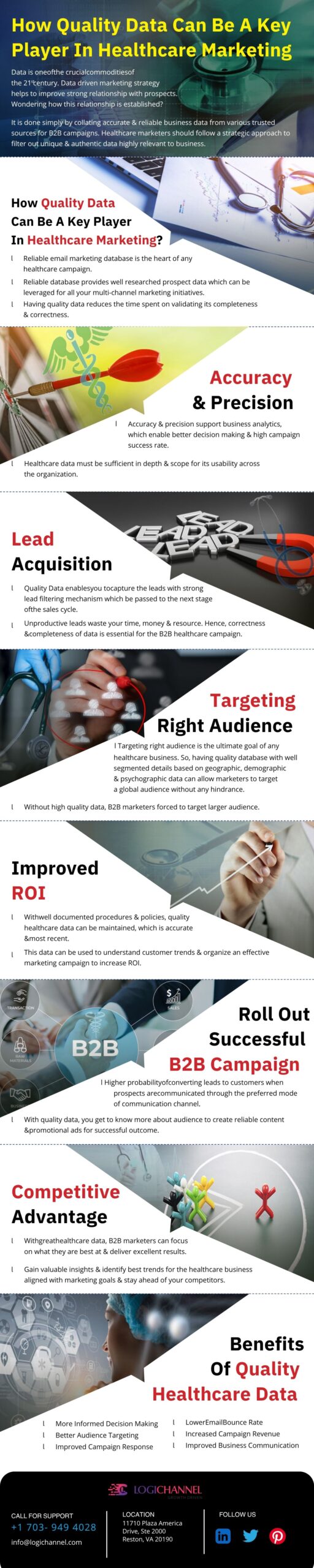
How Quality Data Can Be A Key Player In Healthcare Marketing[Infographics]

Data is one of the crucial commodities of the 21st century. A data-driven marketing strategy helps to improve strong relationships with prospects. Wondering how this relationship is established?

It is done simply by collating accurate & reliable business data from various trusted sources for B2B campaigns. Healthcare marketers should follow a strategic approach to filter out unique & authentic data highly relevant to the business.

How Quality Data Can Be A Key Player In Healthcare Marketing?

  • A reliable email marketing database is the heart of any healthcare campaign.
  • The reliable database provides well-researched prospect data which can be leveraged for all your multi-channel marketing initiatives.
  • Having quality data reduces the time spent on validating its completeness & correctness.

Accuracy& Precision

  • Accuracy &precision support business analytics, which enable better decision making & a high campaign success rate.
  • Healthcare data must be sufficiently in-depth & scope for its usability across the organization.

Lead Acquisition

  • Quality Data enables you to capture the leads with a strong lead filtering mechanism which be passed to the next stage of the sales cycle.
  • Unproductive leads waste your time, money & resource.  Hence, the correctness & completeness of data is essential for the B2B healthcare campaign.

Targeting Right Audience

  • Targeting the right audience is the ultimate goal of any healthcare business. So, having a quality database with well-segmented details based on geographic, demographic & psychographic data can allow marketers to target a global audience without any hindrance.
  • Without high-quality data, B2B marketers forced to target a larger audience.

Improved ROI

  • With well-documented procedures & policies, quality healthcare data can be maintained, which is accurate & most recent.
  • This data can be used to understand customer trends & organize an effective marketing campaign to increase ROI.

Roll Out Successful B2B Campaign

  • Higher probability of converting leads to customers when prospects are communicated through the preferred mode of the communication channel.
  • With quality data, you get to know more about the audience to create reliable content &promotional ads for a successful outcome.

Competitive Advantage

  • With great healthcare data, B2B marketers can focus on what they are best at & deliver excellent results.
  • Gain valuable insights & identify the best trends for the healthcare business aligned with marketing goals & stay ahead of your competitors.

Benefits Of Quality Healthcare Data

  • More Informed Decision Making
  • Better Audience Targeting
  • Improved Campaign Response
  • Lower Email Bounce Rate
  • Increased Campaign Revenue
  • Improved Business Communication
real Estate

Real Estate Industry Email List: A Marketing Tool For Real Estate Agents To Reach Right Clients

 The advent of the internet has made many businesses use the online platforms effectively for their business to grow up on the professional ladder. Real estate is one such industry that boomed in recent years with the help of the internet. A real estate agent is skilled in buying & selling properties across the globe. Similarly, an agent must be aware of how well you communicate with people for promoting your properties. With skillful networking, you must keep track of all contacts you have communicated, which is why you need a Real Estate Agent’s email list.

Why having a real estate agent email list is important?

Email is an effective marketing tool if used properly. A successful real estate broker or agent aims to grow your client base. They keep track of the people they meet over dinner parties, meet-up groups & other social events. But here comes the big question of how you nurture relationships with all prospects you meet. To answer the above question, maintaining an email marketing list will be the right choice. Also, you can build your own customized lists using custom list-building services to keep track of all prospects. This will be one of the effective marketing tools to save, sort & segment your contacts effectively. Similarly, if you build the list you can get full control over it to edit or modify records as per business requirements.

It is a well-known fact that if the real estate industry email list is used the right way you can reach more people & close more deals effectively.

Here we will discuss building the right email marketing guide to capture leads & build strong business relationships & close deals effectively. Believe it or not, we’re in the 21st century & called the digital era for any business. Staying with trends helps you to improve & grow your business.

A statistic from the National Association of REALTORS profiles of home buyers & sellers indicates 50% of all participants found their homes using the internet.

And more importantly, the 2018 industry benchmark report shows an average open rate of email is 19.24% & a click rate of 1.9%.

From above, we can conclude that having a perfect real estate agent email list can broaden your reach & connect with the right prospect for business.

Content of any marketing mail will give a crystal clear idea of how you can nurture your relationship with your subscribers. As a marketer, it is a strategy to sell yourself and your services to a global audience. But still, you find a subtle way to do it because your readers will stop reading them if it is more about you.

Topics that can be covered in your emails:

  • Local news & events across the city
  • Restaurant views
  • Home improvement trends
  • Interior design tips
  • Budgeting sessions
  • Loan workshops
  • Market Updates
  • Market insights

Why an email list is preferred over another mode?

Low cost & the high return on investment makes an email stand out from the crowd. This is one of the main reasons why emails become crucial to any business.  In order to reap the best benefits & get an effective outcome, you must be aware of best practices, building, segmenting the entire email list. Being pioneers in email database services, we at LogiChannel have a team of experts to guide you if you’re in need of any help to build a list from scratch.

Perks of using email tool for real estate business:

Any email marketing software will help you to structure & run your real estate business.

  • Capturing new leads & clients effectively
  • Building everlasting relationships within the real estate community
  • Establishing own brand & promoting it across the globe
  • Grow your sales
  • Expanding client base

Setting up the right real estate email marketing list:

Here are few effective steps to be followed for setting up your own real estate email marketing list.

Capture & Nurture Real Estate Leads: 

There are millions of ways to capture leads & expand your lead database.  From traditional to modern marketing, acquiring leads is one of the major tasks. If it is the traditional way, request a prospect’s email address in an old-fashioned way. When it comes to online, you can connect with prospects using targeted paid ads. PPC advertising is one of the important ways to drive traffic.

Alternatively stay active on all social media pages, which will be one of the lead generation sources to collect basic information about prospects. The collected information must be validated & verified to make sure leads are nurtured & monitored through the entire sales cycle.

Brand yourself:

Branding is one the most used buzz word in recent times. Build rapport with clients to promote your services or real estate products on a global scale.

You can start your conversation with the welcome mail (which can be automated). As the name suggests it is sent to someone who signs up first. Having excellent email marketing software can handle it in a better way. This mail is introducing yourself and proportionally shows the level of expertise, the experience you have in the real estate industry.

Use Right Call To Action

The next most important thing is adding a call to action, which can be used to set up a phone call with prospects if they are interested. CTA (Call To Action) works well in newsletters.  CTA is generally undersigned in email with the right links to call to action.

Conduct Polls & Surveys

The third most important thing is sending out engaging emails. After introducing, going for a sales pitch doesn’t work. Instead of sales mode, you can show the humorous side of yours. Conduct surveys poll to understand better, more about prospect & build an everlasting relationship.

Also, you can send emails about:

  • Holiday greetings
  • Mortgage news
  • Housing decoration trends
  • Newly opened shops or restaurant
  • Real Estate market analysis
  • Events happening in town

Email Personalization:

Over the period, as a marketer, you can analyze the likes & dislikes of your subscribers. A real estate email list can have a variety of subscribers from sellers, buyers, mortgage brokers & more. So segregate prospects based on their interest & send me a personalized email to get a quick response. With automated tools & services, you can generate more customizable emails for each group & keep them engaged.

Automated Emails

No more manual works. Thanks to automated software which are easy & effective in sending out mails in your absence. From building emails to news alerting everything can be automated.  Based on your mailing frequency you can schedule your weekly/monthly email updates to prospects in a hassle-free manner. An automated email sequence is easy to implement & saves you from doing routine works.

Automated workflows can be created for

  • Incentive email
  • Welcome email
  • Email alerts
  • Follow up emails
  • Referral mails
  • And more

Rolling out targeted emails:

Based on email personalization, now you’ll aware of the different interests of your subscribers. So this would be idle time to use that information & roll out effective and targeted email campaigns manually or with automated workflows. These target emails improve your sales & boost credibility. Targeted email content actually improves your trust & visibility. Campaigns can be about selling properties, current happening in town pertaining to real estate industries, seasonal updates, webinars, prop expo & more.

Tracking Email Metrics

Metrics help marketers to define if they are actually doing well in the B2B campaign or not. If you’re spending too much amount of time creating content & you are not aware of how many read or how many are ignored, it is of no use.  Every email service providers allow you to track the number of response you received from each real estate client, including open rates & click through rates. Writing a compelling subject line allows subscribers to open your mail & read it.

Conclusion:

With the modern marketing technique, real estate can make use of the internet for B2B sales & marketing. Email marketing is one of the digital marketing which never goes out of style. Partner with LogiChannel to build your own list. This creates more opportunities to collect leads, nurture relationships & close more deals efficiently. Spending more time on segmentation will help marketers to send personalized mail & stay ahead of competitors. Are you planning to seal the deal for your real estate business, then use our effective real estate industry email lists. Connect with us at info@logichannel.com& build your reliable email list today.

Leverage The Email Lists of Real Estate Professionals

business Growth

How Purchasing Email Lists Can Increase Your Business Growth?

Purchasing an email list is an efficient way to reach your target audience and grow your business quickly. But unfortunately, buying email lists has been unfairly grouped into the “spam” category when it comes to B2B marketing. However, most smart business owners understand the importance of purchasing email lists as one of the most cost-effective ways to dramatically accelerate B2B lead generation growth.

Having an email list enables you to establish a direct connection with people, who are genuinely interested in your products and services. A targeted b2b email list contains complete contact data of many potential customers who don’t know about your unique business solutions.

If you’re looking to generate more b2b leads from a particular industry vertical, then buying a targeted industry-wise email list is a smart idea that can scale up your lead generation efforts. Before jumping into the topic of how purchasing email lists can increase your business growth, it is essential to know more about an email list in a brief manner.

What Is An Email List?

An email list is a collection of email addresses gathered by a business in order to communicate with potential customers through email marketing campaigns. It includes a list of names and addresses collected by companies for the purpose of delivering publications or newsletters to their clients and members. Email lists help you to get more traffic and generate more profit. According to statistics, email lists generate ten times higher conversions than social media promotions. Hence, opt-in email lists are more likely to convert subscribers into paying customers.

Let’s take a look at how a purchasing email list can enhance your marketing efforts while increasing your business growth.

Provides Direct Contact With Potential Clients

Purchasing an email list allows you to reach out to potential customers for your products or services without any limitations. You can send a message to their inbox as many times as you want, and you can send them as much information as you want. Sending emails to individuals who already have a genuine interest in your products and services will not only improve your ROI but will also speed up lead generation activities and the rate of return.

Hence, don’t get caught up in a game of numbers, it’s better to have a smaller list of highly targeted contacts than a larger email list of poor quality email addresses.

Provides Effective Marketing Schedule

It’s difficult to plan email marketing campaigns without having any idea about your customer’s interests, demographics, and geographical location. Purchasing a high-quality email list of your targeted audience enables you to control how, when and who to contact.

Enables You To Focus More On Potential Clients

Purchasing an email list or email list subscription allows you to find out and segregate users that have already shown interest in your products and services. With this knowledge, you can focus more on potential customers, and follow them up with a different strategy.

Expands Your Reach And Increase Sales Growth

Whenever acquire a new email list, you’re expanding your reach geared towards a potential audience. The higher the number of people who receive your marketing message, the more potential leads you’ll generate. The key is to use a combination of validated marketing tactics and the appropriate tool to optimize your email marketing campaigns for open rates and deliverability.

Expand Your Market Reach With Our High-quality Email Lists

Fills the marketing and sales funnels With Quality Leads

Purchasing a new email list will significantly increase the size of your B2B marketing audience. These fresh, cold contacts can be moved to the appropriate funnels as they transform into warm opt-in leads. Warm leads can be nurtured by marketing, while leads that have already been warmed up are handled by sales.

Enhances Your Return On Investment (ROI)

When you purchase email lists from a reliable supplier, you’ll get a properly verified list of contacts that are highly receptive to your marketing emails and messages. As a result, you’ll spend less time and money in marketing to people who aren’t interested in your goods or services.

Frees Up The Resources

Manually building an email list of business contacts takes time and is not an effective use of your team’s resources. Purchased email lists give you a huge head start when it comes to lead generation. You’ll have more time and money to concentrate on closing new leads if you spend less time chasing down new leads.

Tips on How To Use Your Email List Effectively

Have A Solid Business Plan

If you don’t have a plan or strategy in mind, buying an email list is pointless. Create specific forms and content that you want your target audience to see and respond to.

Attract Your Audience 

Give your audience a reason to anticipate your next step. This may be in the form of free trials, coupons, or even freebies. Everyone enjoys receiving free gifts! If you do this, the numbers will skyrocket.

Start Things With Ease 

This is the part that most of the advertisers miss. They become too enthusiastic or eager and begin bombarding their future clients with plenty of emails. People despise being bugged or under strain! Allow them to breathe. Maintain a consistent email list schedule and keep adding benefits while preserving the content’s consistency.

Conclusion

Buying an email list is one of the most efficient and effective ways to extend your reach.  It is not only a great way to expand your reach, but also it will fill your sales funnel and take your business to the next level. Businesses will get their email marketing messages in front of their ideal audience using tailored, deliverable email lists and the right email marketing strategy. It doesn’t matter how great your new product is or how wonderful your service could be if you don’t market to the right people. That’s why LogiChannel provides you with a wide range of targeted email marketing lists based on your business-specific needs.

Email Marketing Tips To Supercharge Your B2B Sales

7 Email Marketing Tips To Supercharge Your B2B Sales in 2021

If your company focuses on B2B sales and you haven’t used email as a marketing tool yet, you’re missing out on a lot of opportunities. According to the statistics, the number of email users is rapidly increasing, with over 4.2 billion email users anticipated by the end of 2022. Regardless of technological advancements, email remains one of the preferred channels for business communication. In addition, email marketing is one of the most successful B2B sales strategies for reaching out to potential customers, improving your collaboration with them, and convincing them to choose your brand over others.

According to MC Kinsey, email is 40 times more effective at acquiring new customers than Facebook or Twitter as shown in the following figure.

With endless strategies available in the market to support you with lead generation and sales, why most businesses prefer emails over other marketing strategies? Here’s the answer:

  • Email marketing is effective for businesses of all sizes.
  • Emails are a quick, easy, and convenient way to establish a personal connection.
  • Remember that not all of your customers are on social media, therefore email is the perfect way to communicate with them.

In this article, we’re going to provide 7 effective email marketing strategies which can supercharge your sales in 2021


Start With a Compelling Subject Line   

The subject line is the most important part of your email campaign. When it comes to increasing b2b sales and revenue, you need to launch effective email programs with attractive subject lines. According to the Optinmonster report, 47% of email recipients open the mail based on the subject line only. This shows that subject lines are extremely crucial for your email marketing campaign’s success.

Furthermore, email subject lines must be attention-grabbing. In fact, email subject lines comprising six to ten words have the highest open rate. Another statistic that works in your favor is that subject lines that convey a sense of urgency or exclusivity have a 22 percent higher open rate.

Pay Attention to Email Header

Email Header is the most important visual aspect of your email campaign. If you want to increase your B2B sales, you need suitable content that aligns with your target audience and grabs the attention of your email recipients.

Considering the average office worker receives 121 emails every day, you just have a few seconds to capture their attention. This means you must send a clear message right from the header section, which is the first thing your recipients can see when they open your email.

Email Personalization

Email Personalization is a great tactic to generate amazing benefits on your email campaigns. According to Invesp, personalized emails have 29% higher open rates and 41% higher unique click rates than non-personalized mailings. The benefits are much more extensive.

According to an Epsilon, 80% of consumers are more likely to buy from a business that offers a customized experience. Here are some benefits of email personalization:

  • Increase in open rates.
  • Higher email click-through rates
  • Increase in customer satisfaction
  • Increase in sales and ROI
  • Decrease in unsubscribe rate
  • Increase in website traffic

Send Mobile-Friendly Emails

Consider sending an email that is visually appealing. However, when you open it on your phone, the images are missing and the interface is unpleasant. As a result, your subscribers are unable to communicate with you. This situation could hinder the success of your campaign.

According to recent surveys, 80% of Internet users use mobile phones, and this percentage is expected to rise in the coming years. As a consequence, a mobile-friendly design should always be included in your email marketing strategy. Always send high-quality emails, regardless of where your subscribers check their email.

Here are some quick design tips that will help you send mobile-optimized emails.

  • Create single-column mails
  • Keep important text in the center
  • Have an easy-to-tap CTA button
  • Use big fonts
  • Display small images

Segment Your Customers List

Customer segmentation functions in the same way for both B2C and B2B email marketers. Since you don’t want to send the same message to everyone on your email list, you segment your subscribers into groups. As a result, you’ll be able to send more tailored, relevant email campaigns. The types of segments you build in your B2B email marketing strategy may be a little different. This could include variations in job roles within the same organization (for example, accountant vs. CFO), as well as the company size, market, and budget of the company.

“According to Lyris’s Annual Email Optimizer Report, businesses that use customer segmentation experienced 24% higher sales.”

Segmenting your email lists by reader demographics makes it easier to develop a message that genuinely resonates with your readers’ needs and interests while enhancing their probability of taking up an offer, communicating with you, or even forwarding it on to other potential clients.

Apply Email Marketing Automation  

Email marketing automation is a proven way to boost sales. Not only will it make your business more effective, but it will also boost email performance and return on investment. Through an automated email campaign, you can optimize when your emails are sent and remarket to either site visitors or people who have previously purchased from you.

Furthermore, it enables B2B marketers to send out personalized messages to both prospects and customers on a schedule. With email marketing automation, create personalized experiences, tell stories, and invite conversations in a way that is scalable and relevant. To get started with email marketing automation, you can use free email marketing tools such as HubSpot, Sendinblue, Omnisend, Mailchimp, and many more.

Include Right CTAs

CTAs are key components of any effective email marketing strategy. CTAs bridge the gap between the brand’s and consumers’ perceptions. Including right, Call-To-Actions ensures the growth of web traffic while enhancing the customer experience. This ultimately increases the conversion rates and profits. CTAs are useful in email marketing for three reasons.

Wrapping Up

If you’re targeting individual consumers or company customers, email marketing has proven to be an effective marketing technique over the years. To generate B2B sales, you can rely on email marketing. However, email marketing isn’t hard, but it does require a solid plan. To increase and supercharge your B2B sales and revenue, employ the above-mentioned email marketing best practices and use those tips to create an effective sales strategy.

personalized B2B Campaign

How Effectively You Can Use Data To Personalize Your B2B Marketing Campaigns

In recent years, the growing adoption of smartphones and AI, combined with the digital evolution, has resulted in a significant increase in data collection, storage, and use. One of the most successful ways to achieve your marketing strategy goals is to use accurate and validated data. However, some advertisers are still unaware of the value and strategies of using reliable data in their promotions.

According to 64% of marketing executives, data-driven marketing strategies are essential. When it comes to email marketing, paid search campaigns, retargeting, social media advertising, or other multi-channel marketing, data can be your most valuable asset to achieve your marketing success. It provides you with an overview of your prospect’s purchasing habits, behaviors, interactions, thoughts, desires, and motives.

It’s no more surprising that the need for more personalized and data-driven marketing is growing by the day. With so many new marketing outlets constantly bombarding us, brands are constantly under pressure to attract new consumers while retaining existing ones. Due to this, the need for more personalized messaging is becoming important. Hence, marketers must need personalized data to communicate profoundly and directly with consumers at every stage of the sales funnel.

What is Personalization?

Personalization is creating a buzz around the world of advertising and marketing. It is the process of tailoring an experience or communication to a person based on the information obtained from an organization. Companies can customize experiences or messages based on the information they gather about prospects and clients. According to the Optinmonster report, 90% of the b2b marketers believe personalization is the future, 48% of customers spend more when their experience is personalized and 74% of people hate being shown irrelevant content. Here, in the below-mentioned image – you can view facts about personalization.

When it comes to personalized email marketing, sending emails that are relevant to your recipient is the top-most priority. However, there’s a lot more that goes into every personalized, targeted email you send. Personalization of your emails can only be as precise or reliable as your data allows. Hence, it is essential to have personalized data while sending any type of marketing campaign.

What is Personalized Data?

Personalized data is what we cannot found in traditional phone directories, company websites or any LinkedIn records. It is the set of specific and customized contact data records which help you to direct your message precisely to key decision-makers in target companies.

Getting access to the customized and personalized data is the new competitive advantage that enables organizations to think strategically about planning, prioritizing, prospecting, and permeating the organizations.

Types Of Data Used For Personalization

Contextual data

Contextual information includes the information about the device and browser used by the individual. Along with this, it also includes the shopper’s location, weather, date, and time of opening an email or visiting a website. All these data fields offer opportunities to determine which content is presented to the shopper on each channel.

Demographic data

Demographic data is the most basic form of personalization data to collect. This is usually static data that can be used to segment and target large groups of people over a longer period of time. Having access to demographic information such as gender, city, country, and age can help you to launch segmented campaigns.

Behavioral data

Behavioral and transactional data can help you gain a better understanding of a customer’s needs and behaviors. Behavioral data, such as browsing data, abandoned cart data, content consumed, search keywords, or visitor frequency, as well as transactional data and purchase history, may provide insights.

How To Use Data To Build Personalized Marketing Strategies:

Capture Complete Data 

You may say that you’re collecting data, but the question is – Are you collecting every piece of data? Today’s brands have access to more consumer data than ever before, and they can use the data to learn more about their consumers.

However, recent studies show that – when it comes to data collection, most marketers hold to the basics such as email, name, location, and demographics—while overlooking the most advanced metrics like lifestyle, online transactions and habits, and social cues. When you’re leaving out so many pieces of the puzzle, it’s clear that you won’t see the whole picture. As such, brands must monitor every single customer interaction through all inbound, outbound, digital, offline, and real-time platforms to know more about customers.

Don’t Overlook Social Data 

When it comes to developing a loyal customer base, nothing beats one-on-one targeting. However, individual targeting requires a thorough insight into consumer preferences and buying patterns. For that, you can use Social cues and signals other than traditional sources such as email, demographics, and purchase reports. Tweets, comments, and follows are real-time social data that show a lot about a customer’s preferences, buying plans, and what brand attributes they like and don’t like.

For example, if your company sells mountain bikes, you might monitor activities like tweeting, liking, following, or commenting about mountain biking to determine which audience segment is most likely to convert. If you got to know about your targeted set of audiences, you could personalize your campaign for those who are genuinely interested in your specific product.

Practice Segmentation

Your job isn’t done until you’ve identified your core customers. For more precise targeting, segment the audience into smaller groups. How do you do it? Searching through the available data to identify discernible patterns in actions or user interaction across all touchpoints is one way to do this. Later, divide your audience into segmented groups, based on the type of pattern they represent. This process will help you to personalize your b2b marketing efforts in a more effective manner.

Benefits of Personalization in B2B Marketing

Increased Conversions

With personalization in marketing, you can see a significant increase in conversions and sales. According to the recent surveys, segmented and personalized emails generate 58% of all revenue.

Improved Brand Loyalty

When customers provide information and data, they expect to be treated as unique individuals with their specific preferences. Hence, most businesses are dedicated their time and resources to implement successful personalized marketing strategies to enhance brand loyalty and customer satisfaction.

Improved Targeting

Whether you are trying to reach a set audience in a specific location or a certain age group of individuals, your brand can leverage personalized marketing. This helps you to connect them in a way you haven’t before, without sacrificing your existing customer relationships in other groups.

Bottom Line

Smart handling of data can help brands in achieving higher customer satisfaction. Personalization can help brands to build new relationships with customers, and entice them to stay longer. To get the most out of personalized marketing activities, marketers need to implement a solid data management strategy. In today’s business world, most of the customers are expecting a unique and personal experience, now it’s up to the brands how better they use personalized data in their b2b marketing to generate and nurture the leads.

LogiChannel: A specialized Data Vendor For All Your Personalized Data Solutions

LogiChannel realized that companies need this personalized data to stay ahead of the competition. That’s why we build custom lists to deliver personalized information. We have extraction tools and teams to collect data individually for every project.

Gathering personalized data has always been critical to success — we at LogiChannel have just figured out how to do it more efficiently.

How a B2B Database Boosts Sales 7 Ways to Use Your Data

How a B2B Database Boosts Sales: 5 Ways to Use Your Data in 2026

Despite all the advances in the data field, sales teams still feel like they don’t have enough quality leads. But this is not an issue of lack of data. This is an issue of using the existing data properly.

The competition among businesses has become greater, purchasing departments larger and decision-making processes  longer. And in this situation, just having a set of names and email addresses will not be sufficient. 

The difference between teams that achieve their pipeline goals and those who struggle to meet them is in how proactively they use the data at their disposal. B2B databases today are far from being a mere contact list

They are rather an important resource influencing account selection, personalization of messages, timing of contacts, and forecasting by leadership. This guide will explain the content of a B2B database, its importance in 2026 compared to recent years, and seven concrete ways of using data for sales.

What Is a B2B Database

A B2B database can be defined as an organized pool of data on companies and their employees, which helps facilitate sales, marketing, and revenue generation efforts. This is the basis for virtually all prospecting, targeting, and personalization efforts carried out by businesses.

Typically, a well-developed B2B database contains:

  • Company information such as the name of the company, industry, location, and firmographic information
  • Contact details of decision-makers, including their names, positions, and verified contact details
  • Industry and company size, which is useful for segmentation and matching customers with your ideal customer profile
  • Indicators of buying intent such as behavior that shows the company is actively looking for the kind of solution you provide
  • The technology stack and firmographics of the company, which provides clear evidence of fit or need
  • Interaction history including past touchpoints and engagement with your emails, websites, and sales calls

Look at how much farther this list goes beyond just simple contact details. Companies that derive the maximum benefit from their databases today are those that have several different kinds of data available together.

Why B2B Data Matters More Than Ever in 2026

A couple of factors have come together to make data quality an increasingly significant competitive differentiator.

  • Buying processes have become lengthy and complicated: Today’s B2B buying process involves anywhere from six to ten decision-makers in different departments, and manually trying to track all of those people is not feasible.
  • Personalized communication is expected: Sending out a message that has no relation to the person’s industry, position, and needs is seen as careless. People will notice, and growing numbers of buyers take that into account when evaluating your brand.
  • The competition for attention has gotten steeper: There is too much noise in their inboxes, and people ignore any email that does not indicate its relevance straight away.
  • There are fewer resources available to handle the increased number of tasks: Teams need to do more work with the same number of members.
  • AI and predictive analytics are now based on data, not intuition: The modern scoring, forecasting, and personalization tools require clean inputs to work properly.

These figures make it difficult not to pay attention to the financial consequences. Organizations using verified contact information have seen their conversion rates rise by about 66% compared to those using old data, and that difference only seems to grow each quarter. 

At the same time, more than a fourth of businesses say that they lose more than $5 million a year due to low data quality and almost half admit that CRM data quality alone is responsible for losses exceeding 10% of annual income.

However, data does not stay accurate forever, either. B2B contact data becomes obsolete at an average rate of 22-30% per year due to changes in employees’ careers and mergers.

7 Ways to Use Your B2B Database to Drive Sales Growth

1. Identify and Prioritize High-Value Prospects

It is not necessary for all companies that are present in your total addressable market to be treated equally. It is your robust database that makes it possible to distinguish. You need to sort prospects by industries they operate in, their sizes, and their income, and this way, salespeople will get better visibility into your ICP.

Benefit: Salespeople will stop pursuing all leads that happen to be out there and will start concentrating only on those that matter.

2. Personalize Sales and Marketing Outreach

Generic outreach campaigns are easily identifiable and easily ignored. With a deep B2B database, teams have everything they need to run genuine outreach campaigns: customized email campaigns, industry- and buyer-type-specific messaging, and content suggestions that align with what the prospect cares about.

For instance, an application software provider targeting manufacturers would be able to leverage firmographic information to deliver supply chain-related case studies to industrial buyers while delivering a completely different message to the prospect in the financial services sector.

Benefit: Higher engagement, improved response rates, and relationships designed for the buyer.

Benefit: Salespeople will stop pursuing all leads that happen to be out there and will start concentrating only on those that matter.

3. Improve Lead Scoring and Qualification

What turns lead scoring into something valuable is a database filled with behavioral and demographic information. This way, it’s not just a question of who should get more attention from the rep, but rather a matter of determining true purchasing intentions of the prospects and passing on the best leads to the sales team. And why is it important? Because there is quite a number of leads which get passed on to sales, yet are not really prepared for it.

Benefit: Higher conversion rate due to the limited availability of the representatives’ time.

4. Power Account-Based Marketing (ABM) Campaigns

ABM is completely dependent upon data that gives an accurate view of the account you are targeting. Having a good database helps the team to recognize the right target accounts, identify the decision makers of those accounts, and develop tailored campaigns for specific individuals.

Benefit: More relevant opportunities and higher return on investment due to the relevance of accounts selected through the campaign.

5. Predict Customer Needs and Buying Intent

History of interactions holds its own story, but you need to be able to read it properly. Using historical information on past engagement helps identify those leads who are actually researching for a solution at present rather than companies that just meet the criteria of ideal targets. 

Benefit: Identification of more leads early on with shortened sales cycles.

6. Enhance Customer Retention and Upselling

However, a B2B database is not only valuable in preparation for sealing a sale, but continues to deliver value long after the contract has been signed. Engaging monitoring of account team interactions will allow them to identify natural upsell and cross-sell opportunities when customers’ demands change, and the same information will be used to identify early warning signals for possible churn.

Benefit: Customer lifetime value increases significantly, and revenue becomes more stable and predictable.

7. Enable Smarter Sales Forecasting and Decision-Making

Clean and comprehensive pipeline data become one of the most important sources of forecasting capabilities for any revenue leader. Analysis of pipeline trends is helpful to make more accurate forecasts and allocate resources/territories better.

Benefit: More accurate decision-making and predictable growth rather than a reactive one because of real trend analysis.

Key Benefits of Building a Strong B2B Database

Putting all these seven examples into context, there are a number of key benefits provided by a properly maintained database including better targeting in terms of eliminating any unneeded outreach efforts, greater personalization through all channels, quicker and bolder decision making at the executive level, and improved conversion and sales productivity in general. All of these benefits are interconnected and that is the very reason why the distance between the two groups only keeps growing.

Common Challenges in Managing B2B Data

ChallengeWhy It Happens
Inaccurate or outdated dataContacts change jobs and companies merge faster than records get refreshed
Duplicate recordsMultiple entry points (forms, imports, manual entry) create overlapping records
Data silos across departments/td>Sales, marketing, and customer success often work from disconnected systems
Privacy and compliance concernsTightening regulations raise the stakes for mishandled records
Difficulty maintaining quality at scaleWhat's manageable at a few thousand records gets much harder at scale

Emerging B2B Data Trends in 2026

Here are just a few trends that are influencing how future-minded teams approach their data strategy this year.

  • Artificially intelligent data enrichment is taking over the tedious manual research processes of the past, filling in gaps for missing details such as job titles and technographic data.
  • Predictive analytics and intent data have become the norm, allowing teams to uncover which accounts are currently in-market without requiring an active lead to fill out a form.
  • Real-time customer intelligence has emerged as the way forward for data-driven sales and marketing efforts, because cache data that is thirty to sixty days old can quickly become outdated.
  • First-party data strategies have come into greater focus as more companies are bound by stricter privacy laws and third-party data becomes increasingly limited.
  • Automated data segmentation and personalization allow teams to engage leads with customized messaging on a scale previously unattainable through manual segmentation.
  • Data management with a focus on privacy has evolved from an afterthought to a critical element of data database architecture from the ground-up.

How to Build a Future-Ready B2B Data Strategy

An effective data strategy doesn’t mean overhauling everything overnight. The gradual and thoughtful route usually yields better results than the attempt at fixing everything immediately.

  1. Figure out your ICP: Go ahead and define the characteristics and traits of companies and industries you are really working with.
  2. Audit your current data set: It is important to assess how good the data you have already is before starting to enrich it.
  3. Perform regular data cleansing and enrichment: Make sure that data cleansing and enrichment become a routine task rather than an emergency operation.
  4. Segment audiences strategically: Divide your prospects into segments not by the whim but based on their characteristics.
  5. Create integration between platforms used in sales and marketing: This way you will reduce the risks of duplication and inconsistencies.
  6. Leverage the power of AI and analytics: Leave all the patterns to be revealed to smart algorithms, but make sure the data itself is clean enough for them to do it.
  7. Measure and optimize continuously: Keep track of metrics and optimize performance according to actual results.

The real future-proof strategy implies treating the data quality as a discipline, not a project.

Conclusion

The B2B database is not only a bunch of contacts in the CRM anymore. It is the base that will define how good the sales team will be in prioritizing accounts, personalizing the approach, qualifying leads, doing account-based marketing, and forecasting sales with any kind of reliability. Sales teams that value their data as a strategically important asset and constantly update it are outperforming those who do not.

If you are ready to use the power of enriched and validated data to develop your company’s outreach activities, LogiChannel offers the best B2B data solutions.

FAQs of Microsoft Users Email List

It refers to a structured set of company and contact details, including firmographics, contacts of decision-makers, and information on how these contacts engage.

It helps sales teams narrow down the right prospects and focus on the accounts that are more likely to become customers without wasting time on mass targeting.

It is possible to segment the prospects in accordance with the ideal customer profile, score them based on their behavior, and recognize companies which have shown an interest in your product thanks to intent data.

This data includes the following details: company details, contacts of the decision-makers in a company, industry and size data, technographic data, intent data, and engagement data.

Account-based marketing requires account-level data to find the right target accounts, identify the buyers’ committee of each account, and provide personalized messages to these people.

Out-of-date contacts, duplications, departmental data silos, privacy pressure, and the challenge of maintaining data quality as the database grows.

Due to the fact that B2B contact data becomes outdated at an annual rate of 22 to 30%, quarterly reviews seem reasonable, and even monthly for large teams.

AI can enrich the data and provide predictive scoring much faster than people can do, but it still needs clean data as input.

It helps track certain behavioral markers showing that a company is actually researching solutions that can help it, allowing salespeople to engage customers.

Establish a solid ICP, conduct regular audits and cleans, connect all relevant sales and marketing systems, leverage AI-based enrichment, and analyze performance metrics.