Top Industries Driving ERP Modernization in 2026

10 Industries Leading ERP Modernization in 2026

ERP software has become, perhaps without its users even realizing, one of the most important choices they will make regarding technology. This software that used to be a simple inventory and payroll management tool for businesses has morphed into a backbone of the organization that makes the difference between the speed with which the business will be able to react to disruptions, changes in demand, and regulation.

The legacy ERPs, developed over fifteen or even twenty years ago, cannot be blamed for not being prepared for the challenge. These systems were created for a predictable supply chain, batch processing, and quarterly reports—all those features of business life have long since been replaced by the reality of our time.

This is why we are witnessing a revolution in ERP software at the moment, with more and more companies retiring legacy ERPs for cloud-based systems with integrated AI, automation, and advanced analytics features. The trend is not confined to any specific industry but spreads far and wide.

And which industries are driving the charge in 2026? This guide tries to provide the answers to that question.

What Is ERP Transformation?

ERP transformation is the migration of an enterprise from its old, generally on-premises ERP system to new, cloud-based platforms optimized for agility, scalability, and intelligence. It is more than an upgrade. The process usually includes standardization of processes across the organization, automation of previously manual processes, and integration of the ERP core with AI and analytics.

There are several reasons why businesses move towards such a transformation. The first one is increased operational complexity as organizations enter new markets, sales channels, and product offerings, which legacy ERPs have trouble coping with. Secondly, there is the need to implement digital transformation within an organization, which requires reconsideration of its technological infrastructure. 

The third one is the compliance needs, which become stricter in the finance and healthcare sectors as the number of regulations increases. The fourth reason is that leaders need insights about the operation of the company in real time rather than the monthly lagging reports generated by the old systems.

It doesn’t end here. There’s another trend emerging beneath everything else. Older legacy ERP systems have been tailored and built out over the past fifteen or even twenty years by different IT professionals who have left the organization already, resulting in systems which are highly customized, difficult to document, and expensive to maintain over time. 

The vendors are making it easier for enterprises to move by discontinuing support for their older on-premise ERP versions, thus creating an impetus to upgrade, which enterprises can’t really put off forever. Not only that, but there’s pressure to do so from new-age employees, as they are used to cloud-based software in other applications.

Thus, what you’re seeing is a market on the move. Approximately half of all organizations worldwide are actively investing in, upgrading, or planning to upgrade their existing ERP solutions right now, signaling the fact that this isn’t an IT-level initiative any more. This is a board-level one.

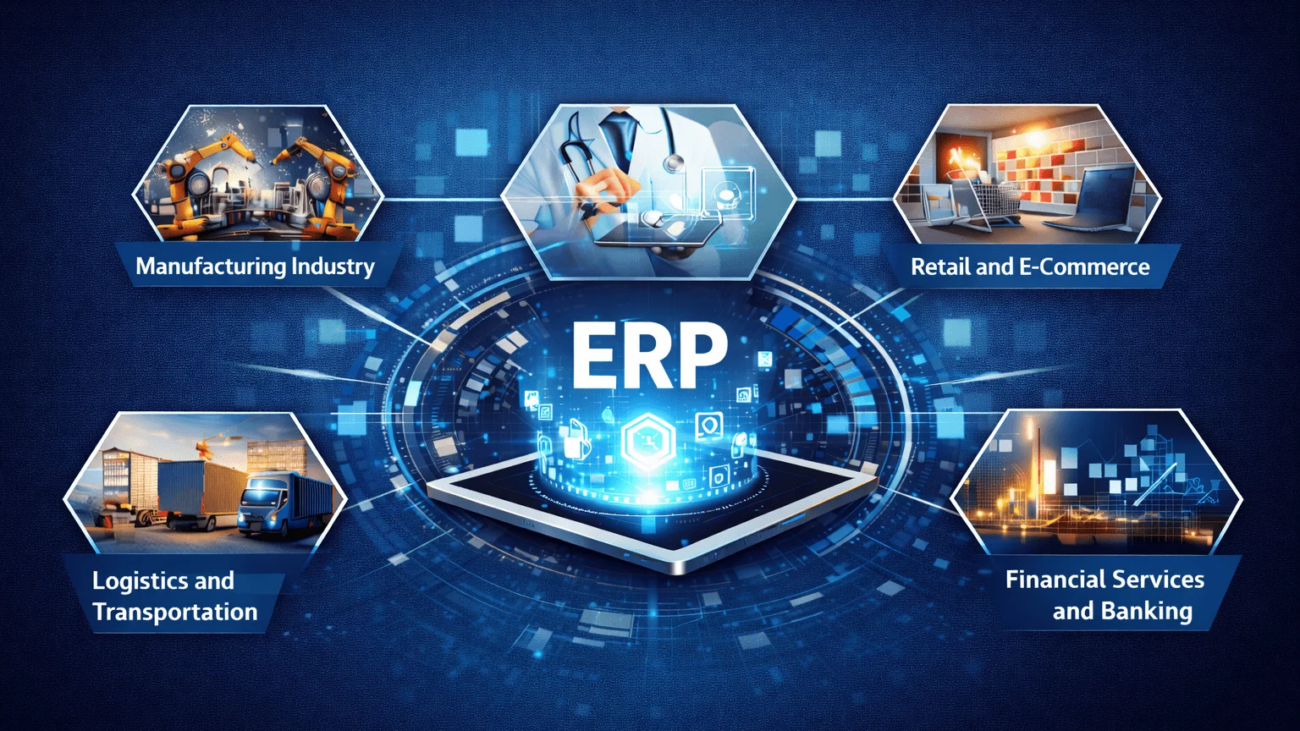
Industries Leading ERP Transformation Investments

There is variation in pace among different industries, but not for random reasons. The pressure on the following industries is unique and necessitates an ERP upgrade as opposed to leaving things as they are.

1. Manufacturing Industry

The manufacturing industry still stands out as the one responsible for most of the ERP spending. Manufacturing accounts for 47% of ERP buyers and 32% of the total market share of ERP users, positioning itself as the key industry for cloud ERP usage. It is not difficult to see why when considering the challenges faced by manufacturers, including their multilayered supply chains, complicated production planning, and inventories that need to be managed throughout all stages.

Smart factories have increased the demands on the manufacturing industry. Manufacturers are not only going digital but also integrating shop floor data, production machinery, and quality management systems with ERP systems.

Key ERP use cases in manufacturing include:

  • Production scheduling based on demand forecasting
  • Automation of procurement process by eliminating manual purchase order cycle
  • Quality management systems identifying defects before they become major

What becomes apparent is the combination of cloud-based ERP and AI-powered production planning in which ML algorithms are used to predict shortages of materials and optimal scheduling of lines.

2. Retail and E-Commerce

There are some challenges unique to retail. Omnichannel selling means that one SKU will be available in the physical store, on the company’s website, and also via the third-party platform at the same time. Maintaining seamless synchronization between inventory on all three channels and avoiding overselling or stockout at the same time is a challenging task that was simply not conceived in traditional systems designed for single-channel retailing.

What are the driving factors for retailers to adopt modern systems? There are three of them: real-time inventory management to avoid the infamous situation of “out of stock, but available online,” rapid order processing due to ERP and warehouse integration, and improving the customer experience through reliable delivery estimates.

The next trend is unified commerce, when the ERP, POS, and eCommerce solutions are based on the same data layer. Also, AI-driven demand forecasting is rapidly gaining ground, which allows retailers to predict the peak season much more accurately than through traditional spreadsheet calculations.

3. Financial Services and Banking

Reasons behind modernizing ERP systems for financial services firms differ from those of other industries, such as manufacturing and retail. First and foremost, it is compliance. Regulators demand detailed, auditable reports that cannot be provided by legacy ERP systems with manually adjusted data. Another major motive is risk management because financial firms require comprehensive exposure visibility at the corporate level in nearly real time.

Modernization aims at enhanced governance and financial visibility, as well as automating processes that help minimize the burden for finance department employees. In the future, artificial intelligence will be integrated into financial planning and reporting systems, making them an everyday tool, especially since finance professionals face increased pressure to provide forecasts before the monthly closing period.

4. Healthcare Industry

Perhaps no area will illustrate growth better than the healthcare industry. The healthcare industry has the greatest potential for growth compared to other sectors, with a predicted CAGR of 22.37% up to 2030 thanks to factors such as rising regulatory requirements, patient data management challenges, and efficiency needs.

This rate of growth is higher compared to almost all other industries and is fueled by the need for greater efficiency. Management of patient data has become increasingly complex due to consolidation of health systems and adoption of the EHR system. The already heavy burden of regulatory compliance in the industry continues to get worse. And efficiency in terms of staff and equipment allocation has become necessary due to tight margins.

Some of the benefits of ERP in the hospitals and health networks will include better workforce management, financial management in multi-facility networks, and supply chain visibility.

5. Logistics and Transportation

No other industries seem to be impacted by disruptions in their supply chains as much as logistics and transportation do. The need for fleet management, routing, and scheduling optimization, along with the consequences of global supply chain unpredictability, made logistics companies opt for ERP systems that could react immediately to situations rather than analyze them afterwards.

The results achieved through modernization of logistics companies may be boiled down to three points: real-time insight into shipments and the state of fleets; improved ability to manage expenses related to fuel, labor, and maintenance; and increased operational efficiency due to algorithmic routing and load optimization.

Technologies Accelerating ERP Transformation

However, these industries aren’t modernizing without any technological background at all—there are several basic technologies that make the entire process possible, and they deserve to be mentioned individually.

First and foremost, cloud ERP is what makes everything possible. It provides scalability that is impossible for on-premises systems, reduced cost of infrastructure due to the lack of need to have a server farm of your own, and faster implementation processes. The number of companies that use cloud ERP increased to 64% in 2024 from 44% in 2020 and does not look like it will stop growing.

Next, artificial intelligence technology changes not only where an ERP system operates but what it can actually do. Predictive analytics, demand forecasting, and intelligent automation are now an integral part of ERP systems and are not added separately anymore. The companies that use AI-powered ERP solutions noted a 20% increase in forecast accuracy and 15% reduction in operational costs.

Data analytics provided by the ERP system allows for real-time decision-making, and business intelligence integration allows asking questions about the current state of things without waiting for reports from the finance department.

The use of automation technology, especially that of robotic process automation overlayed over ERP processes, is helping to ease the workload of personnel. The use of Robotic Process Automation within ERP has made the process 30% more efficient and cut down the number of errors by 25%.

All of these four technological developments together have made ERP shift from being a system of record to a system of intelligence.

Common ERP Transformation Challenges

None of this would be possible without friction. The successful execution of ERP transformation initiatives can be incredibly challenging, and one should be upfront about where problems arise. Academic research suggests that ERP projects tend to overrun their budgets far too often, and the median period necessary to earn back the investment is approximately two and a half years.

Budget issues are one of the first things to be considered when implementing ERP. This software is costly, and there is also a known issue that its price may often exceed the initially stated number due to various unforeseen requirements that emerge throughout the implementation process. 

Another problem may lie in data migration, which may prove to be more complicated than initially thought, as transferring large amounts of historical data from an old system without data corruption or losses can prove to be a challenge.

Even though a system is implemented technically successfully, it may still fail in practice due to lack of employees’ interest in using the tool. In other words, staff may continue using their old ways and workarounds rather than adopting the system. 

Lastly, the integration with legacy systems might be the last straw breaking the camel’s back, especially if the tool does not feature an open API.

There are several common practices for overcoming all these obstacles.

ChallengeCommon Mitigation
Budget overrunsPhased implementation rather than a single "big bang" rollout
Data migration riskStructured change management and early stakeholder involvemen
Employee resistance/td>Structured change management and early stakeholder involvement
System integration gapsMiddleware or API-first platforms chosen specifically for compatibility

In fact, phased implementation has emerged as the norm, since it enables the team to check each module before proceeding to the next one, thus avoiding any kind of total failure in the organization as a whole.

Future of ERP Transformation Across Industries

In the coming period, there are going to be certain trends that will help define the next step towards the ERP modernization process. This includes the use of AI-native ERP platforms, meaning software built with AI at its core rather than being augmented with additional capabilities, and the development of industry-specific ERP platforms. The latter has become popular due to the fact that general-purpose platforms tend to lack the particularities of the workflow of the company working in distribution, health care, or manufacturing.

Hyperautomation, or the automation of not just single processes but whole end-to-end procedures, is becoming a more common thing every year. Moreover, the prediction of the future state rather than simple reporting on the past achievements becomes an increasingly valuable capability for modern ERPs. In the case of investments, manufacturing, retail, health care, and financial services are expected to be the top industries investing in the modernization of ERPs until the end of the decade.

The forecast predicts the market size of cloud ERP to increase from about $113.94 billion in 2026 to $202.26 billion by 2030, which provides an indication of the amount of capital that is being invested into this field.

In terms of gauging which technologies are currently used by competing firms and potential clients, the technographic information provided by LogiChannel provides an empirical means of measuring ERP technology adoption versus simply survey estimates. This is quite helpful in addition to the general market information provided.

Ready to Identify Companies Investing in ERP Modernization?

Conclusion

However, despite manufacturing, retail, finance, healthcare, and logistics dominating the ERP modernization agenda in 2026, each of these industries is pursuing it because of its own unique reasons. In manufacturing, it is to manage the increased complexities of the supply chain; in retail, to maintain the synchronization of inventory across various channels of sales; in financial services, to meet regulatory requirements; in healthcare, to meet regulatory requirements and to cope with huge amounts of data. Logistics, meanwhile, seeks real-time insights where before there were none.

It seems that what unites all of these industries is the view that cloud computing architecture, AI, and real-time analytics are not nice-to-have features any longer but a standard requirement for any enterprise-level software solution. As the migration is completed in the coming years, ERP modernization will likely become not a competitive edge but a necessary step to survive on the market. Those who will undertake the process earlier will get an opportunity to compete in terms of speed of operation rather than having to make adjustments later.

Companies Using Oracle ERP

Companies Using Oracle ERP: Top Enterprises, Industries, and Adoption Trends in 2026

Organizations throughout the world are increasing their investment in ERP systems so that they can optimize their operations, achieve real-time visibility of their finances, and have an infrastructure that is well-positioned for the future. Among many platforms that are facilitating this shift in current technology, perhaps the one that is most widely adopted by both large and multinational businesses is Oracle ERP Solutions.

From manufacturers in the Fortune 500 to global healthcare systems to rapidly expanding retail businesses, Oracle ERP is used by thousands of companies to execute some of their most important business functions. Companies rely on Oracle ERP for everything from financial consolidation across many subsidiaries to automating procurement processes and orchestrating their supply chain functions; thus, the Oracle ERP platform is the backbone of how enterprises conduct their businesses regardless of location or industry.

In this article, we will examine various large companies that use Oracle ERP, the industries that have the highest adoption rates; and trends relative to Oracle ERP that will start to take shape by 2026; plus we will analyze what this landscape of adoption implies for B2B marketers and technology providers selling to enterprise buyers.

What Is Oracle ERP?

The suite of applications that make up Oracle ERP was designed to be an integrated enterprise application solution to assist businesses in managing their core business processes under one single business platform. The entire business life cycle is represented with modules for financials, procurement, supply chain, project management, and the monitoring of risk and compliance. 

There are two ways Oracle provides ERP solutions to customers:

(1) the long-reigning classic on-premises Oracle ERP software that has served large companies for many years, and

(2) the new-generation Oracle Fusion Cloud ERP, which is the evolution of an organization’s technology infrastructure by providing a modern cloud-based ERP solution. Cloud-based Oracle Fusion provides real-time streaming updates, machine-based automation, and the seamless integration necessary with other systems while eliminating the high cost of supporting the on-premise system.

Core Oracle ERP Modules:

  • Financial Management: Includes areas such as general ledgers, accounts payable, accounts receivable, fixed assets, and closing finances.
  • Procurement: Encompasses supplier relationship management, sourcing, purchasing, and spend analysis. 
  • Supply Chain Management: Involves managing inventory, order management, manufacturing, and logistics. 
  • Project Management: Includes project planning, resource management, billing, and costly processes.
  • Risk Management and Compliance: Includes the use and documentation of internal controls, audits, and regulatory reporting.

Key Benefits:

Business operations that are centralized across all areas and legal entities Financial accountability and visibility in real-time Compliance with regulations and ready for audits Expandable to support growth as a global company Innovation using the Cloud through AI Machine Learning and Automation.

Oracle ERP at a Glance: Key Statistics for 2026

Oracle has a tremendous global reach with its ERP platform, and it is consistently growing because more and more companies are migrating away from older systems to new, state-of-the-art, scalable enterprise cloud applications.

MetricValue
Estimated Global Oracle ERP Customers30,000+
Countries with Oracle ERP Deployments175+
Enterprise Market Penetration25% of Fortune 500 companies
Industries Served20+
Oracle Cloud ERP Revenue Growth15-18%

Top Companies Using Oracle ERP in 2026

Oracle has a tremendous global reach with its ERP platform, and it is consistently growing because more and more companies are migrating away from older systems to new, state-of-the-art, scalable enterprise cloud applications.

Company NameIndustryHeadquarters
AT&TTelecommunicationsUSA
DeloitteProfessional ServicesUSA
FedExLogistics & Supply ChainUSA
Marriott InternationalHospitalityUSA
SiemensIndustrial ManufacturingGermany
VodafoneTelecommunicationsUK
Tata Consultancy ServicesIT ServicesIndia
Toyota Motor CorporationAutomotiveJapan
Johnson & JohnsonHealthcare & PharmaUSA
ChevronEnergyUSA

Aquire The Verified and Industry Segmented List Of Companies Using Oracle ERP

Why Do Large Enterprises Choose Oracle ERP

There are three main reasons why Oracle has so many great features. The first one is that their ERP is designed for scalability around the globe. They support multi-entity, multi-currency, and multi-language without any excessive amount of customizations needed to create it like other competitors.

A company that operates across 40 countries will be able to consolidate all the financials, manage all the purchase orders, and provide legal and compliance reports from one instance.

The second factor would be the depth of financial management they provide. Oracle has one of the most advanced financial software suites available on the market today, providing tools/services for everything from subledger accounting to prediction of cash flow.

The third factor would be that Oracle is able to provide localized versions of their software for each country concerning their taxation system, payroll system, and other statutory reporting systems, which would make them the obvious choice for a company that is doing business in multiple countries.

Industries with the Highest Oracle ERP Adoption

Manufacturing

Manufacturing is an area of exceptional strength for Oracle’s ERP solution. Oracle delivers production planning (including bills of materials), shop floor control (including work-in-process), and inventory management across a global footprint for manufacturers worldwide. With real-time visibility into the supply chain, manufacturers can respond more rapidly to supply chain disruptions. Integrated quality management helps manufacturers maintain compliance with mandatory industry standards.

Oracle’s advanced manufacturing function has functionality that allows manufacturers to connect their production schedules directly to their purchasing and logistics functions, thus shortening lead times and increasing on-time delivery performance. The end-to-end visibility that Oracle ERP provides continues to be a primary factor in manufacturers selecting the Oracle ERP solution over other ERP solutions.

Financial Services

The banking, insurance, and asset management industries are some of the most regulated industries in the world. With robust financial reporting, risk management and regulatory compliance modules, Oracle’s ERP software directly addresses the complexities of these industries.

Oracle’s ERP product is being leveraged by many financial services firms to automate the reporting of their IFRS, GAAP and various regionally specific regulatory requirements. Additionally, its capabilities to handle thousands of different financial entities and permutations of consolidation scenarios in real time enables CFOs and their compliance teams to have confidence in operating on a larger scale.

Healthcare

Healthcare organisations such as hospitals, healthcare systems and life sciences companies have specific challenges associated with managing their budgets, procurement management and compliance with vendors. Oracle ERP gives healthcare organisations the ability to automate their accounts payable processes, manage complex procurement contracts, as well as ensure compliance of their procurement practices with regulatory requirements.

Many of the larger hospital networks have chosen to implement Oracle ERP as a replacement for their existing fragmented legacy systems which has resulted in dramatic improvements in processing time as well as substantial increases in visibility into their spending.

Retail and E-Commerce

As a retailer, you’re living in an age of omnichannel retailing, where having visibility into your inventory is crucial. In order to be successful, retailers who use Oracle ERP will have instant access to their inventory in both brick and mortar locations as well as warehouses and e-commerce fulfillment operations. 

This provides retailers with accurate forecasting of demand, reduces the number of stockouts, and streamlines order orchestration.

Additionally, Oracle ERP is integrated with Customer Data Platforms (CDPs) and e-commerce platforms, which gives the retailer a solid operational infrastructure to deliver a consistent customer experience across all channels.

Logistics and Supply Chain

Logistics companies and third-party providers use Oracle ERP to oversee warehouse operations, distribution planning and optimize transportation. Current conditions of global supply chains are such that demand fluctuation, geopolitical issues and diminishing capacity create continuous strain. 

Consequently, the need for supply chain management capabilities to Oracle ERP has reached unprecedented levels. Real-time tracking of inventory, automatic replenishment functions, and integrated carrier management allow logistics firms the option of operating more efficiently and responsively.

Why Enterprises Choose Oracle ERP Over Other ERP Platforms

Enterprise-Level Scalability

ERP by Oracle was created to handle complexity. It serves multi-entity corporations who have many legal entities, different accounting standards around the world (such as IFRS or GAAP), and a volume of transactions that Smaller Solutions would be unable to handle. When companies become larger due to mergers and acquisitions, the Enterprise Resource Management system from Oracle can scale up to support additional businesses without requiring extensive configuration changes.

Advanced Analytics and Reporting

Oracle ERP has many analytical capabilities that greatly surpass the typical methods for generating reports on financial data. Dashboards that are updated in real-time allow finance departments to see their KPIs immediately. Predictive analytics allow procurement managers to anticipate and prepare for disruptions in their supply chain. Report generation that uses AI technology can quickly identify anomalies and find reasons for deviations, so finance workers no longer have to spend hours manually reviewing reports.

Strong Cloud Ecosystem

Oracle Fusion Cloud ERP is completely bonded with Oracle’s whole cloud offering (including Oracle HCM Cloud, Oracle SCM Cloud, and Oracle CX). This close-knit relationship in all areas of the Oracle ecosystem minimizes how much you spend managing several different enterprise systems, and it also means that any data can move easily between HR, finance, operations, and customer related functions.

Oracle ERP Cloud Adoption Trends in 2026

Growing Shift Toward Cloud ERP

Over the last couple of years, the shift away from traditional Oracle ERP systems installed locally on-premise and moving into Oracle’s Fusion Cloud ERP product has greatly increased as businesses that have continued to hold on to aging Oracle versions (like EBS or JD Edwards) move to complete cloud transformations in order to keep pace with innovation and reduce the cost of maintaining legacy infrastructure.

Hybrid implementations continue to be normal in many large organizations during their transition period; however, complete cloud-based ERP implementations are becoming the expected way of deploying ERP for all new users, as well as for businesses that are re-architecting their existing ERP systems.

1: AI-Powered Financial Operations

Oracle has invested substantially in embedding AI into their Cloud ERP solution. By 2026, AI-enabled financial processes will have shifted from being considered ‘competitive differentiators’ to being recognized as expected functionalities. Examples of such processes that are now commonplace among Oracle ERP customers include recommended/automated journal entry postings; AI-enabled cash flow forecasts; and accelerated closure of accounting periods utilizing intelligent processes.

2: Automated Procurement

Increasingly, procurement staff in organizations implementing Oracle Enterprise Resource Planning (ERP) software are utilizing automation throughout the purchasing process to minimize the number of times a user interacts with the system during purchase processes (by generating an automatic order for each purchase, matching supplier invoices to POs, and managing exceptions). The impact of automation from Oracle on these procurement processes generates measurable savings and reductions in cycle times for business customers’ purchases.

3: Real-Time Supply Chain Visibility

The disruption of the supply chain has raised the significance of real-time visibility to a permanent status. Exclusive to Oracle ERP, clients are leveraging integrated supply chain management features in order to track their inventory levels and determine when an order has been shipped or whether or not they need to react to a supply chain disruption in time. Furthermore, AI-based demand sensing will help supply chain professionals predict changes before they result in either lost sales due to stock-outs or overstock of goods.

4: ESG and Compliance Reporting

Multinational corporations have made Environmental, Social, and Governance (ESG) reporting a top priority at the Board level. With these regulations tightening globally, Oracle ERP is enhancing the capabilities of its compliance and sustainability reporting to enable finance teams to capture, consolidate, and report ESG metrics alongside financial metrics. As ESG disclosure regulation becomes more stringent at a global level, the built-in compliance frameworks of Oracle will be a major factor in purchasing decisions.

Regional Analysis: Where Oracle ERP Adoption Is Growing

North America

The U.S. is the biggest market for Oracle’s ERP solution, and in particular its Financial Services, Health Care, Manufacturing, and Technology verticals are leading the way in terms of widespread customer adoption. In addition, most of the world’s largest Oracle ERP installations are in the United States. Furthermore, the U.S. continues to lead the charge for Oracle Cloud ERP by helping enterprises improve their infrastructure.

Europe

European organizations are challenged by complex regulations in multiple countries, thereby making the localization features of Oracle ERP extremely useful. These features allow customers to comply with the European Union’s General Data Protection Regulation (GDPR), keep track of value-added tax (VAT) reporting, and meet other requirements mandated by individual countries.

Asia-Pacific

In Asia-Pacific, Oracle Cloud is the leading provider of Enterprise Resource Planning software, with the biggest increase occurring in countries like India, Australia, Japan, and Southeast Asia. MCC and other major businesses are adopting Oracle Cloud ERP solutions because they require flexible and scalable infrastructures to facilitate their international expansion and grow rapidly in their industries (including manufacturing, IT services, and financial services).

Middle East

A number of government organizations, sovereign wealth funds, and large conglomerates in the U.A.E., Saudi Arabia, and Qatar have chosen to implement Oracle ERP solutions as part of their overall digital transformation efforts, as well as to help support the goals of Vision 2030. The vast experience of Oracle in the region and in working with government entities makes it the vendor of choice for ERP platforms in these markets.

Increase Outbound Pipeline Generation by 2.4X With Our Oracle ERP Customers List

What Oracle ERP Adoption Means for B2B Marketers

Identifying High-Value Enterprise Prospects

Knowing the names of the companies running Oracle ERP is not just an exercise in learning for technology vendors, consultants, and service providers; it is also a means to identify high-potential enterprise customers. The organizations already using Oracle ERP represent very high potential for complementary offerings such as system integration services, analytics tools, cybersecurity platforms, and managed services.

In addition, the use of Oracle ERP will also provide an indicator of overall levels of digital transformation maturity. These companies are currently making investments in technology solutions, they have established IT decision-making processes and structures, and they typically have an interest in any solution that would enhance or further the value proposition of their investment in Oracle ERP. 

Target Decision Makers

When working with Oracle ERP vendors, the decision-makers are typically:

CIO (Chief Information Officer): Strategic oversight/implementation of vendor and technology strategies;

CFO (Chief Financial Officer): Financial management and reporting enhancements;

CTO (Chief Technical Officer): Cloud strategy and integration architecture;

ERP Directors & IT Managers: Daily management of Oracle environments and evaluation of additional solutions;

Procurement Leadership: Evaluation of solutions that interface with Oracle’s procurement module.

How to Reach Companies Using Oracle ERP

An effective outreach program targeting Oracle ERP users must be based on data. The best strategies include:

  1. Account-Based Marketing (ABM): Build target account lists of existing Oracle ERP customers and create focused marketing campaigns that address the specific challenges and use cases each account has.
  1. Technographic Targeting: Leverage technographic data to identify companies that implemented Oracle ERP nationwide. This will allow the marketing and sales teams to focus on accounts based on the size of their deployment, product version, and when their contracts are due for renewal.
  1. Industry Segmentation: Adoption patterns of Oracle ERP by industry can vary greatly; therefore, ensure your outreach by vertical industry to directly address the specific challenges the prospect is facing.
  1. Personalized Outreach: Generic messaging does not appeal to any enterprise buyer. By using personalized outreach that identifies the prospect’s specific Oracle deployment, industry, and business challenges, results will be much better than by sending broad-based outreach.

The Future of Oracle ERP: What to Expect Beyond 2026

According to the roadmap for its products, Oracle is moving towards creating an ERP platform that is autonomous, intelligent, and industry-centric.

Autonomous finance is one of the most revolutionary trends that can be expected in the coming years. Oracle has placed tremendous importance on integrating AI into its systems to enable financial activities such as period close, reconciliation, and reporting to become fully automated. The finance department would become involved in only exception management and strategy.

An intelligent supply chain would involve the use of artificial intelligence and machine learning techniques to anticipate any disruptions, dynamically manage inventory, and coordinate supplier networks. Given the unpredictable nature of global supply chains, this would definitely be a major advantage for Oracle ERP software users.

Adoption of Advanced Cloud will be further fueled by Oracle’s continued investment in its cloud platform and growth of its data center presence worldwide. Oracle’s sovereign cloud solutions will be helpful to enterprises in industries subject to regulations, enabling cloud implementation within the geographical limits prescribed by regulations.

Industry-specific ERP advancements will enable Oracle to develop its industry expertise. Look out for more modules specific to life sciences, defense, utilities, and construction sectors.

Conclusion

In 2026, Oracle ERP continues to be one of the most impactful ERP software solutions used by companies worldwide. Various industries from manufacturing to health care, retail to logistics, and finance continue to utilize Oracle ERP solutions for managing complex operations and implementing their long-term business strategies.

With the increase in Oracle Cloud use and modernization of legacy IT infrastructures at corporations, the composition of companies using Oracle Cloud will keep changing. 

For B2B service providers and marketers, as well as other professionals working with Oracle, knowing which businesses have Oracle ERP solutions and why they are using it is critical information.

No matter what business objectives you ppursue,whether you need prospects, want to assess the competitive positioning of your product, or just want to understand the business software market better, Oracle ERP adoption information is key.