Why Enterprises Are Switching to SAP S/4HANA

Why Enterprises Are Switching to SAP S/4HANA

The Digital Transformation Driving Modern Enterprises

Enterprise technology is evolving at an incredible pace. Modern enterprises require speedy decision-making, analytical insights on the fly, process automation, and platforms that allow global scaling without compromising performance. The old generation ERP systems that used to facilitate the growth of enterprises have now turned out to be hindrances for innovative growth.

It is one of the key reasons behind the migration of companies from different industries to SAP S/4HANA.

The manufacturing industry, the retail sector, healthcare providers, as well as companies operating in the field of finance and banking – all kinds of enterprises are updating their IT infrastructure in order to stay relevant in the digital age.

SAP S/4HANA is not an ERP system improvement. It is more than that – it is an approach to managing business processes, analyzing data, improving customer experience, and preparing for further changes.

What Is SAP S/4HANA?

SAP S/4HANA is the next-generation ERP system from SAP that leverages SAP HANA’s in-memory technology. In contrast to conventional ERP software that uses traditional disk-based databases, SAP S/4HANA allows the processing of large amounts of data in real-time.

This facilitates the following capabilities:

  • Analysis of live business data
  • Simplification of business processes
  • Operational efficiency gains
  • Workflows automation via AI and machine learning
  • Infrastructure simplification
  • Faster reporting and forecasting

The system combines finance, supply chain, procurement, sales, manufacturing, customer management, and analytics within a unified, intelligent ERP system.

With growing focus on digital transformation projects within businesses, SAP S/4HANA has emerged as a high priority for CIOs and IT heads.

Why Enterprises Are Moving Away from Legacy ERP Systems

ERP systems that were developed earlier have become outdated as they were designed for an earlier era. Many companies still operate on legacy systems that reduce efficiency and limit their capacity for innovation.

Some of the problems created by older ERP systems include:

  1. Slow Data Processing

Legacy systems usually process data in batches, thus taking time to provide important information that could be useful for making informed decisions.

2. Complicated Architecture

Companies often implement legacy systems that incorporate various applications that work separately from one another.

3. High Maintenance Expenses

Companies must make numerous expenditures when using legacy systems, including hardware, database management, and other costs associated with maintenance.

4. Real-Time Analytics Limitations

Executives now want to have access to real-time dashboards and advanced analytics tools, which legacy systems cannot deliver.

5. Integration Problems

Technological innovations, such as artificial intelligence, the Internet of Things, automation, and others, are hard to implement within legacy ERP systems.

SAP S/4HANA solves these problems through its simple and intelligent architecture.

The Top Reasons Enterprises Are Switching to SAP S/4HANA

Real-Time Analysis and Speedy Decision-Making

Perhaps one of the greatest strengths of SAP S/4HANA is that data analysis is done in real time.

With this system, it means that business people do not have to wait days or hours before getting their reports; they get instant access to their operations. In addition, they can make speedy decisions in response to market changes, customers’ needs, and other issues.

A manufacturing firm using SAP S/4 HANA, for instance, can identify problems in its production process at the earliest possible opportunity and rectify them right away.

Simplified IT Infrastructure

Data redundancy is greatly minimized by the SAP S/4HANA solution, as well as simplification of database architecture.

Typically, conventional ERP systems need several aggregate tables, indexes, and also have dedicated reporting systems. These aspects are considerably simplified by the use of the in-memory computing capability of SAP S/4HANA.

Some of the benefits are:

  • Improved performance of the system
  • Decreased size of the database
  • Reduced cost of hardware resources
  • Simplified management of the system

Better User Experience with SAP Fiori

Contemporary workforce requires user experiences like that offered by consumer apps.

There is SAP Fiori included in SAP S/4HANA which offers intuitive user experience.

The employees can access dashboard, workflow, approval process, and other analytical tools from applications with ease of use.

For instance, the procurement manager may perform purchasing request approvals using mobile applications without going into complicated ERP menus.

This kind of user experience improvement is contributing towards increased user adoption.

Cloud Adoption and Business Flexibility

With many organizations adopting cloud-first approaches, SAP S/4HANA has the ability to be installed in cloud or hybrid configurations.

An organization can select among:

  • SAP S/4HANA Cloud
  • Private cloud installations
  • On-premise installation
  • Hybrid installations

There are various benefits to cloud installations:

  • Faster installation process
  • Automatic software upgrades
  • Less hardware investment
  • Easier scalability
  • Greater accessibility

The importance of flexibility that cloud solutions provide is increasingly crucial amid the rise of remote working.

AI, Automation, and Intelligent Processes

Today’s organizations need more than just transactional systems; they need intelligence through automation.

This is because SAP S/4HANA incorporates cutting-edge solutions like:

  • Artificial Intelligence (AI)
  • Machine Learning (ML)
  • Robotic Process Automation (RPA)
  • Predictive analytics

Automating tasks will be easier by adopting these tools, and they will make forecasting more accurate.

For example, financial teams will be able to automate invoice reconciliation and fraud prevention. Supply chain teams will be able to predict inventory shortages using predictive analytics.

Improved Financial Management

Adoption of SAP S/4HANA is also influenced by the finance transformation initiative.

SAP S/4HANA delivers a single financial data model that helps organizations achieve:

  • Fast financial close
  • Timely profitability analytics
  • Compliance reporting
  • Greater visibility of cash flows
  • Predictive analytics

The CFOs gain real-time insights about the company’s financial performance without having to depend on various disconnected systems.

This results in better decision-making.

Industries Rapidly Adopting SAP S/4HANA

There has been an uptake of SAP S/4HANA in various sectors.

  1. Manufacturing

The manufacturing sector uses SAP S/4HANA for better planning, supply chain monitoring, and efficient production operations.

Real-time analytics allow less downtime and better inventory control.

2. Retail and E-commerce

Businesses operating in retail and e-commerce utilize the platform for the integration of customer information, enhanced forecasting, and personalized customer experiences.

Omnichannel operations and fast order fulfillment are also enabled by the system.

3. Healthcare

Healthcare organizations utilize the software in their procurement process, better patient-related activities, and financial processes.

Financial Services

Financial services firms make good use of SAP S/4HANA to manage regulatory, financial risks, and enhance reporting abilities.

Technology and SaaS Companies

Technology firms utilize the platform to expand their operations internationally and to support sophisticated subscription-based models.

SAP ECC End of Support Is Accelerating Migration

Another big reason for companies moving to SAP S/4HANA is the impending end-of-mainstream-support for SAP ECC.

Companies aware of the legacy SAP ERP system are well aware that waiting any longer will pose future challenges and complexities.

Firms are preparing themselves by taking proactive measures, which include the following:

  • Preventing any kind of disruption
  • Minimizing technical debt
  • Remaining competitive
  • Possessing the ability to innovate in the future.

SAP ECC End of Support Is Accelerating Migration

Another big reason for companies moving to SAP S/4HANA is the impending end-of-mainstream-support for SAP ECC.

Companies aware of the legacy SAP ERP system are well aware that waiting any longer will pose future challenges and complexities.

Firms are preparing themselves by taking proactive measures, which include the following:

  • Preventing any kind of disruption
  • Minimizing technical debt
  • Remaining competitive
  • Possessing the ability to innovate in the future.

Common Challenges Enterprises Face During Migration

However, despite the advantages, migration of SAP S/4HANA is a complex transformation process.

Data Migration Challenges

Large companies have a lot of historical data. Migration, validation, and cleansing processes can take much time.

Change Management Problems

Staff may be resistant to new processes and technology. It requires effective training and change management.

Customization Complications

Companies use many customized legacy applications. These will need a revision during migration.

Budgeting and Timeliness Challenges

Enterprise Resource Planning migrations involve a lot of budget and planning. Bad project management will cause problems.

Nonetheless, many companies have been able to realize their migration potential successfully.

Best Practices for a Successful SAP S/4HANA Migration

Several areas need to be addressed when planning an organization’s migration strategy.

Set Clear Business Goals

Migration needs to be linked to digital transformation initiatives and not be regarded as a mere technological enhancement.

Conduct Infrastructure Assessment

Infrastructure assessment can assist in pinpointing any compatibility problems, customizations, and integrations needed.

Ensure High-Quality Data

Good-quality data will improve reporting, analysis, and efficiency during and after migration.

Offer Employee Training Programs

Training will help ensure user adoption that increases ROI from an ERP solution.

Consider Working with SAP Implementation Experts

Experienced implementation partners lower the risk associated with migrations.

The Future of Enterprise ERP

These systems are gradually becoming intelligent business platforms that facilitate automation, predictions, and AI-based decisions.

The SAP S/4HANA system is placed right at the center of all these developments.

In an age where businesses are increasingly embracing digitalization, firms require ERP systems that can handle:

  • Retim operations
  • Scalability across the globe
  • Smart automation
  • Cloud-based innovations
  • Data-driven decisions

Organizations that embrace modernization earlier get ahead of the game.

Why SAP S/4HANA Matters for Business Growth

Modern businesses will have no chance at competing in this ever-changing environment unless they are using advanced infrastructure solutions.

SAP S/4HANA allows companies to achieve the needed levels of agility, speed, intelligence, and scalability for the successful operation in the current business landscape.

This includes everything from increasing efficiency in the operations to providing real-time insights into the work and automating different processes.

The adoption of an ERP modernization strategy is crucial for the continued success of any business today.

Looking for Companies Using SAP S/4HANA?

Knowing which companies are utilizing SAP S/4HANA could assist organizations in finding out about current trends, forming strategic partnerships, and reaching target audiences.

Should your business offer:

  • Consulting services for ERP software
  • Implementation of SAP solutions
  • Cloud migration
  • Information Technology recruitment
  • Business-to-business technology products
  • Software integration services

Then, accessing verified and validated SAP S/4HANA customer data can significantly improve your sales and marketing strategy.

Explore Verified SAP S/4 HANA Users Data

Find specific contacts within companies, industry-related information, and details about decision makers to speed up your B2B marketing campaigns and lead generation initiatives.

Gain access to:

  • SAP S/4HANA Users
  • SAP ERP Customer Lists
  • Adoption of Enterprise Technology Information
  • Industry-Specific Prospects

Start leveraging your enterprise sales today.

Frequently Asked Questions

SAP S/4HANA leverages SAP HANA in-memory database to provide speed and real-time analytics. The difference from SAP ECC is that SAP S/4HANA possesses a more streamlined data structure, contemporary UI, and intelligent features like AI and machine learning.

The SAP S/4HANA software suite provides various deployment options such as cloud, private cloud, hybrid cloud, and on-premises deployments. The enterprises have options for deployment according to their needs.

The time it takes to implement SAP S/4HANA depends upon various factors such as size of organization, complexity of data involved, type of deployment, and need for customization.

A number of leading businesses from various industries including manufacturing, retail, finance, healthcare, and IT have implemented SAP S/4HANA.

Some of the top companies using SAP S/4 HANA are:

  • Walmart
  • Apple
  • Volkswagen Group
  • CVS Health
  • Johnson & Johnson
  • Microsoft
  • Coca-Cola
  • Dell Technologies

SAP S/4HANA enhances supply chain management with real-time tracking of inventories, predictions, procurement automation, and improved logistics.

Companies need to assess various aspects such as current ERP system infrastructure, customization needs, and training of staff before proceeding to migration.

Companies can leverage technology intelligence solutions, ERP customer lists, and B2B data companies to find companies using SAP S/4HANA.

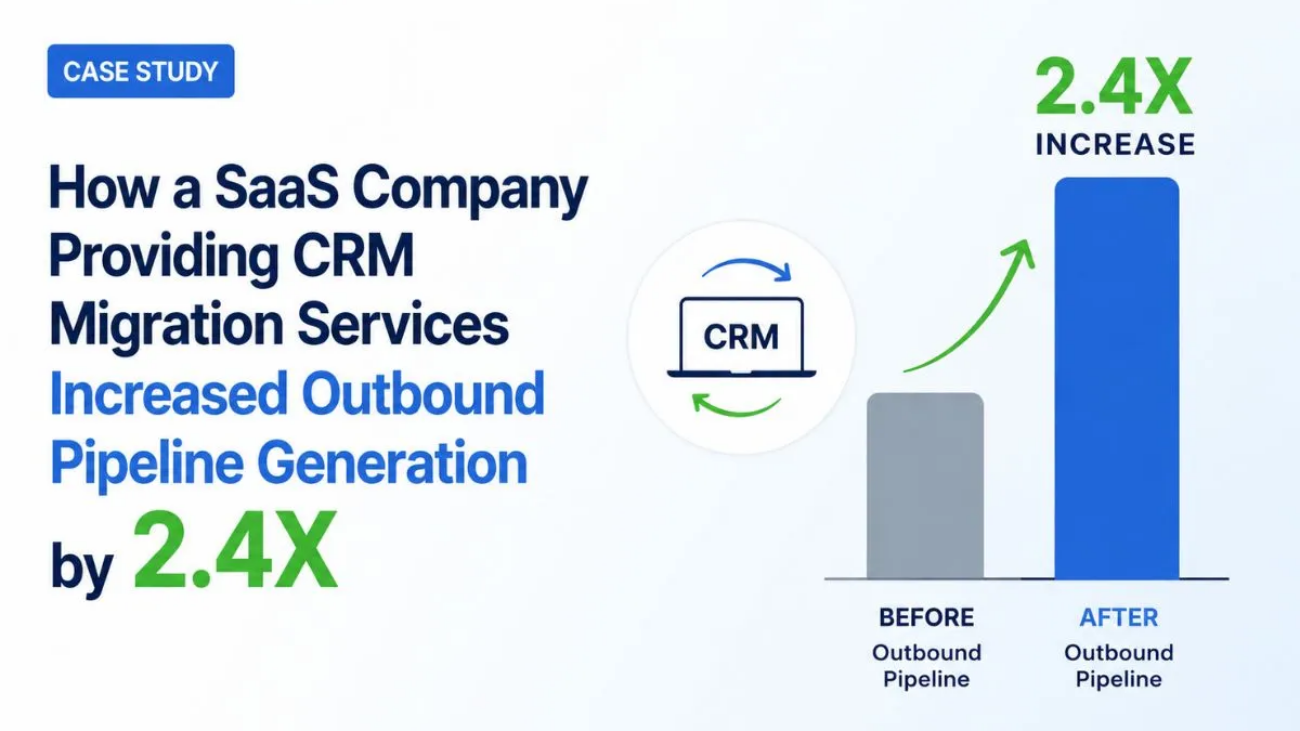
How a SaaS Company Providing CRM Migration Services Increased Outbound Pipeline Generation by 2.4X

How a SaaS Company Providing CRM Migration Services Increased Outbound Pipeline Generation by 2.4X

Client: Mid-Market SaaS Company

The Challenge

This software-as-a-service (SaaS) organization aids medium-sized and large-scale firms with the transition from older customer relationship management (CRM) systems to new ones. The most common endpoint after retirement from previous systems is the Salesforce CRM. 

They had a precise ideal customer profile (ICP). They developed their pitch very effectively, and they applied all of the correct sequences for targeting these organizations. However, the pipeline created by the outbound sales team was stagnant, with no momentum toward growth and new opportunities. 

The company’s director of revenue operations conducted a diagnostic and identified one primary variable that was impacting pipeline growth: data. Their large-scale, generic B2B database did give broad market coverage, but it did not give them the data depth needed to make the right assessments regarding their sales efforts. 

The database did not contain verifiable information that would have allowed them to determine which companies were actually using (and would want to use) the Salesforce CRM, who decided to migrate, or if any of the potential or existing accounts actually had a reason to migrate from their previous CRM system to the Salesforce CRM.

The results of limited data depth were numerous:

  • High bounce rates from email messages being sent to outdated or unverifiable contacts. 
  • Low response rates because their outreach material was not relevant to the person receiving it. 
  • Very low quality of leads, with only a couple of leads converting to sales opportunities. 
  • A considerable amount of the sales reps’ time is being consumed trying to do account research that the database was intended to handle. 
  • The sales team was not deficient in activity; they just did not have accurate and actionable information to base their activity upon.

The Solution

As part of the evaluation process of various data providers, the company chose to work with LogiChannel, where they were able to use our verified, refreshed  Salesforce customers list as a resource to find companies that use Salesforce to enhance their sales system as part of their outbound prospecting efforts.

The data contained for each company includes: 

  1. The vertical of the company
  2. The revenue of the company 
  3. The number of employees
  4. The geographical location of the company and 
  5. The signal that the company uses Salesforce

For each contact within the organization, the data contains: 

  1. The name of the decision maker
  2. The verified job title of the decision maker 
  3. The business email address
  4. The direct telephone number and
  5. The LinkedIn url

For a sales team that sells CRM migration services, this was not simply useful, but it provided a fundamentally different approach to the prospecting process.

The Execution

Using precision segmentation to target new business after conducting a thorough review of the Salesforce Customers List, LogiChannel was able to create a more precise target account universe using 3 filters: companies with 200 – 2000 employees who operate in financial services, professional services, or healthcare technology, and have decision makers such as VP of Sales Operations, CRM Administrators, Director of Revenue Operations, and CTOs. 

The result of these filters was 3,200 tightly defined accounts; this compared to over 15,000 loosely defined contacts before this exercise. Although there are fewer total accounts now, there is a much greater level of specificity.

With a more cleanly defined account list, LogiChannel was able to completely rewrite its outreach sequences. 

The previous messaging was product-focused and explained what they did and why CRM migration was important; the new messaging was context-focused and provided information about the potential pain points for the target based on their role and industry. 

For instance, when reaching out to a VP of Sales Operations within a financial services firm, they were able to discuss the restrictions associated with Salesforce integrations in regulated environments. 

Similarly, when reaching out to a CRM Administrator within a healthcare technology company, they were able to directly address the challenges to maintaining data integrity during platform transitions.

These weren’t just plain old personalization tokens. They were REAL conversations that were personalized due to having access to all that data (which allowed us to have authentic conversations). Our reply rates improved within the first two weeks.

Sales and Marketing Alignment

A less obvious but very significant impact on the data was what it did for cross-team alignment. Before LogiChannel, Marketing would run campaigns to build awareness for one audience and the Sales teams would have no idea that this same group was being given a different marketing message.

With the Salesforce Customers List as a common starting point, both Teams were focused around the exact same list of 3,200 Target Accounts. Marketing created LinkedIn Ad Campaigns and Content Syndication for 100% of the Target Accounts. Sales teams were able to see engagement signals before reaching out. 

The end result was Coordinated Multi-Channel Outbound motion. Every target received consistent messaging at the point they come into contact with the brand.

Data Refresh on a Regular Basis

The team has also pledged to replace their stale contacts, update company records & continuously validate their email addresses with a Data Refresh from LogiChannel approximately every 60 days. Data (B2B) decays very quickly. 

People change jobs. Job function or roles change. A list that isn’t regularly updated slowly loses accuracy every single week. Therefore, continually refreshing their lists ensures that the team is always working with current, deliverable information.

The Results

  • Outbound Pipeline Generated 2.4X increase vs. prior quarter.
  • Email Open Rate increased by +47%
  • Reply Rate increased by +34%
  • Sales-Qualified Leads increased by +41%
  • Email Bounce Rate decreased by -62%
  • Average Sales Cycle Length reduced by -18%

All metrics clearly displayed the benefits 90 days later. More than double the pipeline was generated by the team without any changes made to products or hiring additional employees. 

The 62% decrease in bounce rate had stopped the up-to-that-point negative impact on the sending domain’s reputation due to undeliverable addresses. And the shorter sales cycles showed how prospects would interact with sales organizations if they began to have relevant and contextual conversations from their first touchpoint.

“We did not change our product. We did not change our people. We changed what we knew about who we were speaking to; therefore, everything downstream improved.”- The Head of Revenue Operations

Increase Outbound Pipeline Generation by 2.4X With Our Salesforce Customers List

how-financial- software- companies-use- accountants- contact-databases- to-drive-growth

How Financial Software Companies Use Accountants Contact Databases to Drive Growth

Unlike a generic SaaS product, selling financial software is about the ultimate buyer’s specific type of person who makes a well-thought-out decision. Specifically, you need to sell these products to accounting professionals (accountants, certified public accountants (CPAs), financial directors, and CFOs). They all have minimal tolerance for anything irrelevant and high expectations of what they will expect from any financial software solutions they purchase.

For most financial software companies, this presents a unique set of obstacles. You know exactly who you want to sell to, and yet you have difficulty locating these individuals and/or connecting with them at the right time so that you can provide them with information that captures their interest; however, having access to an accountant’s contact list will make the process much easier to accomplish.

In this blog, we will outline how various financial software companies utilize accountant contact lists to drive ‘true,’ measurable growth opportunities through creating better prospect databases by running campaigns that convert.

What Is an Accountant's Contact Database

What Is An Accountant Database

An accountant’s directory is an accurate, organized collection of contact & company information for accounting professionals across a wide range of industries and firms. A typical accountant’s directory includes the following: full name and position title (CPA, Controller, CFO, Finance Manager, etc.); ); business email address (verified); direct telephone number; company name, size, and industry; geographic area; link to their LinkedIn profile; and firm type (public accounting, corporate finance, advisory, etc.).

For financial software companies, an accountant’s directory is more than just a list of names. It is a map of the entire addressable market that has been organized, segmented, and made ready to activate through your sales and marketing channels.

The difference between utilizing a generic business-to-business directory and utilizing a directory focused on accountants is akin to fishing with a wide net compared to fishing specifically in the right waters.

Why Financial Software Companies Need Specialized Data

Broad industry coverage is one of the selling points of nearly every B2B data provider in the market today. While this is a helpful feature for businesses with widespread ideal customer profiles (ICPs), it is ultimately not the right fit for many financial software providers seeking specific audiences within their ICPs.

Your financial solution serves a very narrow group of individuals with specific problems; therefore, accountants studying the use of tax automation won’t find any relevance in a logistics manager’s use of your product.

When your business uses generic databases when researching or targeting prospects, certain issues arise:

  1. Lack of relevant contacts — A generic prospecting list will contain a wide variety of titles/industries that will not have any need for your product. Wasting outreach resources on irrelevant contacts results in diminished effectiveness of your solution or, in effect, dilutes the overall performance of the campaign.
  2. Outdated data—Generic databases are often not updated on a regular basis, causing your outreach to bounce at an alarming rate, which ultimately leads to irreparable damage to your email sender reputation over time.
  1. Missing context—Without key information regarding firm size and specialty, geographic location, and technology usage, potential outreach messages cannot be personalized and,, assuch,h will not resonate with accounting professionals.

Having access to a dedicated accountant’s contact database addresses all three of the above problems from the outset.

Ways Financial Software Companies Use Accountants Contact Databases to Drive Growth

1. Building a Precisely Targeted Prospect List

In order for an outbound marketing campaign to be successful, a clearly defined prospect list is the foundation. For example, financial software companies will want to have a list of prospects that reflects the intricacies of the accounting profession, which means not just using job title filter(s). 

If a tax software company wants to develop a clear target audience, for example, they would most likely create different segments of their audience, such as independent CPAs and smaller public accounting firms (as opposed to large corporate finance departments). 

If a financial close automation platform is looking to build out its target audience, it will likely want to target Controllers and VPs of finance with companies/organizations that fall within the mid-market segment (those with 200 to 1,000 employees). 

If audit software companies want to segment their target audience, they will likely want to be targeting those in regulated industries where audit complexity is likely the highest (banking, healthcare, insurance). 

Additionally, having access to an accountants contact database, will allow for this level of audience segmentation to take place by allowing marketers to focus on developing a list of targeted individuals that is based on using relatively few contacts  (in this case, 5,000) who would be most likely to engage in your company’s outreach efforts as opposed to having a large number of contacts (50,000 or so) who would be less likely.

2. Running Personalized Email Campaigns That Actually Get Replies

Many accounting professionals receive cold emails daily, but they rarely read them. Most email inboxes are filled with generic, product-focused messaging that does not show an understanding of the recipient’s job duties, so a lot of these emails end up in the trash without even being opened.

However, some financial software companies cut through the noise of email junk and deliver value through well-thought-out, targeted outreach to specific departments/roles type across multiple companies. 

The best way to accomplish this would be to build a comprehensive accountant’s email list and build targeted messaging based on the receipt’s specific role/industry and the context in which they are working. For example, an email sent to a CPA working for a mid-size public accounting firm could acknowledge the increase in volume of work experienced due to tax season and how the financial software can reduce the time spent on manual bookkeeping during the first quarter. 

Similarly, an email sent to the Financial Controller of a manufacturer could outline the unique pain points (e.g., the amount of time required for closing the month-end book across multiple entities) that need to be addressed in order to streamline their month-end close process.

Email outreach to the above-mentioned people should not be accomplished through simply adding the first name token into a generic email template. Instead, the outreach should have been written as if it were solely for him/her and should have had a personal touch associated with it (like a personal email). 

Ultimately, when the recipient feels like the email was written directly for him/her, he/she will be more likely to open the email, respond to the email, and/or put him/herself into your pipeline as someone who is interested in learning more rather than just being a name on a list.

3. Powering Account-Based Marketing (ABM) Campaigns

Account-based marketing (ABM) has become one of the most effective strategies for marketing B2B software providers. ABM is the perfect fit for marketing financial software; the buyer universe is well defined; and the size of the deals warrant a high-touch approach.

With ABM, a focused list of target accounts are identified. Sales and marketing efforts then coordinate around each of these target accounts by delivering personalized messages via multiple channels simultaneously.

A contact database of accountants provides the foundation for running an ABM program. The contacts verified in the database will supply the marketing team with the necessary verified data to execute targeted LinkedIn campaigns, programmatic ads, and content syndication to the specific firms and professionals they want to reach. 

The sales team will receive context to ensure that outreach to prospects for follow-up occurs in a timely manner that feels contemporaneous to the marketing outreach.

When sales and marketing are both using the same verified contact data, and targeting the same target accounts, the effect on the pipeline can be cumulative. Prospective customers will see your brand frequently across multiple channels, the message will have the same tone in multiple ways, and the time it takes to move from awareness to having a conversation with you will be substantially shorter.

4. Accelerating Product-Led Growth with Targeted Trial Outreach

In order to increase the rate of initial product adoption many financial software companies employ a ‘freemium/free trial’ type model. The challenge for companies having trial users convert to paying customers can be dependent on who their trial users are.  

Using your accountants’ contact database can assist financial software firms to be more proactive in getting relevant extra accountants (based on your ideal customer profile) into your trial process/funnel by identifying candidates (accounting firms & finance departments) and then providing targeted trial invitations directly to those individuals based on their role (job title). This will help ensure that you are bringing a higher quality of user into your product on day one and providing users likely to receive real value from the product & use important components of the product are more likely to convert to a paying customer. In addition, this approach will give your customer success team a cleaner and better-defined account base to work with during the trial period.

5. Supporting Channel and Partnership Development

Often, financial software companies do not grow as a direct result of their own sales but rather through building strategic alliances with CPA firms and other organizations where there are opportunities to recommend each other’s services and products, as well as leveraging associations that have an established reputation within the industry. 

There is no shortage of ways that you can build partnerships; however, the most successful way is to utilize CPA databases to identify and create these partnerships.

A CPA database can be an asset when your business development team uses it to find CPA firms of a size, specialty, or geographic regions that provide significant potential as either referral or reseller partners; identify CPAs and financial advisors who have established credibility and authority within their accounting community, or established advocates, potentially as channel partners, who would be able to recommend your product with credibility and authority. 

This is one way that CPA databases are used and often undervalued in favor of targeted outreach to the markets served; however, partnership-based growth is one of the least expensive acquisition channels for financial software and utilizing a CPA database to identify the most suitable partners is the first step.

6. Retaining and Expanding Existing Accounts

As previously mentioned, growth isn’t simply about finding more customers to buy from you; it’s also critical to the overall picture of revenue generation for most software companies offering financial products through upselling and cross-selling and renewing contracts with your current customers.

An accountant’s contact list will aid both retention and the ability to expand your business with the customer in two primary ways. First, by providing the Customer Success and Account Management teams with an accurate, current list of contacts at each customer location, either due to a change in decision makers or new budget holders coming into play, they will be able to react quickly to the changes taking place.

Second, a contact list can also assist in identifying potential areas for expansion of existing customers based on firmographics. For example, if a customer has added employees, opened new locations, or expanded into different services, these changes can typically be identified using firmographics before the company even enters into discussions about renewing the contract. 

Additionally, if you have accurate data to support proactive management of your current customers, you will begin having discussions about expanding the relationship with them before your competitors have a chance.

What to Look for in an Accountants Contact Database

Not every database has the same quality as far as content and contact source, and the quality of the database used by a financial software vendor can impact the success of every program or campaign that it supports. 

Here are a few things to consider when evaluating databases used by financial software companies:

Verification and Accuracy – Ensure vendors have a multi-step verification process that includes automated validation, human review, and real-time email verification against known good email addresses. Work with vendors that have a minimum 90% deliverable rate.

Depth of segmentation – The ability to segment contacts based upon criteria such as job title, type of business, size of business, type of industry, location of business, and level of authority is important for financial software vendors whose ideal customer profile (ICP) is precisely defined.

Compliance – The database must be fully compliant with GDPR, CCPA, and CAN-SPAM. Data privacy is not an option – it protects you legally as well as protecting your brand in the eyes of the professionals you are hoping to contact.

Your Search for Data – One way to ensure that you select the correct B2B Data supplier is to choose from the providers who add fresh data regularly, preferably every quarter. Since many accounting professionals change jobs often, it is important to choose a vendor who continuously maintains and updates their databases.

Customisation and Support – Good Providers will support you as you have communication with them pre-purchase and in a post-implementation phase of the data activation process. Good Providers will go beyond just providing your team with a spreadsheet of data as they will engage in discussions with you about your ideal customer profile (ICP), assist you with creating targeted segments, and help you activate your newly acquired data successfully.

Conclusion

The financial software industry includes a specific buyer type with significant decision making and a highly competitive nature. Generic messages to widely dispersed groups do not have success rates.  However, most leaders in the Marketing and Sales functions of these organizations understand this already. 

What does have success are targeted communications. Knowing precisely who the best prospects are and sending messages to those prospects that demonstrate an understanding of their business. In addition, all campaigns being developed (outreach via email, ABM outreach, trial outreach, partner development) must have a basis in accurate, vetted, and appropriately segmented data. 

The Accountants Contact Database is what enables campaign development based on precision at a high scale. 

This is not a “silver bullet” or “magic wand” piece of information. The messaging must be appropriate. The product must provide value. The sales process must be of a high quality. However, where strong go-to-market motions are integrated with a sound data infrastructure, these companies will experience consistently greater amounts of Pipeline, improved Conversion Rates, and fewer days for a Sale to be completed. 

If your financial software business is ready to make the transition from broad-based communications to data driven precision and growth based on intelligence, your first step should be simple: establish your foundational data prior to communicating to prospects.

Frequently Asked Questions

An Accountants Contact Database is a collection of verified contact information for accounting professionals such as CPAs, CFOs, Controllers, Finance Managers, and accounting firms. It typically includes business emails, phone numbers, company details, job titles, industry information, and geographic data.

A verified accountants database allows businesses to create personalized email campaigns based on job role, company size, industry, and business challenges. This increases open rates, response rates, and overall campaign performance.

Yes. Accountant contact databases help businesses generate qualified leads by targeting finance professionals who are actively involved in purchasing or evaluating financial software solutions.

LogiChannel’s accountants contact database is updated regularly to maintain high data accuracy and deliverability. Our team continuously verifies and refreshes contact information, including business emails, phone numbers, job titles, and company details, to ensure businesses can connect with the right accounting professionals at the right time. Regular updates help reduce bounce rates, improve campaign performance, and support better lead generation results.

Industries such as financial software, tax automation, audit solutions, accounting services, fintech, ERP software, and financial consulting can benefit significantly from accountants contact databases.

sap-successfactors-users-list

SAP SuccessFactors Users List: A Smarter Way to Reach HR Decision-Makers

Introduction

You’ve probably experienced frustration when attempting to sell an HR solution before. You write a compelling email; you create a massive list of prospects; you launch a campaign only to receive no response. The HR industry is one of the most saturated industries in B2B marketing, and it continues to get more competitive every year to find new customers.

The root cause of this issue isn’t necessarily the solution itself, but rather your target. A majority of marketers still use broad industry lists or simply search for job titles to find the “right” person at the “right” time. While this tactic may work at times, it leaves a huge amount of potential business untapped. What if there was a way to skip the guesswork altogether and go directly to the people who have experience using enterprise HR solutions? These are the people who are interested in improving their HR processes and systems.

This is the reason why companies buy SAP SuccessFactors Users Lists. It provides a targeted, data-driven approach to reach HR decision-makers who do not merely have an affinity for your space, but rather actively have it in their daily work life.

A Quick Understanding on SAP SuccessFactors

Companies using SAP SuccessFactors are the largest and mid-sized organizations that are seeking a cloud-based solution to support their HR operations. Through its Employee Central module, customers can manage all elements of HR, including the following: the hiring process, developing talent, and managing employee learning. 

Regardless of whether an organization is managing a workforce of 250 or 100,000 people, SAP SuccessFactors provides HR leaders with the data visibility, compliance coverage, and process structure to manage their modern workforce. Purchasing the platform demonstrates a company’s commitment to investing in long-term HR technology as well as providing insight into the company’s identity as a customer.

Who Actually Uses It?

SAP SuccessFactors is used by large corporations but would not be classified as an enterprise-only solution. The system is also being deployed by many rapidly growing medium-sized companies, global companies, and industries where the HR strategy plays a significant part in their overall business strategy (e.g., IT and software, healthcare, manufacturing, banking and financial services) all have a high level of dependence on SAP SuccessFactors to manage their workforce because of the complexity of managing their workforce, compliance, and the relationship of their workforce with their business’s success.

The types of people you will want to reach out to at these types of companies include HR Directors, Chief Human Resource Officers, Talent Acquisition Leaders, and HR Technology Managers. They are not just screening your inquiries but are active buyers with a budget allocation and specific objectives to improve how their organization manages their employees.

What exactly is an SAP SuccessFactors Users List?

In short, it is a database that is made of businesses that utilize SAP SuccessFactors and their decision-makers’ information. A quality list includes the following data: business name, industry, size, revenue; as well as the decision-makers’ first and last name, title, email address and in some instances telephone number. 

The distinction between this database and a generic B2B mailing list is the underlying technology signal to which they are all committed; i.e., they all have made a decision to use enterprise HR software which enables you to understand their priorities, how comfortable they feel with their budget, and how open they are to HR-related discussions than any of the other data points you have might have. 

Consequently, you are not cold-calling someone who has not previously had an interest in HR technology; instead, you are calling someone who has evaluated HR technology, has made a decision to utilize it, and has signed a contract with a vendor. Therefore, this provides you with a very different context for making your outreach.

The Real Benefits of The SAP SuccessFactors Users List

Using a verified list of SAP SuccessFactors users provides you with many benefits. You improve your targeted marketing because you identify and connect with the right HR professionals immediately instead of sifting through irrelevant information. You enhance your leads’ quality since they have all been developed based on context rather than chance. 

You accelerate your sales pitches since you are dealing with people who already understand your language. You increase the return on investment from your campaigns, as more personalized, relevant information sent to a warmer audience will perform at a higher level.

The most important benefit of understanding a prospect’s technology stack allows you to perform large-scale personalization. You can provide further clarification on their platform, discuss potential integrations, and use your solution in conjunction with what the prospect currently utilizes and trusts. 

Making the Most of the List

SAP SuccessFactors is a great tool to help you get in touch with your target audience, but having the right customer list is half the struggle. The combination of using email campaigns to target their current HR platform provides a higher engagement rate than just doing an email blast or sending out mass spam emails. 

Connecting with HR leaders on LinkedIn is a perfect way to reach out directly and run targeted sponsored posts that would be relevant to them. If you are looking to target a specific account with a full Account-Based Marketing (ABM) strategy, the most successful way to do this is to coordinate your efforts between email marketing, LinkedIn, a strong piece of content, and a direct salesperson for those accounts.

When developing content for your target audience in HR, show them examples of the successful ways in which companies similar to theirs solved similar issues. By showing your audience, credibility will be established quickly.

You accelerate your sales pitches since you are dealing with people who already understand your language. You increase the return on investment from your campaigns as more personalized, relevant information sent to a warmer audience will perform at a higher level.

The most important benefit of understanding a prospect’s technology stack allows you to perform large-scale personalization. You can provide further clarification on their platform, discuss potential integrations, and use your solution in conjunction with what the prospect currently utilizes and trusts. 

What Separates a Good List from a Bad One?

The quality of data from one supplier to the next may differ significantly. If you want to evaluate a list of SAP SuccessFactors users, look for suppliers who refresh their databases on a regular basis; provide GDPR-compliant records; and can be segmented by various attributes such as industry, geography, company size, or job function. 

Validated contact information is extremely important as an email address or title which has gone “dark” (bounced back) is an inefficient use of your team’s time as well as making you appear less credible to your sender’s reputation as a sender.

Lastly, you should consider the ability to customize your list. The best data suppliers will offer to work with you in developing a list targeted to meet your specific needs as opposed to providing you with a generic export file.

An Honest Look at the Challenges

Every data-driven marketing strategy includes multiple points of friction within it, most commonly due to outdated records. Outdated records generally cause the greatest frustration in this industry due to the constant changes of roles within the workspace. Low engagement can occur from messaging turning repetitive and sounding too much like a sale. Also, compliance can become an issue when running campaigns targeting contacts or possible contacts in Europe or other regulated areas.

For most of these points of friction, there is a simple fix. You should partner with a reliable vendor, continually keep your records current, use different channels for each of your communications, and always focus on adding value to your audience without coming on too strong as a salesperson. Personalization is more than just “nice to have”; it is the key differentiation between campaigns that generate replies or are ignored.

Real World Cases

For example, a SaaS firm offering workforce analytics that originally planned to contact general HR was able to run a targeted campaign aimed exclusively at SAP SuccessFactors users. They put the product into context to build a conversation around what the product would allow them to do with their current HR data, making it easier for their target audience to see the value in the product. 

Also, consider an example of a staffing agency trying to grow its client list by reaching out to HR leaders at companies already using workforce management systems. This strategy allows the agency to contact organizations already thinking about talent management rather than trying to move those not currently engaged in that thought process. 

This could be done in the same way for HR technology vendors, implementation consultants, and training providers. Not only does the list provide the needed contacts, but it also provides context for those contacts so that outreach efforts can be successful.

Conclusion:

Broad-based marketing for HR typically costs a lot of money and it is getting less effective than it used to be. The SAP SuccessFactors Users List not only provides you with a large list of contacts, but it also provides you with an audience of HR decision-makers who have been through the process and have expressed their interest in your products or services.

If your products or services fit into the HR technology space, then you should consider starting with a sales pitch.

Start Reaching Verified HR Decision-makers who are willing to hear you

top-10-global-companies-using- serviceNow

Top 10 Global Companies Using ServiceNow and How It Transforms Their Business

Introduction

Companies are now focused on how quickly they can implement automation rather than deciding if they should. Workflows that get stuck, departments that are disconnected from one another, and IT functions that only react to events are no longer seen as market disadvantages; organizations are able to ignore inherent vulnerabilities in their current state due to the speed and accuracy with which they are competing in their respective industries.

ServiceNow has become the go-to solution for large organizations trying to deal with this new reality. With over 8,100 clients across 85 countries, ServiceNow is found in 85% of the Fortune 500 and has created the infrastructure necessary to allow some of the largest and most intricate organizations in the world to work smoothly together. 

ServiceNow is a key factor in allowing companies of all sizes with large transaction volumes to centralize their workflows, automate repetitive tasks, and access artificial intelligence-enhanced insights.

So, what does ServiceNow look like in real life? What are companies that have used the platform doing with it and what do they get in return? In this post, we will provide examples of ServiceNow implementations in the marketplace today and why it is being so widely adopted.

What Makes ServiceNow So Powerful?

If you want to understand why ServiceNow has so much success with large, complex enterprises that are always struggling with operational sprawl and there are plenty of those types of businesses then here are some areas where ServiceNow has excelled: 

Workflow Automation at Scale: ServiceNow replaces traditional email chains, spreadsheets, and manual handoffs by providing structured, automated workflows for all the tasks you previously needed to go through several steps to accomplish. You can configure a series of tasks as an end-to-end process with an owner, SLA, and escalation.

ITSM and ITOM on a Single Platform: IT Service Management (ITSM) and IT Operations Management (ITOM) on the same platform allow for tighter integration between incident detection and resolution because users do not need to switch tools or lose context.

AI-Powered Decision Support: ServiceNow leverages AI in operations to provide operations teams with predictive insights, intelligent routing, and automated categorization through its Now Intelligence suite. This dramatically decreases the cognitive burden on human analysts while substantially reducing time to resolution.

Cross-Department Integration: One of ServiceNow’s strengths is the ability to effectively cross departmental boundaries. Departments such as HR, Finance, Legal, Procurement, and Facilities can utilize the same platform for delivering service, which reduces any friction associated with handing off services from one department to another.

Enterprise Scalability: ServiceNow has been designed to handle complex enterprises. Examples include multi-site deployments, global workforce management, heavily regulated industries and a large volume of transactions. In these examples the platform continues to deliver services at all times without making architectural compromises.

Schedule a 15-minute strategy call with Jack Nichols

Top 10 Global Companies Using ServiceNow

These top 10 leaders are showing how ServiceNow’s value is being realized across industries and geographies as they leverage the platform to transform everything from IT and HR to customer service.

1. Vodafone:

vodafone

Industry: Telecommunications

Challenge: Vodafone has operations in over 20 countries and provides telecommunications services to hundreds of millions. The company had built up its IT infrastructure over many decades from both acquisition and organic growth and, over time, had created a patchwork of legacy systems that complicated change management and made it difficult to resolve service outages.

Solution: Vodafone deployed ServiceNow’s IT operations management capabilities to provide visibility throughout their entire infrastructure in real time. By configuring event management and automating impact analysis, when an issue on the network arose, the proper teams were alerted with the proper context rather than being bombarded with irrelevant information.

Business Impact: As a direct result of their ServiceNow implementation, Vodafone has greatly reduced the volume of major incidents. The average time to resolve incidents has decreased, and the network operation center staff now have a greater degree of situational awareness than ever before at this level of operation. Proactive identification of issues before impacting customers is now an achievable operational capability as opposed to being a goal.

Coca-Cola used ServiceNow to harmonize and simplify its IT Service Management (ITSM) practices worldwide to offer a uniform and efficient model of service. The transformation was dramatic. Coca-Cola cut time to incident resolution by 50% along with achieving greater visibility into its IT infrastructure.

By using automated key processes, the business reduced disruptions and improved responsiveness and built a more responsive digital foundation.

2. Deloitte:

Deloitte

Industry: Professional Services / Consulting

Challenge: Deloitte has complexity associated with their size. It is difficult to manage HR processes, deliver IT services and enable collaboration across hundreds of thousands of employees within a global organization, particularly when different regions and practices within the business have historically operated with a high degree of independence from one another.

Solution: To address this challenge, Deloitte has used ServiceNow’s HR Service Delivery module to create a central point of access for all HR processes, such as adding or terminating employees, managing employee benefits and responding to employee inquiries. Deloitte has also implemented ServiceNow’s IT Service Management capabilities to support its internal IT organization and has integrated ServiceNow into its broader enterprise technology architecture.

Business Impact: As a result, Deloitte’s HR function has improved its ability to quickly and consistently process HR transactions. In addition, because employees can have self-service access to most of the HR services they need, the number of routine questions sent to the HR department is greatly reduced.

The integration of HR and IT processes has eliminated delays that existed before when an employee had to wait for IT access while their HR process was still being processed.

3. KPMG

KPMG

Industry: Financial Services / Audit & Advisory

Challenge: KPMG’s massive internal organization had thousands of employees working in over 140 countries. Departments such as HR, finance, and IT worked as separate units, providing no unified way for employees to access services or resources. As a result, employees experienced long wait times before being able to complete simple service requests.

Solution: A single portal was created using the ServiceNow employee experience platform. This allowed employees to access all service functions (including IT, HR, finance, legal, and facilities) from one online location and one set of tracking and escalation rules.

Business Impact: Employee satisfaction with internal service improved greatly. In addition, there was an overall reduction in operational costs associated with managing requests across many different systems. For a firm where internal efficiency supports the quality of client delivery, this was a significant competitive advantage.

4. Siemens:

4. University Hospital Zurich

Industry: Professional Services / Consulting

Challenge: Siemens is an enormous global industrial company with diverse sectors such as energy, transportation, healthcare, and automation. Coordinating IT Service Management for many global business divisions was challenging due to  each using different tools, processes, and service standards. 

Solution: Siemens decided to unify service management for all of its global businesses by implementing ServiceNow as the enterprise ITSM system, and using its service catalog and workflow capabilities to standardize how IT Services are delivered to the individual businesses. In addition, Siemens integrated ServiceNow to its existing enterprise applications, including SAP, therefore providing a seamless flow of data from one system to another and achieving enterprise wide consistency of data. 

Business Impact: Siemens has significantly reduced the costs associated with operating its IT organization as it has eliminated redundant tools and consolidated onto one platform. SAP’s use of ServiceNow has also reduced many of the issues that business segments experience as they work together, and by standardizing the service catalog, all Siemens employees receive the same quality of service regardless of which business unit or geographical location they belong to.

5. DXC Technology :

dxc-technologies

Industry: IT Services

Challenge: DXC Technology manages thousands of enterprise clients’ IT services around the world, offering them excellent service management via DXC’s internal use of service management tools. The internal service management workflows were disjointed due to the legacy systems still in place; therefore, the way they do business and run their own operations were causing a direct impact to the quality of the services provided to the client.

Solution: DXC uses ServiceNow as the foundation for both their internal and external managed services delivery. Internally, they’re using ServiceNow to create standardized employee workflows to improve the delivery of IT services to end-users. Externally, they’ve developed client-facing service portals and automated reporting dashboards on the ServiceNow platform.

Business Impact: DXC Technology has reported that they experienced a significant reduction in internal IT cost since migrating to the ServiceNow platform. But more importantly, they’ve been able to increase their overall speed of deployment of managed services to their clients with improved SLA compliance and reduced timeframes to onboard new clients.

6. HSBC:

HSBC

Industry: Professional Services / Consulting

Challenge: Operating in 64 countries and territories means that HSBC has one of the world’s most complicated regulatory and compliance environments. In addition, they must achieve rigorous security and audit standards in the deliverance of their IT services, while also providing fast and reliable solutions to the tens of thousands of internal users and the technology necessary to support global banking operations.

Solution: ServiceNow IT Service Management (ITSM) and Security Operations capabilities were used by HSBC to provide IT service delivery management and increase security posture at the same time. Security incident response workflows were automated to ensure that all potential threats were properly escalated, investigated, and resolved through an auditable, documented process for regulatory compliance.

Business Impact: Security operations teams at HSBC now have significantly improved visibility and response capabilities. Audit trails are cleaner and more comprehensive with less overhead for compliance. Security incident response times are reduced due to applying automation to routine security requirements, allowing analysts to spend time on legitimate threats versus administrative processing.

The transformation enabled centralized control of IT processes and automated reporting against compliance. This left the operations more responsive and audit-ready.

7. Accenture:

Accenture

Industry: Professional Services / Consulting

Challenge: With more than 700,000 employees in over 120 countries, Accenture was confronted with a substantial challenge concerning the delivery of IT services. Dealing with internal IT requests was inconsistent, based on geography, and determined by the person that was tasked with resolving the request since there was no standardization among different geographical areas to govern how each region managed IT service requests; therefore, service quality varied from region to region.

Solution: In response, Accenture implemented ServiceNow’s ITSM Platform as their global standard to manage the delivery of IT services to their internal customers with all major business units and geographical locations interacting through ServiceNow. 

By leveraging ServiceNow’s self-service portal, Accenture was able to deflect routine requests from being formally submitted as tickets and also implement automated workflows for many common processes associated with IT service requests such as onboarding, software provisioning, and hardware requests.

Business Impact: Accenture has significantly reduced the time it takes to resolve tickets and has made considerable improvements in first contact resolution rates. The self-service portal has also greatly reduced the number of tickets being submitted to an IT service agent for resolution and enabled them to devote their time to resolving higher levels of complexity. The consistency of service delivery has improved dramatically across the entire global reach of their company.

8. Unilever:

Unilever

Industry: Consumer Goods / FMCG

Challenge: Unilever operates as a multichannel business across 190 countries, supplying products around the world through a very complex end-to-end supply chain and IT and operations functions  that also support multiple businesses at once including manufacturing, logistics, marketing, and retail in a variety of environments simultaneously.

Solution: To solve the above, Unilever used ServiceNow to streamline IT Service delivery globally with an emphasis on automating routine workflows and improving employee experience for Unilever’s large global population. ServiceNow also provided Unilever with reporting and analytics capabilities, enabling Unilever to gain better visibility into service performance across business units, regions, and countries.

Business Impact: There has been a measurable reduction in the amount of time it takes to resolve an IT service request at Unilever, with significant increases in self-service adoption rates for employees. As a result, the number of routine service requests that were resolved without human intervention has increased, freeing up IT resources to work on higher-value activities.

The company turned to ServiceNow for the improvement of HR services provision and in giving employees a single self-service portal.

Through faster case resolution and faster resolution time, Unilever significantly enhanced staff satisfaction. ServiceNow enabled HR staff to be free to focus on strategic work while being able to deliver employee support consistently.

9. AT&T :

at&t

Industry: Telecommunications / Technology

Challenge: AT&T has an extensive telecommunications network throughout the United States and is also an enterprise technology leader. Due to the scale of their operations and the fact that their network services are available 24 hours per day, 7 days per week, any inefficiencies related to IT operations management at AT&T have a direct correlation to customer satisfaction and revenue loss.

Solution: To resolve the previous problem, AT&T deploys the capabilities provided by ServiceNow’s ITOM (Information Technology Operations Management) solutions. With the deployment of these services, AT&T is able to monitor the entire network and IT infrastructure in real time. The event management functionality of ServiceNow has allowed AT&T to correlate alerts through all of its facilities, allowing IT staff to receive less redundant alerts so that they can concentrate and provide a response to high-priority issues rather than low-priority alerts.

Business Impact: As a result of deploying ServiceNow’s ITOM solutions, AT&T has seen an overall reduction in alert noise levels, with automation of correlation and filtering having eliminated the majority of alerts that previously required staff time to review. This allowed AT&T’s IT staff to respond to legitimate incidents in a timelier manner and reduced the level of fatigue that has been experienced by IT staff due to high volumes of alerts.

10. Walmart:

walmart

Industry: Retail / E-Commerce

Challenge: Walmart is the biggest retailer in the world by revenue. The company has more than 10,500 locations across 19 countries, along with a rapidly growing e-commerce business. Managing such a large and broad technology operation requires an IT service management solution that can support huge volumes of transactions and keep track of these transactions at all times, regardless of whether they are happening in retail stores, distribution centers, corporate offices or on digital platforms.

Solution: To improve IT service delivery and provide consistency of service for store-based technology staff, Walmart implemented ServiceNow to deploy a global IT service management solution. IT disruptions are particularly damaging to retail operations; therefore establishing fast and structured incident response processes was crucial, given the significant cost incurred by losing the functionality of a point of sale system during high customer traffic.

Business  Impact: As a result of implementing ServiceNow to automate and connect all staff engaged in providing technology services to Walmart’s global operations, Walmart now resolves store technology incidents more quickly than ever before, thereby minimizing the operational impact that IT disruptions have on revenues. With standardised processes put in place for routing incidents to the appropriate teams with the right information, there are no longer unnecessary delays identifying a cause for an outage. 

ServiceNow was introduced to automate ticketing and support operations. The change led to better issue resolution times, better tracking, and scalable IT operations to accommodate future growth. ServiceNow enabled NVIDIA to preserve internal efficiency while continuing along its path as a leading innovator in the industry.

Key Takeaways Across These Companies

There are several common themes that emerge across each of these ten case studies that assist in helping organizations understand why ServiceNow is so prevalent and what differentiates organizations that are able to get maximum value from ServiceNow vs. those that cannot. 

  • First, organizations that were successful in deploying ServiceNow had high volumes of repetitive processes. For example, an organization that can save five minutes per incident ticket in ServiceNow may help save an organization $1 million in productivity gains annually when they process 1000 incident tickets daily. 
  • Secondly, organizations that have a centralized approach to service delivery reduce the friction that exists at many of the handoff points between department/process/system and teams. In most cases, the problems organizations encountered when deploying ServiceNow were not because each individual process was broken, but because of the transitions between business processes, IT systems and teams. 
  • Using ServiceNow, organizations are able to work across departments and create unified, seamless workflows that address and eliminate the delays and loss of information that occur at the various handoff points between different teams, departments, and organizations.
  • The adoption of self-service solutions is the powerful force multiplier. In many cases, the real efficiency gains were not due to faster agent resolutions but users being able to resolve their own issues by using properly designed self-service portals. This is as much about design and change management as it is about technology.
  • Before true improvements can be made, there must be access to sufficient data or information that gives you the ability to see yourself in order to know what you need to work on. Companies such as Vodafone and AT&T had been transformed by gaining operational visibility to spot trends they had not been able to identify or execute upon in the past.

Why Marketers Target ServiceNow Users

Organizations using ServiceNow demonstrate many of the characteristics that make them attractive as an audience segment for those who sell consulting services or professional services to enterprise customers. 

Examples include having adequate budgets for investing in enterprise software, executive buy-in to digital transformation initiatives, and a technical team that can manage a complex platform and continually find ways to augment the value associated with their current technology investments. 

Therefore, if your organization sells technology, consulting, integration services, or professional services to enterprise customers, the organizations that have implemented ServiceNow are both digitally mature, high-budget enterprises interested in making further technology investments and therefore already continuing to proceed with their digital transformations, as opposed to determining whether or not to move forward with transforming their respective businesses. 

However, when communicating with an organization that has implemented ServiceNow, the conversation should focus on demonstrating how your product or service fits into their transformation efforts.

Conclusion:

The fact that ServiceNow is present in ten of the world’s top companies is no accident; it is part of a cohesive company-wide strategy to streamline multiple disparate businesses, automate large-scale processes, and create the operational visibility required to manage scaled complexity.

The companies profiled in this article, starting from Walmart’s retail-tech ops to HSBC’s compliance-rich banking infrastructure, represent the broadest possible breadth of instances where ServiceNow is creating value. There is no one industry or problem that connects all these companies; rather, the connection amongst all of these companies is a strategic imperative. To do more with the same resources, more quickly, in a more consistent and auditable manner.

For many businesses interested in understanding where enterprise-level technology expenditures are being concentrated, whether as part of a sales strategy, competitive intelligence efforts, or technology platform evaluation, the ServiceNow customer base is one of the most well-defined populations of digitally seasoned, high-investment organizations in the world.

In addition, the advancements achieved through transformation via ServiceNow provide a valuable benchmark. They demonstrate what is achievable when implementing strategic workflow automation with executive-level commitment and a clear vision of operational outcomes desired by the organization.

Acquire verified contacts of Companies Using ServiceNow for your next campaign

FAQs of ServiceNow Customers List

The main purpose of ServiceNow is to assist  organizations in attaining improved workflow automation and service delivery. The following describe the major applications offered by  ServiceNow: IT Service Management; IT Operations Management; HR Service Delivery; Customer Service Management; and Security Operations.

Industries that use ServiceNow include financial services, telecommunications, professional services, manufacturing, retail, and government sectors.

Enterprises  prefer ServiceNow for its scalability, pre-built workflows, integration ecosystem, and its ability to serve multiple departments from a single platform. 

List of ServiceNow biggest customers: 

  • Walmart
  • Microsoft
  • Amazon 
  • Apple
  • Nvidia
  • U.S. Department of Defense
  • JPMorgan Chase
  • BT Group
  • UnitedHealth Group 

For companies looking to target ServiceNow users generally use intent data, technographic information and valid contact lists to find decision makers at organizations who are using the platform.

Generally, ServiceNow targets large companies and will be considered too costly for small/midsized companies. When evaluating IT service management (ITSM) products used in mid-market businesses (less than 500 employees) , find alternatives for serviceNow. 

Yes, absolutely! Our ServiceNow customers list strictly follows all major data privacy rules, including GDPR and CCPA. We collect all data in a legal and ethical way, making sure every contact is permission-based

Certainly! You can easily request samples by placing a request form on our website. Our team will promptly reach out to you to understand your specific requirements and share the samples in your preferred format.

Yes. Our data is compatible with CRM, and it can be easily imported on all major platforms such as Salesforce, Oracle, Freshworks CRM, Zoho, MS dynamics and more. Start converting the leads without any technical hassle.

Kindly share your B2B requirements by either calling us at 1 703- 949 4028 or sending an email to info@logichannel.com. Our executives will get in touch with you immediately.

Benefits of ServiceNow Customers and Users email list:
• High quality leads
• Maximized ROI
• Opt in verified contacts.
• Improve conversion rate.
• Highly affordable
• Preferred choice of file delivery formats

We value your time and patience. Your order will be processed within 2 business days after receiving your confirmation. (Including our terms and conditions).

Global Tech Companies Transforming the Industry

Top 10 Global Tech Companies Transforming the Industry

How Technology Is Redefining the Way Industries Operate

Technological disruption is occurring at a faster rate than ever before. Technology has now transitioned from being simply a supportive function to becoming the core value proposition for competitive advantage  with technology encompassing everything from Artificial Intelligence, cloud-based infrastructure, quantum computing to edge networks. Accordingly, it is essential that businesses in all industries have access to and engage with the right “technology ecosystem” to remain competitive, flexible, and ready to grow.

This major technological disruption is being primarily driven by leading technology companies that have dedicated billions of dollars in R&D, have established global benchmarks, and have developed platforms upon which entire industries depend. Understanding these leading technology companies, their strategies, and the value they bring to their respective industries is crucial for B2B companies seeking smart partnerships,  procurement decisions, and long-term intelligence for strategic planning.

What Sets a Tech Company Apart as a Global Leader

Not every large tech company qualifies as a true industry transformer. The distinction lies in a specific combination of capabilities and influence.

R&D Investments and Innovations

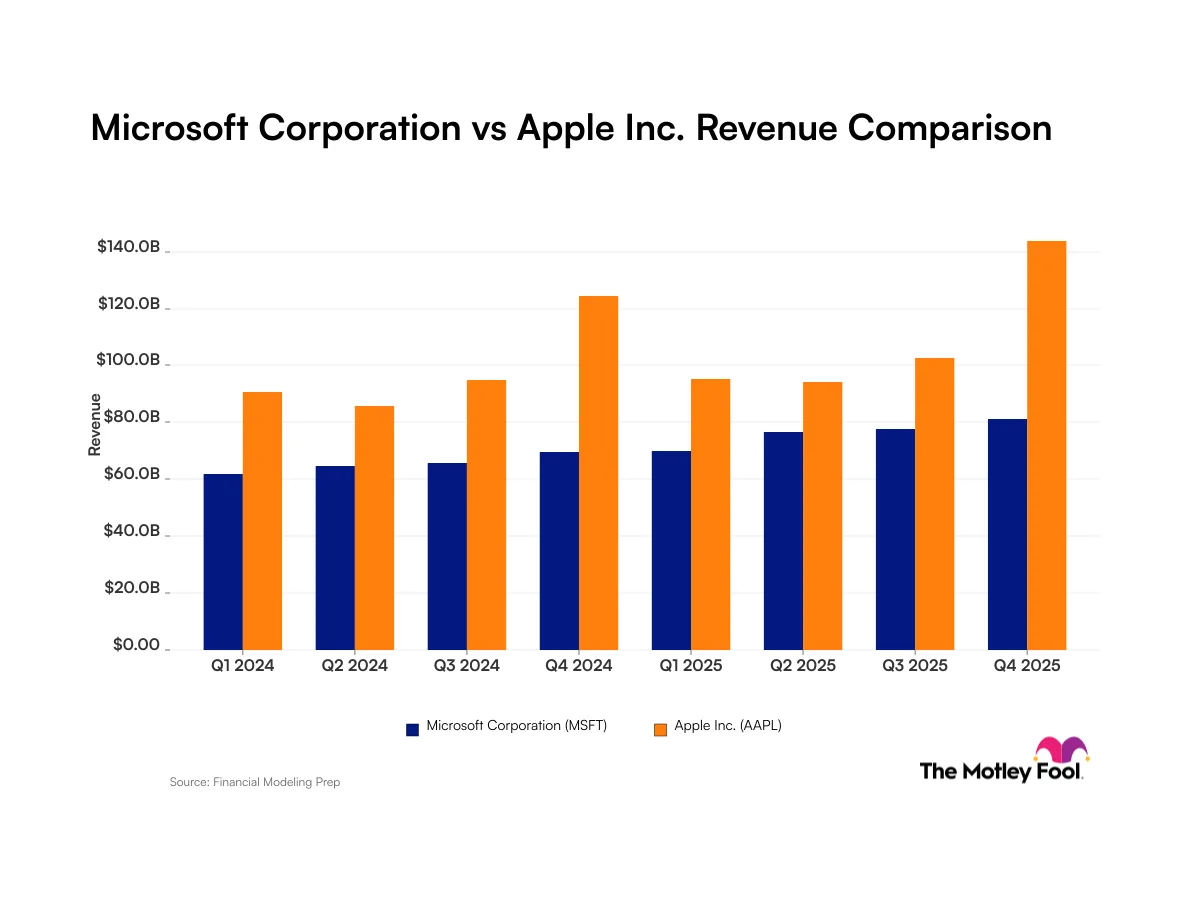
Microsoft and Apple consistently reinvest huge portions of their surplus revenues in research and development. They are creating a pipeline of advancements that lead them to stay ahead of the demands in the marketplace, rather than merely being reactive.

microsoft and apple revenue comparision

Market Capitalization and Global Scale

The financial capacity needed to compete will indicate the level of trust, stability, and capacity to function internationally. Companies with a multi-trillion dollar market capitalization can attract workers, grow to new places or withstand downturns.

Product Ecosystem and Strategic Influence

When you experience the top tech companies in the world, you’ll discover that they do not just sell products, but rather create ecosystems or interdependent systems. Platforms, APIs, and developer environments become the infrastructure upon which others build, thereby creating profound interdependence.

The Enterprise Customer Base and Adoption Rate

The widespread adoption of a product by enterprise customers is clear evidence of the company’s validity in practice. The adoption of operations strictly based on a tech providers stack by Fortune 500 companies clearly demonstrates a return on measured returns at scale of the solutions provided by the individual company.

The Top 10 Global Tech Companies Transforming the Industry

The following is a list of the top ten companies at the forefront of worldwide technological transformation.

1. Microsoft

Microsoft has transitioned from a software-only company to a leading technology provider in both B2B and B2C spaces. With Azure as its enterprise cloud solution and through its extensive use of artificial intelligence with Microsoft Copilot across its full suite of productivity tools. Microsoft is positioned to make massive inroads toward digital transformation for large and small businesses alike. Additionally, Microsoft’s acquisition strategy and contribution to open-source projects further validate the company’s dominance as an important foundational partner in B2B technology.

2. Apple

While Apple has built its reputation through consumer computing hardware, it is also emerging as a significant player in the B2B marketplace. With a developer ecosystem built on privacy and reliability, Apple is establishing a solid presence in providing enterprise mobility solutions across multiple industries, particularly healthcare and financial services. In addition to these advancements, Apple’s custom silicon processor development will set new standards for performance across all industries.

3. Alphabet (Google)

As the leading provider of global data analytics, Alphabet is continuing to gain momentum in the enterprise by capturing significant market share with Google Cloud and by developing cutting-edge applied AI with DeepMind. B2B decision-makers rely heavily on Google’s advertising technology, Google Analytics, and Google Workspace products in their day-to-day operations across diverse industries.

4. Amazon (AWS)

Amazon Web Services continues to dominate the global cloud market as a premier provider of infrastructure-as-a-service (IaaS) for start-ups through government organizations alike. As the core of IT strategies for companies in industries such as manufacturing, retail, and healthcare, Amazon’s breadth of services which include computing, storage, machine learning, and IoT  provide the backbone for enterprises today. In addition to changing how businesses operate through its logistics innovations, Amazon is revolutionizing the supply chain model for businesses in B2B operations.

5. NVIDIA

NVIDIA has transformed from just a graphics processing unit (GPU) manufacturer into one of the key enablers of the AI era with its cutting-edge GPUs staking claim to the majority of worldwide AI training done with large language models. Its GPUs will play an essential role in any organization building and deploying AI solutions, NVIDIA’s software ecosystem (specifically CUDA) has become the standard for AI development pipeline.

6. Meta Platforms

Meta is strategically pivoting to enterprise communication and immersive technologies to be positioned as an influential player in the future of work. The long-term implications of Meta’s investments in the metaverse and AI-powered content supply chains will provide new opportunities for B2B marketers when developing, collaborating, or engaging with customers.

7. Samsung Electronics

Samsung operates in both the consumer technology and industrial manufacturing markets. Its semiconductor division is essential for global supply chains while its enterprise solutions – such as displays, networks, and smart devices are used by companies across 74+ countries. Samsung’s involvement with the deployment of the 5G infrastructure is also noteworthy because many industries are currently undergoing a transformation through connectivity.

8. Salesforce

Salesforce has changed how businesses manage customer relationships when scaling. Its CRM solutions, with the addition of Einstein AI, allow large organizations’ teams to set up automated workflows, personalize their outreach to customers, and gain insights from their customers’ interactions with them. Salesforce typically serves as the operational backbone of B2B organizations’ sales and marketing functions.

9. IBM

With the acquisition of Red Hat, IBM’s shift to hybrid cloud serves as a foundation for its renewed relevance in the enterprise market. The company’s strong emphasis toward helping organizations in regulated industries, along with its consulting practice, makes IBM an excellent transformation partner for organizations that are managing complex digital migrations.

10. Tata Consultancy Services (TCS)

TCS, a major provider of information technology (IT) services across the globe, epitomises the internationalisation of a service-based technology delivery framework. TCS provides digital transformation, cloud migration and enterprise application management at a global level. With the increasing investment into automation and artificial intelligence technologies, TCS will enable companies to upgrade their business processes in a timely and cost-effective manner. TCS works with companies in over 50 countries to do this.

Key Trends Accelerating These Companies' Growth

Leaders in B2B can get ahead of trends and innovations by identifying the underlying macro trends that lead to these companies becoming leaders in their space.

Generative AI is being embedded into the core offerings of every company on this list. From AI-supported coding to intelligent document processing, generative AI is moving out of the experimental phase into the production phase in enterprises, which is going to be a defining trend for 2026.

Enterprises are now using hybrid/multi-cloud strategies, where they have multiple cloud providers (i.e., AWS, Azure, Google Cloud). This trend is driving enterprises to demand additional products to help them with interoperability and security tooling, as well as orchestration platforms.

As processing power gets closer to the source of data, companies in the manufacturing, logistics, and healthcare industries are gaining operational intelligence in real-time. Samsung, NVIDIA, and AWS are building the infrastructure to support this transition on a large scale.

Increased reliance on digital infrastructure necessitates security as an organization-wide function. As evidenced by how the major technology companies have begun developing security natively into their platforms instead of as an add-on, this potential alteration of the B2B organization’s perspective of risk management has been substantial.

ESG accountability is going to have an impact on how technology is acquired by organizations, making investment decisions based on factors such as the long-term performance of energy-efficient data center equipment, use of carbon-neutral cloud services and transparency tools in their supply chain.

How These Companies Drive Impact Across B2B Organizations

The impact of these companies is felt long after the purchase is complete. The products and services they provide are essential in creating how industries function.

All businesses that provide financial services use the cloud to build scalable cloud infrastructures from AWS and Azure to support processing millions of transactions in real-time while staying compliant with regulatory changes.

The manufacturing sector is utilizing the AI chips from companies like NVIDIA and employing edge computing so that companies can conduct predictive maintenance, automate quality control, and optimize their supply chains to minimize downtime and costs.

Healthcare providers are leveraging Microsoft’s cloud platforms and using AI analytics from companies like IBM to quickly diagnose patients, develop individualized care plans, and streamline administrative work.

Retail/e-commerce companies are deploying Salesforce’s CRM functionalities and utilizing logistics analytics from Amazon to create hyper-personalized customer experiences and predict customer demand.

To summarize, the foundation for all B2B operations is built upon these companies’ technology infrastructure. Their developer APIs, platforms, and environments form the building blocks of innovation by enabling a business to add new features to its software applications without needing to build the underlying technology again.

Challenges Facing Global Tech Giants in 2026

While large organizations have an abundance of resources and capabilities at their disposal, they continue to face a variety of challenges.

1. Increased Regulatory Burdens and Antitrust Activity

A growing number of governments around the world (U.S., EU, Asia) are increasing scrutiny of companies for monopolistic behaviour, data practices, and concentration of power within industries. As such, companies are finding themselves struggling with uncertainty regarding their long-term platform dependencies and data sovereignty as the regulations and legal ramifications continue to evolve.

2. Competition for Talent

Demand globally for artificial intelligence (AI) engineers, cloud architects, and data scientists is far greater than their availability. This has resulted in companies competing aggressively to secure specialty talent from within their industry or from outside of it  making it difficult for the world’s largest technology companies to move product development forward and to deliver innovative products to their customers.

3. Data Privacy & Ethical Governance of AI

As companies increasingly rely on AI systems to run their operations, the public and private sectors’ concerns around bias, transparency, and accountability continue to mount. Technology companies are feeling pressure to demonstrate responsible practices related to developing and deploying AI systems, both from their regulators, customers, and employees.

4. Geopolitical Divisions

Geopolitical forces are resulting in supply chain disruptions, semiconductor export restrictions, and numerous varying regulatory frameworks throughout the globe, creating tremendous levels of operational complexity for technology companies who have become globally sophisticated in their operations. As a result, B2B buyers are experiencing an increase in vendor risk considerations that were much less prevalent five years ago.

5. Increase in Cyber Threats

As companies increasingly comprise vital infrastructure components, they are also becoming more appealing as high value targets for advanced cyber attacks. Protecting a platform while allowing for an open developer ecosystem will require continued resources and an adequate level of scrutiny.

The Future Outlook for Global Tech Companies

Leading technology corporations are trending toward increased interconnectedness, higher automation rates, and widespread utilization of AI in both their products and services. In the next 3-5 years, we can anticipate some key changes to this trend as it pertains to the global technology industry:

  1. Quantum Computing’s progress will shift from an untested research concept to a practical enterprise computing capacity. There will be both commercial use cases (IBM, Google) as well as continuing to develop on quantum’s capabilities to support applications such as drug discovery, financial analysis, supply chain optimization and enterprise financial application implementations.
  2. Businesses will see enormous advances in productivity as “agentic” AI systems will become available to carry out multi-step tasks autonomously through the integration of these capabilities into core enterprise software platforms.
  3. The emerging metaverse will continue to develop and bring together the physical and digital worlds via augmented reality applications and will provide new B2B use cases relating to employee training, remote collaboration, and product design.
  4. Governments are mandating “data localization” as part of their National Cloud plans that will force many international cloud providers to revise their architectures in order to remain competitive in these new markets being created by the implementation of National Cloud plans.

It is very clear that for B2B  leaders, companies that invest in these capabilities today will create the platforms for defining their competitive advantage tomorrow. Choosing to strategically align one’s business strategy and processes with the appropriate technology partner is not just about IT, it is also critical to the success of the business.

Conclusion

The following overview highlights 10 global technology companies that are more than just large corporations; they are transforming the world through digital commerce. Through their ongoing investments in new technology, extensive ecosystems, and total integration into business processes, these organizations are changing the rules within entire industries, altering how businesses operate as competitive entities, and creating new sources of value for themselves and their customers.

For B2B organizations, following the progress of these companies is key to making educated choices regarding the development of new technologies, the establishment of formal vendor relationships, and the formulation of a digital strategy. Regardless of whether your organization is investigating cloud computing options, artificial intelligence tools, or enterprise resource planning solutions, each of these organizations will likely be included in such discussions, and rightly so.

Discover more about our technology solutions or find out how these trends relate to your B2B growth strategy.

Frequently Asked Questions

The current largest tech companies according to market share, total sales, and the amount of technology invention they are responsible for include: Microsoft, Apple, Google, Amazon, and Nvidia. Each company maintains a leading position within at least one of the following foundational technological categories: cloud computing, Artificial Intelligence, and platform ecosystem.

Nvidia is expected to continue to see explosive growth through increased demand from enterprise customers for AI-ready hardware. Google Cloud Platform and Microsoft are both also seeing phenomenal levels of growth through the success of their AI and cloud offerings.

Investment prospects vary based on one’s tolerance for risk, exposure to various industries, and personal financial objectives, so it’s difficult to identify a ‘best’ tech stock for investing. However, because of their dominant positions in AI infrastructure, Nvidia, Microsoft and Alphabet are all perceived as solid long-term investments as of 2026. It is strongly recommended that you contact a qualified financial professional for advice prior to making any investments.

The most significant technology trends expected in 2026 include AI-driven generative and agentic AI, the adoption of multi-cloud computing at the edge in conjunction with 5G ongoing advancement in the field of quantum computing, and the increasing trend of procuring technology in a way that supports environmental sustainability.

The U.S. takes first place as the country with the most high-tech companies worldwide, with particular strengths in Cloud-based products, AI, and enterprise software. The 2nd largest country is China followed by India, which is experiencing an exponential growth rate and establishing a firm foundation for global technology services.

AI is now a major player in product development, operational effectiveness, and customer experience across all the top technology companies. As of 2026, AI will be the primary source of new product value and will determine how technology companies compete against one another through such means as generative AI tools, intelligent automation, and predictive analytic tools.

A few of the world’s largest technology companies are at the forefront of developing artificial intelligence (AI), including Microsoft, Alphabet Inc, NVIDIA, Amazon and Meta Platforms Inc. All five of these corporations have played an important role in developing many aspects of AI, and all five continue to be leaders globally in AI development.

The industries that rely most heavily upon technology companies are the financial services, health care, manufacturing, retail, transportation, and media industries. The technology companies that provide these industries with cloud computing, analytics powered by AI, and enterprise software platforms, have had a substantial impact on improving productivity for these industries.

Technology businesses contribute to the world economy through direct means (e.g., through creating jobs, relying on taxes generated by their economic impact, and generating additional tax revenue); and indirectly through improving productivity, increasing innovation, improving efficiencies, and developing useful tools that are used in virtually all industries around the globe. Technology companies also affect the development of international trade rules, establish global governance frameworks for data, and develop standards for digital infrastructure.

The future holds an evolution of current technological capabilities towards more AI automation systems, commercialized quantum computing, strengthened government regulation of technology companies, and even more extensive integration between digital and physical worlds with augmented/virtual reality technologies, as well as Internet of Things (IoT) devices.

Global technological companies are the backbone of the current global economic system, having created platforms, networks, and tools that enable the conduct of commerce, facilitate communication, enhance healthcare, improve educational outcomes, support governmental systems, and contribute to overall economic growth in the world. In this way, actions taken by these companies in terms of investment programs, hiring practices and innovation strategies will have ripple effects throughout all industries and into national economies.