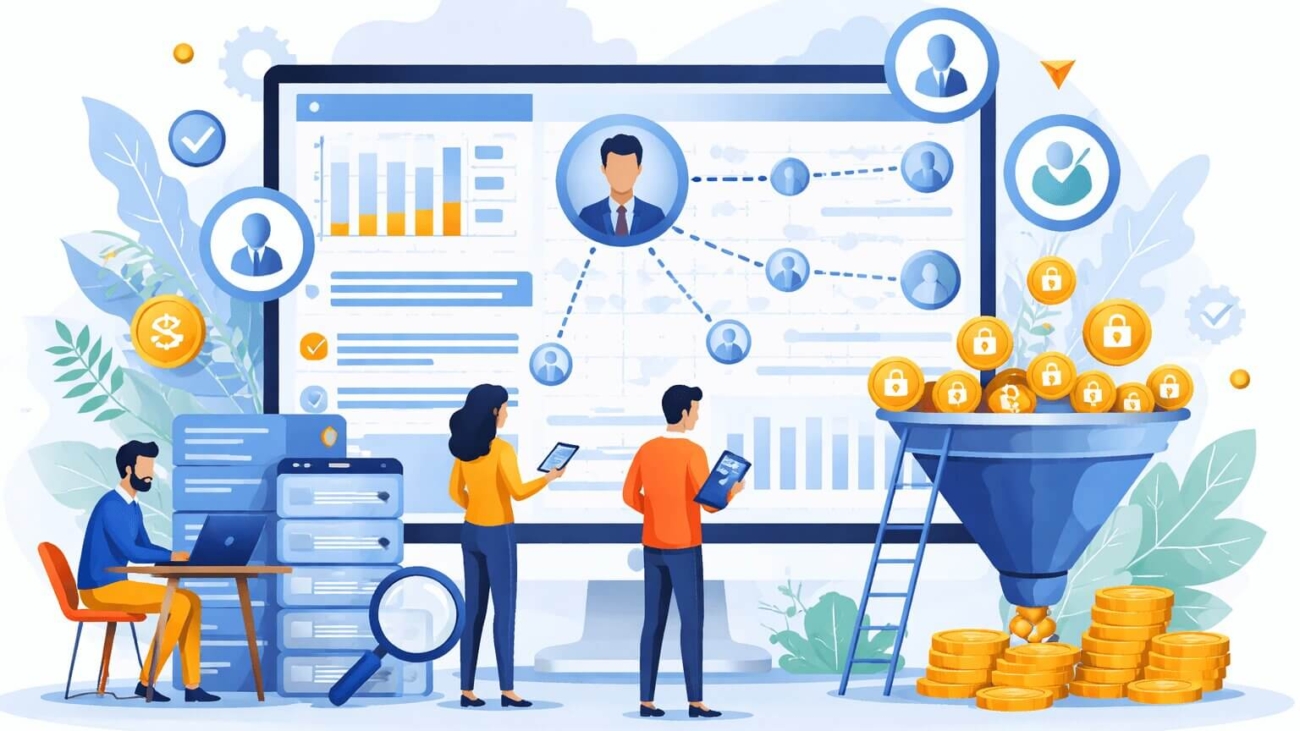
How B2B marketers can generate quality leads using VMware Users List

How B2B Marketers Generate Qualified Leads with VMware Users List

Today’s market is saturated with organizations, but not all organizations will be your target, bringing us to the most crucial need for sales teams today: Marketing Qualified Leads (MQLs). MQLs are a focused list of companies your organization can focus on, expecting a higher likelihood of sales and scaled efficiency in ROI.

So now, it’s not limited to reaching out to a million prospect companies; it’s about reaching out to businesses that will particularly benefit from your product/service. 

Make the shift from being volume-based to intent-based with simple tweaks in your marketing strategy. For starters, know who you plan to target. How? Well, trace what competitor tools or other tools companies need for their business, particularly inclining towards your service.

For example, a verified, opt-in database of decision-makers who purchase some of the top software in the world, like VMware, would be a great start. Companies that purchase VMware truly care about their organizational growth. If you are a competitor of VMware, grab their verified user database and see your marketing leads scale.

Why Businesses Own Tech like VMware Today

Great for tech and IT companies, VMware is essentially known for its virtualization technology, enabling organizations to enhance security, recover quickly from disasters, and ensure seamless migration. VMware also improves operational flexibility and efficiency. VMware is a crucial purchase to modernize IT infrastructure.

How VMware Users Database is Valuable For Lead Generation

  • VMware is an indicator of IT maturity and buying capability
  • Access enterprises already investing in virtualization and cloud tech
  • Identify organizations undergoing digital transformation
  • Gain a competitive advantage.
  • Reduce cost-per-lead, spend more on the right audience

How To Turn VMware User insights Into High-Quality B2B Leads

Turn User Insights Into High Quality B2B Leads

Cast limited, strategic hooks with your targeted campaigns by studying the database in question. Know your users, pitch to them based on the insights you have, for example, company size, industry, location, among other data fields.

Check out some practical ways your company can utilize the VMware users database:

Account-Based Marketing

With a focused VMware customers list, you can prioritize your energy towards high-value accounts, personalize communications, and generate deals. For instance, a cloud optimization company can approach VMware users with a communication strategy like this: improve performance, reduce infrastructure costs. Such pitches sent to the right decision-makers make outreach instantly relevant.

Host Targeted Email Campaigns In Just A Few Clicks

Contextual messaging is possible when you know your database is verified. Make small shifts to communicate with decision-makers first-hand by understanding their needs, making the email extremely relevant, and making it more likely for you to gain a response. But first, study your database and stratify your data.

Target Precisely With Paid Ads

Marketers today can upload company lists into platforms like LinkedIn to run targeted campaigns. This will utilize ad budgets strategically, showing your ads only to relevant companies, bringing in great analytic results like open rates and conversions, too. Instead of targeting just business owners, focus on targeting decision-makers already using business forward tools like VMware.

Set Up Personalized Content Strategies

Tailor marketing content based on your database’s existing tech stack and pain points, post them as a blog, write an email around each of the posts, write case studies, guides, and more that can be sent out as an email too. 

Content that is useful to people will be opened. If you send out useful content regularly, you have the ability to build a belief that your organization provides value and will naturally attract sales.

Across all use cases, the pattern is that marketers can easily bridge the gap from guesswork to targeted marketing, bringing in MSQs for the sales team to convert into deals.

Crafting Messages That Actually Works
Crafting Messages That Actually Works

It’s great if you own a high-quality, segmented VMware Users List, but it helps only if your messaging matches the reality of your audience. A great way would be tapping into the pain points or priorities of customers. 

Speak The Customer’s Language

If a company is already using VMware, talk to them about hybrid cloud setups, virtualization environments, workload optimization, and not something as broad as digital transformation. 

Focus on the problem, not your product

Anchor your messaging towards solving a specific problem, how to optimize your business with great tools, how to protect your system through virtual environments, among several other topics. Talk about your product/service and end with an action you desire from them, like a phone call, filling out a form, etc. Topping this off with an offer would be great as well!

Build a story, a context

Start a relevant conversation with strong messaging. Educate your customer, acknowledge their challenges while offering a clear, practical solution. 

When your messaging aligns with what the audience is already facing, you don’t need aggressive selling; the relevance does the work.

Common mistakes to avoid

Common Mistakes to Avoid

No matter how good the database is, mistakes can happen, and now’s a good time to prevent them. These are some mistakes you can avoid while building a strong campaign.

Purchasing outdated data

Ask your database provider when the data was last verified or cleansed. A good database will be cleansed every 45 days. Outdated databases, if used, can lead to high bounce rates, irrelevant outreach, and ultimately wasting marketing spend.

Treating The Entire Database The Same Way

Each organization has its distinguishing factor, and each organization is tied together with certain common aspects. Know all about it and plan custom communications for each complex situation, and see the result. Rolling out the same communication to the entire database implies generic messaging, missing out on opportunities for personalization.

Unplanned communications strategy

Don’t just write pushy messages for sales, build a context, a story to communicate with your prospect. It can either be discussing a pain point followed by a solution or talking about how your solution generated 3X revenue for your customer, among other useful, pain-point-inspired topics.

Ignoring segmentation

Good data is powerful when you know how to work with it. Segment your database into strata your business needs to touch upon, like industry type, company size, business solutions, among others. Roll segmented campaigns for campaign efficiency, truly pressing on specific pain points, and causing direct sales.

Conclusion: Quality Over Quantity: Always

B2B marketing is not successful just with a high-end database; it works when the database is well-segmented, cleansed, and your business has a story to pitch. At the end of the day, the closer your targeting matches real-world problems, the less you need to “convince” and the more your business can scale.
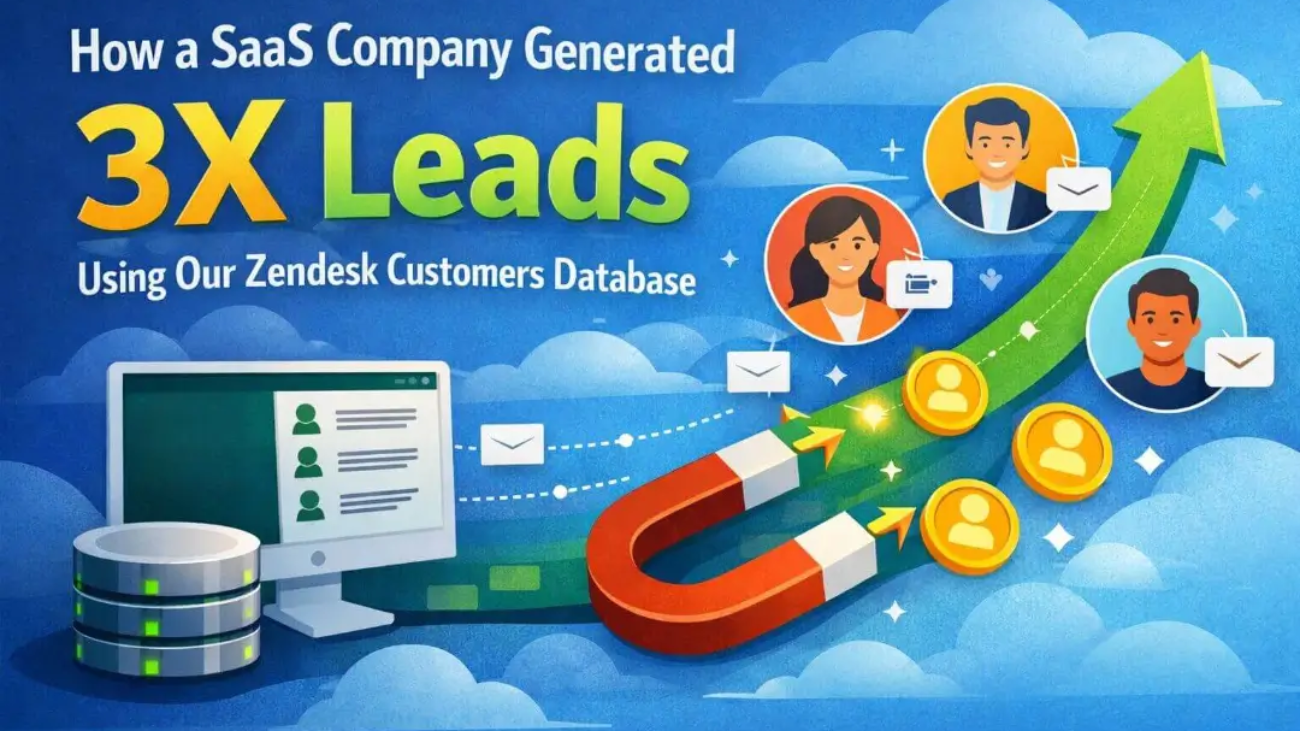

How a SaaS Company Generated 3X Leads Using Our Zendesk Customers Database

How a SaaS Company Generated 3X Leads Using Our Zendesk Customers Database

A SaaS Company with a great tool and a very narrow customer base struggled to scale its revenue. With the awareness that their competitor is Zendesk, but their software is way more affordable and user-friendly than Zendesk’s, they were adamant to stay in the market. That’s when they found their solution: Targeted Zendesk Customers Database, scaling qualified leads by 3X within just three months.

Client Overview

The client is a SaaS Company that has 100+ employees, specializing in cloud-based customer management software. The tool helped them with file-sharing, company operations, sharing private files, and everything happens seamlessly using one dashboard. 

The client caters to small & mid-sized businesses, but really wants to grow to deliver to Big 4 companies. The tool is everyone’s favorite currently because it comes with AI-powered workflows that can be accessed wherever team members are. The sales model is B2B outbound with account-based marketing.

The Challenge

The client was running several multi-channel marketing campaigns, but still struggled with fairly low engagement rates. The sales team was not able to target the right people since they own a database that they verified last in 2014, making targeting very redundant. 

Due to an inactive database, the SaaS company faced low response rates from generic lists, poor targeting, and difficulty identifying companies they could target, causing high customer acquisition costs and long sales cycles. Once, an unsuccessful send-out brought them great open rates, but that was to gain about 50 unsubscribers, and with so much effort, the actions were not driving any positive results.

Our client soon discovered an active database of companies using Zendesk.

Why Zendesk Users Were The Ideal Target

The client always considered Zendesk as a competitor, as they aspired to build products that are as effective as Zendesk, maybe more. Zendesk users pay hefty amounts for using the CRM platform, with no integration capabilities or customizable workflows. Zendesk does not allow companies to build their workflows based on business goals. 

Our client was not Zendesk; it was all of Zendesk, with its disadvantages turned into advantages. In other words, the client’s tool was built on the basis of being more effective than Zendesk, with more room for AI integration and great business outcomes, all at a great package price.

Campaign Strategy Implemented

We asked our client why existing customers were onboarded for the first time. The client said it was because other AI CRM systems are very expensive, and theirs is priced well with great features. Some clients mentioned how they want to switch from Zendesk to us. So together we looked up Zendesk, their offerings, made a few tweaks, and purchased the Zendesk customers database. This way, our client got a reason to communicate to Zendesk users that something better exists in the market. This directly led to 70% conversions and skyrocketed open rates.

Yes, the product the client is selling is the hero here, but there’s more to this: a targeted customer database with data fields including but not limited to verified companies using Zendesk, contact details of decision makers, industry, company size, and other demographic details.

The targeted database of Zendesk users came with details of CIOs / Customer Support Heads, Support Operations Managers, and CX Directors, giving direct, detailed access to prospects. Cold emails with customization are what finally led to 70% conversions from our first marketing campaign using the database!

How the SaaS company used the targeted database of Zendesk users:

Step 1: Building an ideal customer profile

With our customized email list of Zendesk users, the client could uncover businesses with a certain turnover, with 200+ employees, from the USA, working in the tech and trading industries. This built the deal customer persona for the SaaS company while building a clear path for communications.

Step 2: Account-Based Marketing

While doing market research, we realized the tool is closest to Zendesk CRM, which is how we helped clients. We used the Customer database of Zendesk users in the USA alone because the client was just USA-based at the time. 

Step 3: Personalized Outreach

Once the client knew who they were talking to, the messaging focused on providing solutions like CRM AI integrations, strategies to support efficiency, and the benefits of automation based on customer needs.

Customer needs could be determined based on certain data insights, so skimming through the data helped the client understand brands that can be targeted in the USA, based on what pain point, already giving room to explore other audiences with 100% confidence.

Step 4: Multi-Channel Campaign

The client was never limited to the USA, there was always a thought process of the founder, and that’s to find interesting ways to reach out to businesses that needed their solutions.

With our targeted list of Zendesk users, we could adopt multi-channel marketing, and we started Email marketing, LinkedIn outreach, SDR cold calling, hosting webinars, and encouraging the same database to participate, leading to surprising conversions. The database was then filtered from just the USA to all countries for communications.

All the marketing needed became the intent because the right people out there were waiting to be reached, my client had the right database, it’s a match made in favor of success.

Results Achieved

Our client owns a great SaaS solution that the world can enjoy, but nobody to reach out to. With a simple tweak of buying a verified list of Zendesk users, these are the results, quantified: 

  • Qualified Leads: 3X increase
  • Email Response Rate: +42%
  • Meetings Booked: 2X growth
  • Sales Pipeline: $1.5M generated

Why The Strategy Worked

The Zendesk customers database helped our client centralize, organize, and protect vital data for exceptional business performance. Reliable data lead them to personalized marketing, building customer relationships by tapping into pain points with solutions. The key success factors for marketing success the client experienced include: 

  • Highly targeted audience
  • Accurate technology data
  • Personalized messaging
  • Ideal product-market fit

Client Testimonial

“Targeting companies already using Zendesk was a sharp turn we took that switched the business for growth. Instead of generic outreach, we are now in direct talks with companies that truly need our solutions.”

Key Takeaways for SaaS Companies

Do not expect performance on the mercy of just a pre-owned database. Databases your business works with will need to be up-to-date, just like your product. It’s only when the database is set up for the right audience that you will be able to see results, as in the case of our client. 

Own a verified list of customers that works for your business based on industry, location, or even competitor technology, anything that ties up all your prospect audiences (in general, for example, Zendesk users in the case mentioned above). Expect higher open and conversion rates, high engagement rates, and better results during cold outreach as well. 

Make data-driven decisions and expect minimal shocks, only surprises, with the benefits of using an accurate, verified, opt-in database of decision makers. In fact, active databases are a great asset for any marketing team, a blessing more so. Know who you are talking to, concentrate on their pain points while seeing the database compound as results start showing. Beyond acquisition, email marketing increases the lifetime value of customers if utilized well. 

Knowing who to target gives a very good segmentation criterion for the database. The more detailed your persona targeted is, the more streamlined you can use the database, seeing more results that’ll get you understanding your customer more deeply, eventually leading to more and repeat business.

Access Our Zendesk Customers List For Boosting Lead Generation By 3X

top-7-dos-and-donts-of-email-marketing

Top 7 Do’s and Don’ts of Email Marketing

Let’s rewind to the moment you wake up. What’s the first thing you do? 

Multiple studies reveal that around 60% of people take a look at their emails. They may be checking emails for multiple reasons; for email marketers, this sounds like an incredible opportunity to make a conversion. 

Email marketing has proven to be a cost-effective strategy to drive traffic and ensure conversions for your products and services. 

Top 7 Do’s of Email Marketing

Email marketing is the core of a business’s marketing activity because it enables personalization, rapport-building, and consistent customer engagement.

Establish a direct line of communication with your customers through segmented email lists based on demographics, preferences, and more. Review the email marketing do’s and don’ts to learn the best practices for your business, and begin applying them today!

1. Build a Permission-Based Email List

Opt-in subscribers are essential for any business because they enable you to reach an interested audience from the start. This, in turn, yields high open and click-through rates. But, how to acquire these subscribers? By rolling out fun offers, sharing your story, and encouraging them to become your customer, you can acquire 100% opt-in details in compliance with GDPR and CAN-SPAM. This way, your database will always protect the brand or sender’s reputation. 

2. Personalize Your Email

Studies show that cold emails personalized with a simple first name in the subject line achieve 22% higher open rates! This means your business gets a chance to be seen and read about, and maybe convert, too!

3. Do Write Compelling Subject Lines

First impressions matter. Your email subject line is the first thing a user sees. If left untapped, your open rates will be low; more importantly, you won’t notice any ROI. Craft your email subject lines with a hook, an offer prospects can’t say no to, and inform them about your service that can evolve the way they function! Write your subject lines clearly, with precision and consistency. 

4. AI and Machine Learning

A crucial marketing activity is owning an active, segmented database. Segmentation is another way of targeted marketing. A good email subject line can give up to 50% click-through rates in comparison to non-segmented email campaigns. Acquire segmented data based on interests, behavior, geo-location, company age, and company size, among other perspectives.

Target best when you know your target audience. Write relatable pieces that directly address customers’ needs, optimize the funnel, and drive positive results.

4. Segment Your Audience

A crucial marketing activity is owning an active, segmented database. Segmentation is another way of targeted marketing. A good email subject line can give up to 50% click-through rates in comparison to non-segmented email campaigns. Acquire segmented data based on interests, behavior, geo-location, company age, and company size, among other perspectives.

Target best when you know your target audience. Write relatable pieces that directly address customers’ needs, optimize the funnel, and drive positive results.

5. Provide Valuable Content

The content you send to your customers must provide value, such as by educating them or sharing news. Sometimes, avoid direct selling and concentrate on building customer loyalty, building a brand voice, and driving real traffic organically. 

At the end of the day, marketing is about sharing, building a community, and enjoying the journey of the brand, its launches, growth, and improvements.

6. Optimize Emails for Mobile

Create mobile-optimized emails and ensure every email communication is accessible, actionable, and legible. Statistics show that about 50% of people today check their email on their phones, meaning you have about half the chance of turning a visitor into a customer with a high-quality customer journey from the email through to the end.

Good email design can increase open rates, leading to multiple visits and building brand loyalty. Over time, the customer will get used to your interface, and you can be confident they will be locked in to your service for the long term. 

Think about your communication strategy, encourage selective use of email marketing, and make room for more targeted marketing with segmented email lists. Prevent email fatigue and unsubscribes.

7. Track and Analyze Performance

Track and analyze your email marketing efforts; there is no point in rolling out a campaign and seeing a 90% open rate if you don’t know what drove the open but no conversion, for example. Align your team with brand goals while building and see each communication’s performance and responses. Always strive to improve, drive continuous improvement, and regularly track analytics to determine whether your strategies are working for the business, and adjust accordingly. Some of the many ways to get started with analytics include checking open and click-through rates for each email, tracking conversion rates, and running A/B tests by rolling out versions of the same communication to segmented audiences.

Be authentic with your readers and build rapport with them, rather than ending up in the spam folder due to being too forceful without being vested in their interests.

It is crucial today to adhere to CAN-SPAM and GDPR laws. All data you own must be opt-in or reach out to database providers who own verified, authentic contact details only, keeping you away from being marked as spam while you are reaching out to people who are going to be interested in your business. 

Top 7 Don’ts of Email Marketing

Email marketing is effective, easy to adapt, and reliable for communicating with potential leads. But the simplest of mistakes and they can take you from someone’s inbox to someone’s trash without being seen, or even worse, end up in the spam folder! Learn from the expert, take a look at some email marketing mistakes you must avoid:

1. Don’t Purchase Unverified or Non-GDPR-Compliant Compliant Email Lists:

A quick and easy-to-deploy tool, the AWS Fintech Blueprint is a great platform for startups and new products. It is secure and compliant and comes along with a pre-configured infrastructure.

2. Don’t Send Too Many Emails

Email marketing is a great tool, but when you send too many communications too often, your brand image and lead progress may be affected. If emails are sent too often, the recipient may view them as low priority, and it’s very stressful to be spammed by marketing emails. Find a way to communicate at certain times, a particular way, with some hook.

Think about your communication strategy, encourage selective use of email marketing, and make room for more targeted marketing with segmented email lists. Prevent email fatigue and unsubscribes.

3. Don’t Use Subject Lines that Sound Too Salesy

The last thing you want your business email to face is the spam folder. One way to end up in customers’ spam folders is when the wording is misleading or the subject line is in all caps. Avoid vague communications, excessive spammy words, or direct sales lingo in the subject line, or sending an incomplete subject line.

Be authentic with your readers and build rapport with them, rather than ending up in the spam folder due to being too forceful without being vested in their interests.

4. Don’t Ignore Email Design

After the subject line’s impact comes the quality of the email; a poor email will show extremely low clicks for multiple reasons: a CTA not highlighted, an email that looks too pushy, or no brand language. Sometimes, even an email that is not optimized becomes unsuccessful. 

Your brand should aim for clean, enhanced, high engagement emails, test with text but, jpg emails work wonders too.

5. Don’t Forget a Clear Call-to-Action

A clear CTA guides the user to take an action like ‘Get Started’ or ‘Sign up for free’, experiment to see what action works best, reduce confusion, help the customer navigate the user experience; and increase satisfaction.

A bad CTA means low conversions, and it’s mostly caused by bad visual hierarchy, terrible UX, or just playing around with the button copy instead of using analytics to determine what kind of CTA truly works for conversions. 

6. Don’t Ignore Compliance Laws

It is crucial today to adhere to CAN-SPAM and GDPR laws. All data you own must be opt-in or reach out to database providers who own verified, authentic contact details only, keeping you away from being marked as spam while you are reaching out to people who are going to be interested in your business. 

7. Don’t Neglect Testing

Neglecting your email testing today means not caring about what the customer is going to see. You’d want to taste a dish for any less salt, add any if needed, and then enjoy. Similarly, emails must be tested before actual rollout. It’s a matter of millions of customers, among other factors. 

Test your links, buttons, check for any grammar issues, examine visual elements or even verifying personalization elements; they’re all a part of email testing that must not be neglected.

Your brand should aim for clean, enhanced, high engagement emails, test with text but, jpg emails work wonders too.

Quick Checklist for Email Marketing Success

Conclusion

Email marketing plays a big role in brand success, whether B2B, B2C, or D2C. Emails are a great way to connect with your customers while offering them a little something extra to stay in touch with your business via email.

Follow the 7 primary and crucial do’s and don’ts of email marketing given above, keep the checklist handy, and see your brand and communications cultivate a trusted, reputable relationship with your audience. See a dramatic improvement in open rates with these simple and effective email marketing rules.

Found this article helpful? Share it with someone who can benefit from this, too.

FAQs: Email Marketing Do’s and Don’ts

The do’s and don’ts of email marketing emphasize the best practices businesses should follow to run effective marketing campaigns. Marketers should build GDPR approved email lists, write personalized emails, segment audiences, and share valuable, mobile-optimized content while tracking performance. At the same time, marketers must avoid buying redundant email lists, spamming users, ignoring testing, or violating compliance laws.

Email is a great channel for communicating with existing and prospective customers because it is a direct channel for building customer relationships and keeping customers engaged, too. The power of communication, email marketing delivers high ROI, drives traffic and conversions, with customer loyalty if everything is analyzed and positive results are consistently followed. A business can personalize and segment campaigns based on segmented email lists to target the right audience with relevant content.

Some of the most common and critical email marketing mistakes one must avoid are ignoring compliance laws like GDPR/CAN-SPAM, not caring about email’s aesthetic and CTA placement, and skipping testing before sending campaigns. Avoid these email marketing mistakes to enjoy the perks of email marketing for your business.

Consider writing clear, compelling subject lines. Adding personalization to your email to customers and consistently testing open and conversion rates are some of the ways to improve open rates of your email communications.

Email marketing is a tough nut to crack, but once you do, the benefits are unbelievable. Sharing some tips for beginner email marketers: Curate a permission-based email list, personalize emails, and write clear, engaging subject lines that are rarely clickbait-like. You can also segment your audience, provide valuable pieces of information instead of direct selling, optimize emails for mobile, and, most importantly, regularly track performance to improve results.

Optimally speaking, email marketing communications frequency changes based on the industry and the target audience. However, emails twice a week at different timings will at first help you understand what time someone opens their emails, and what truly works. Make tweaks in your email strategy according to analytics after a month of email rollouts.

Email segmentation allows targeted communications that most likely lead to a great following. Email segmentation gives you insight into users segmented based on certain common factors, and emails are written on a very narrow, targeted basis. When an email here runs well, the open and conversion rates are definitely going to be sky-high.

The CAN-SPAM Act is a law that protects people. The act says a business must always give clear, accurate information with no misleading subject lines. A company address is crucial in any communication, so the user knows you are authentic. Every contact must be used if it’s opt-in, and opt-out users must be honored within 10 days of informing. 

The success of an email campaign is measured based on brand objectives. For example, if you need more sales than just followers, the open rate is not as important as the conversion rate. If your objective is brand awareness, then open rates click through rates are great metrics to show success in the campaign.