


Client: Mid-Market SaaS Company
The Challenge
This software-as-a-service (SaaS) organization aids medium-sized and large-scale firms with the transition from older customer relationship management (CRM) systems to new ones. The most common endpoint after retirement from previous systems is the Salesforce CRM.
They had a precise ideal customer profile (ICP). They developed their pitch very effectively, and they applied all of the correct sequences for targeting these organizations. However, the pipeline created by the outbound sales team was stagnant, with no momentum toward growth and new opportunities.
The company’s director of revenue operations conducted a diagnostic and identified one primary variable that was impacting pipeline growth: data. Their large-scale, generic B2B database did give broad market coverage, but it did not give them the data depth needed to make the right assessments regarding their sales efforts.
The database did not contain verifiable information that would have allowed them to determine which companies were actually using (and would want to use) the Salesforce CRM, who decided to migrate, or if any of the potential or existing accounts actually had a reason to migrate from their previous CRM system to the Salesforce CRM.
The results of limited data depth were numerous:
- High bounce rates from email messages being sent to outdated or unverifiable contacts.
- Low response rates because their outreach material was not relevant to the person receiving it.
- Very low quality of leads, with only a couple of leads converting to sales opportunities.
- A considerable amount of the sales reps’ time is being consumed trying to do account research that the database was intended to handle.
- The sales team was not deficient in activity; they just did not have accurate and actionable information to base their activity upon.
The Solution
As part of the evaluation process of various data providers, the company chose to work with LogiChannel, where they were able to use our verified, refreshed Salesforce customers list as a resource to find companies that use Salesforce to enhance their sales system as part of their outbound prospecting efforts.
The data contained for each company includes:
- The vertical of the company
- The revenue of the company
- The number of employees
- The geographical location of the company and
- The signal that the company uses Salesforce
For each contact within the organization, the data contains:
- The name of the decision maker
- The verified job title of the decision maker
- The business email address
- The direct telephone number and
- The LinkedIn url
For a sales team that sells CRM migration services, this was not simply useful, but it provided a fundamentally different approach to the prospecting process.
The Execution
Using precision segmentation to target new business after conducting a thorough review of the Salesforce Customers List, LogiChannel was able to create a more precise target account universe using 3 filters: companies with 200 – 2000 employees who operate in financial services, professional services, or healthcare technology, and have decision makers such as VP of Sales Operations, CRM Administrators, Director of Revenue Operations, and CTOs.
The result of these filters was 3,200 tightly defined accounts; this compared to over 15,000 loosely defined contacts before this exercise. Although there are fewer total accounts now, there is a much greater level of specificity.
With a more cleanly defined account list, LogiChannel was able to completely rewrite its outreach sequences.
The previous messaging was product-focused and explained what they did and why CRM migration was important; the new messaging was context-focused and provided information about the potential pain points for the target based on their role and industry.
For instance, when reaching out to a VP of Sales Operations within a financial services firm, they were able to discuss the restrictions associated with Salesforce integrations in regulated environments.
Similarly, when reaching out to a CRM Administrator within a healthcare technology company, they were able to directly address the challenges to maintaining data integrity during platform transitions.
These weren’t just plain old personalization tokens. They were REAL conversations that were personalized due to having access to all that data (which allowed us to have authentic conversations). Our reply rates improved within the first two weeks.
Sales and Marketing Alignment
A less obvious but very significant impact on the data was what it did for cross-team alignment. Before LogiChannel, Marketing would run campaigns to build awareness for one audience and the Sales teams would have no idea that this same group was being given a different marketing message.
With the Salesforce Customers List as a common starting point, both Teams were focused around the exact same list of 3,200 Target Accounts. Marketing created LinkedIn Ad Campaigns and Content Syndication for 100% of the Target Accounts. Sales teams were able to see engagement signals before reaching out.
The end result was Coordinated Multi-Channel Outbound motion. Every target received consistent messaging at the point they come into contact with the brand.
Data Refresh on a Regular Basis
The team has also pledged to replace their stale contacts, update company records & continuously validate their email addresses with a Data Refresh from LogiChannel approximately every 60 days. Data (B2B) decays very quickly.
People change jobs. Job function or roles change. A list that isn’t regularly updated slowly loses accuracy every single week. Therefore, continually refreshing their lists ensures that the team is always working with current, deliverable information.
The Results
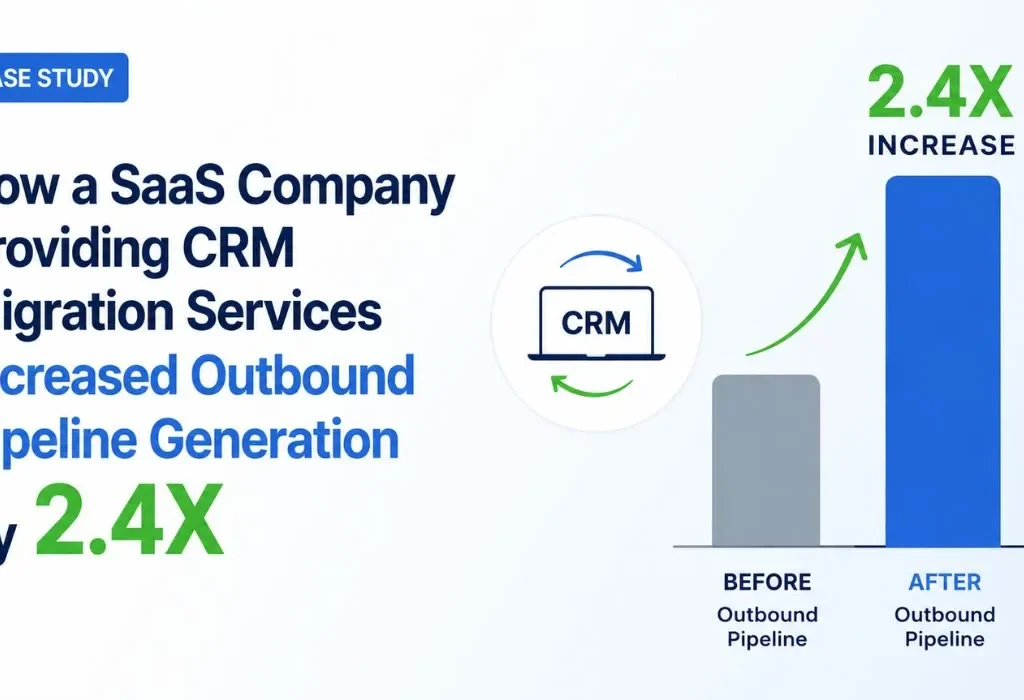
- Outbound Pipeline Generated 2.4X increase vs. prior quarter.
- Email Open Rate increased by +47%
- Reply Rate increased by +34%
- Sales-Qualified Leads increased by +41%
- Email Bounce Rate decreased by -62%
- Average Sales Cycle Length reduced by -18%
All metrics clearly displayed the benefits 90 days later. More than double the pipeline was generated by the team without any changes made to products or hiring additional employees.
The 62% decrease in bounce rate had stopped the up-to-that-point negative impact on the sending domain’s reputation due to undeliverable addresses. And the shorter sales cycles showed how prospects would interact with sales organizations if they began to have relevant and contextual conversations from their first touchpoint.
“We did not change our product. We did not change our people. We changed what we knew about who we were speaking to; therefore, everything downstream improved.”- The Head of Revenue Operations