



How Technology Is Redefining the Way Industries Operate
Technological disruption is occurring at a faster rate than ever before. Technology has now transitioned from being simply a supportive function to becoming the core value proposition for competitive advantage with technology encompassing everything from Artificial Intelligence, cloud-based infrastructure, quantum computing to edge networks. Accordingly, it is essential that businesses in all industries have access to and engage with the right “technology ecosystem” to remain competitive, flexible, and ready to grow.
This major technological disruption is being primarily driven by leading technology companies that have dedicated billions of dollars in R&D, have established global benchmarks, and have developed platforms upon which entire industries depend. Understanding these leading technology companies, their strategies, and the value they bring to their respective industries is crucial for B2B companies seeking smart partnerships, procurement decisions, and long-term intelligence for strategic planning.
What Sets a Tech Company Apart as a Global Leader
Not every large tech company qualifies as a true industry transformer. The distinction lies in a specific combination of capabilities and influence.
R&D Investments and Innovations
Microsoft and Apple consistently reinvest huge portions of their surplus revenues in research and development. They are creating a pipeline of advancements that lead them to stay ahead of the demands in the marketplace, rather than merely being reactive.

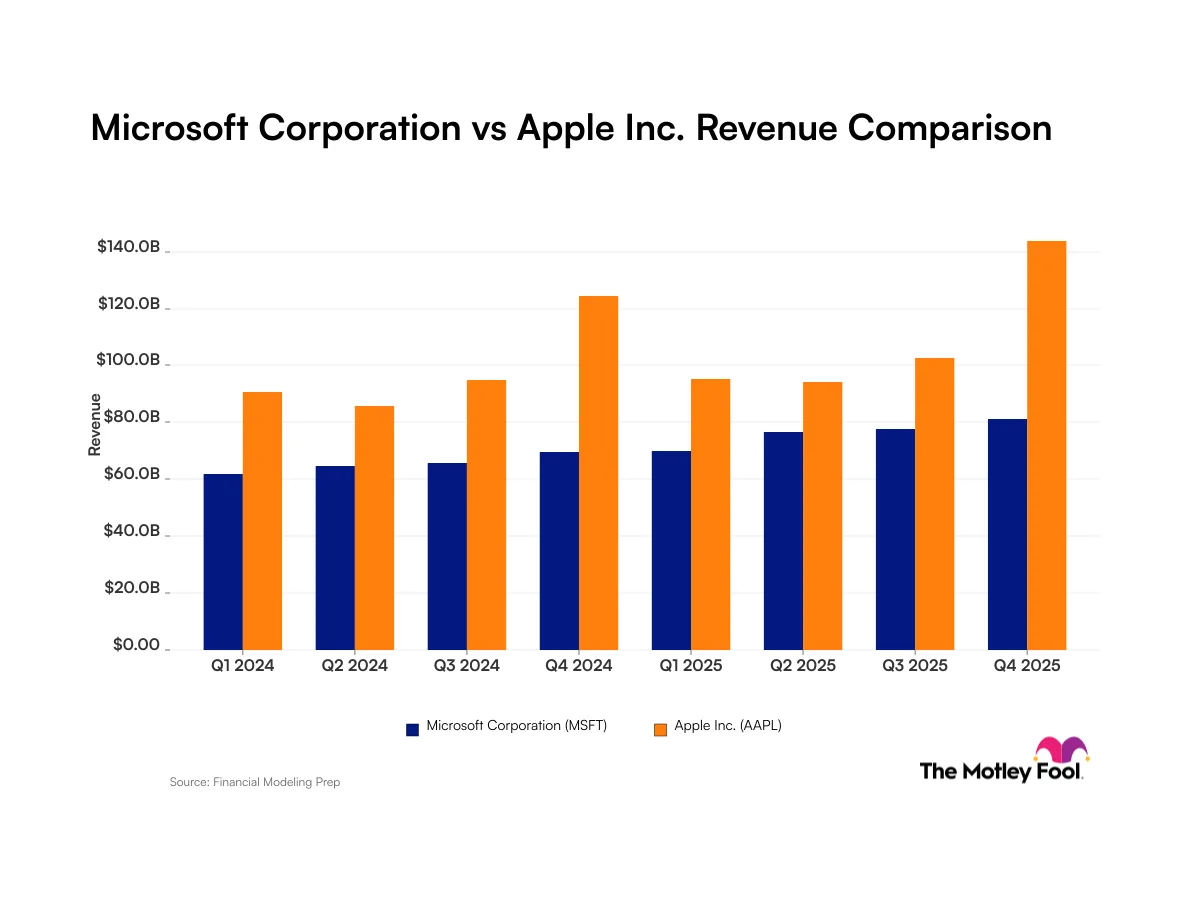
Source: https://finance.yahoo.com/markets/stocks/articles/microsoft-vs-apple-comparing-trajectories-190738758.html
Market Capitalization and Global Scale
The financial capacity needed to compete will indicate the level of trust, stability, and capacity to function internationally. Companies with a multi-trillion dollar market capitalization can attract workers, grow to new places or withstand downturns.
Product Ecosystem and Strategic Influence
When you experience the top tech companies in the world, you’ll discover that they do not just sell products, but rather create ecosystems or interdependent systems. Platforms, APIs, and developer environments become the infrastructure upon which others build, thereby creating profound interdependence.
The Enterprise Customer Base and Adoption Rate
The widespread adoption of a product by enterprise customers is clear evidence of the company’s validity in practice. The adoption of operations strictly based on a tech providers stack by Fortune 500 companies clearly demonstrates a return on measured returns at scale of the solutions provided by the individual company.
The Top 10 Global Tech Companies Transforming the Industry
The following is a list of the top ten companies at the forefront of worldwide technological transformation.
1. Microsoft
Microsoft has transitioned from a software-only company to a leading technology provider in both B2B and B2C spaces. With Azure as its enterprise cloud solution and through its extensive use of artificial intelligence with Microsoft Copilot across its full suite of productivity tools. Microsoft is positioned to make massive inroads toward digital transformation for large and small businesses alike. Additionally, Microsoft’s acquisition strategy and contribution to open-source projects further validate the company’s dominance as an important foundational partner in B2B technology.
2. Apple
While Apple has built its reputation through consumer computing hardware, it is also emerging as a significant player in the B2B marketplace. With a developer ecosystem built on privacy and reliability, Apple is establishing a solid presence in providing enterprise mobility solutions across multiple industries, particularly healthcare and financial services. In addition to these advancements, Apple’s custom silicon processor development will set new standards for performance across all industries.
3. Alphabet (Google)
As the leading provider of global data analytics, Alphabet is continuing to gain momentum in the enterprise by capturing significant market share with Google Cloud and by developing cutting-edge applied AI with DeepMind. B2B decision-makers rely heavily on Google’s advertising technology, Google Analytics, and Google Workspace products in their day-to-day operations across diverse industries.
4. Amazon (AWS)
Amazon Web Services continues to dominate the global cloud market as a premier provider of infrastructure-as-a-service (IaaS) for start-ups through government organizations alike. As the core of IT strategies for companies in industries such as manufacturing, retail, and healthcare, Amazon’s breadth of services which include computing, storage, machine learning, and IoT provide the backbone for enterprises today. In addition to changing how businesses operate through its logistics innovations, Amazon is revolutionizing the supply chain model for businesses in B2B operations.
5. NVIDIA
NVIDIA has transformed from just a graphics processing unit (GPU) manufacturer into one of the key enablers of the AI era with its cutting-edge GPUs staking claim to the majority of worldwide AI training done with large language models. Its GPUs will play an essential role in any organization building and deploying AI solutions, NVIDIA’s software ecosystem (specifically CUDA) has become the standard for AI development pipeline.
6. Meta Platforms
Meta is strategically pivoting to enterprise communication and immersive technologies to be positioned as an influential player in the future of work. The long-term implications of Meta’s investments in the metaverse and AI-powered content supply chains will provide new opportunities for B2B marketers when developing, collaborating, or engaging with customers.
7. Samsung Electronics
Samsung operates in both the consumer technology and industrial manufacturing markets. Its semiconductor division is essential for global supply chains while its enterprise solutions – such as displays, networks, and smart devices are used by companies across 74+ countries. Samsung’s involvement with the deployment of the 5G infrastructure is also noteworthy because many industries are currently undergoing a transformation through connectivity.
8. Salesforce
Salesforce has changed how businesses manage customer relationships when scaling. Its CRM solutions, with the addition of Einstein AI, allow large organizations’ teams to set up automated workflows, personalize their outreach to customers, and gain insights from their customers’ interactions with them. Salesforce typically serves as the operational backbone of B2B organizations’ sales and marketing functions.
9. IBM
With the acquisition of Red Hat, IBM’s shift to hybrid cloud serves as a foundation for its renewed relevance in the enterprise market. The company’s strong emphasis toward helping organizations in regulated industries, along with its consulting practice, makes IBM an excellent transformation partner for organizations that are managing complex digital migrations.
10. Tata Consultancy Services (TCS)
TCS, a major provider of information technology (IT) services across the globe, epitomises the internationalisation of a service-based technology delivery framework. TCS provides digital transformation, cloud migration and enterprise application management at a global level. With the increasing investment into automation and artificial intelligence technologies, TCS will enable companies to upgrade their business processes in a timely and cost-effective manner. TCS works with companies in over 50 countries to do this.
Key Trends Accelerating These Companies' Growth
Leaders in B2B can get ahead of trends and innovations by identifying the underlying macro trends that lead to these companies becoming leaders in their space.
Generative AI is being embedded into the core offerings of every company on this list. From AI-supported coding to intelligent document processing, generative AI is moving out of the experimental phase into the production phase in enterprises, which is going to be a defining trend for 2026.
Enterprises are now using hybrid/multi-cloud strategies, where they have multiple cloud providers (i.e., AWS, Azure, Google Cloud). This trend is driving enterprises to demand additional products to help them with interoperability and security tooling, as well as orchestration platforms.
As processing power gets closer to the source of data, companies in the manufacturing, logistics, and healthcare industries are gaining operational intelligence in real-time. Samsung, NVIDIA, and AWS are building the infrastructure to support this transition on a large scale.
Increased reliance on digital infrastructure necessitates security as an organization-wide function. As evidenced by how the major technology companies have begun developing security natively into their platforms instead of as an add-on, this potential alteration of the B2B organization’s perspective of risk management has been substantial.
ESG accountability is going to have an impact on how technology is acquired by organizations, making investment decisions based on factors such as the long-term performance of energy-efficient data center equipment, use of carbon-neutral cloud services and transparency tools in their supply chain.
How These Companies Drive Impact Across B2B Organizations
The impact of these companies is felt long after the purchase is complete. The products and services they provide are essential in creating how industries function.
All businesses that provide financial services use the cloud to build scalable cloud infrastructures from AWS and Azure to support processing millions of transactions in real-time while staying compliant with regulatory changes.
The manufacturing sector is utilizing the AI chips from companies like NVIDIA and employing edge computing so that companies can conduct predictive maintenance, automate quality control, and optimize their supply chains to minimize downtime and costs.
Healthcare providers are leveraging Microsoft’s cloud platforms and using AI analytics from companies like IBM to quickly diagnose patients, develop individualized care plans, and streamline administrative work.
Retail/e-commerce companies are deploying Salesforce’s CRM functionalities and utilizing logistics analytics from Amazon to create hyper-personalized customer experiences and predict customer demand.
To summarize, the foundation for all B2B operations is built upon these companies’ technology infrastructure. Their developer APIs, platforms, and environments form the building blocks of innovation by enabling a business to add new features to its software applications without needing to build the underlying technology again.
Challenges Facing Global Tech Giants in 2026
While large organizations have an abundance of resources and capabilities at their disposal, they continue to face a variety of challenges.
1. Increased Regulatory Burdens and Antitrust Activity
A growing number of governments around the world (U.S., EU, Asia) are increasing scrutiny of companies for monopolistic behaviour, data practices, and concentration of power within industries. As such, companies are finding themselves struggling with uncertainty regarding their long-term platform dependencies and data sovereignty as the regulations and legal ramifications continue to evolve.
2. Competition for Talent
Demand globally for artificial intelligence (AI) engineers, cloud architects, and data scientists is far greater than their availability. This has resulted in companies competing aggressively to secure specialty talent from within their industry or from outside of it making it difficult for the world’s largest technology companies to move product development forward and to deliver innovative products to their customers.
3. Data Privacy & Ethical Governance of AI
As companies increasingly rely on AI systems to run their operations, the public and private sectors’ concerns around bias, transparency, and accountability continue to mount. Technology companies are feeling pressure to demonstrate responsible practices related to developing and deploying AI systems, both from their regulators, customers, and employees.
4. Geopolitical Divisions
Geopolitical forces are resulting in supply chain disruptions, semiconductor export restrictions, and numerous varying regulatory frameworks throughout the globe, creating tremendous levels of operational complexity for technology companies who have become globally sophisticated in their operations. As a result, B2B buyers are experiencing an increase in vendor risk considerations that were much less prevalent five years ago.
5. Increase in Cyber Threats
As companies increasingly comprise vital infrastructure components, they are also becoming more appealing as high value targets for advanced cyber attacks. Protecting a platform while allowing for an open developer ecosystem will require continued resources and an adequate level of scrutiny.
The Future Outlook for Global Tech Companies
Leading technology corporations are trending toward increased interconnectedness, higher automation rates, and widespread utilization of AI in both their products and services. In the next 3-5 years, we can anticipate some key changes to this trend as it pertains to the global technology industry:
- Quantum Computing’s progress will shift from an untested research concept to a practical enterprise computing capacity. There will be both commercial use cases (IBM, Google) as well as continuing to develop on quantum’s capabilities to support applications such as drug discovery, financial analysis, supply chain optimization and enterprise financial application implementations.
- Businesses will see enormous advances in productivity as “agentic” AI systems will become available to carry out multi-step tasks autonomously through the integration of these capabilities into core enterprise software platforms.
- The emerging metaverse will continue to develop and bring together the physical and digital worlds via augmented reality applications and will provide new B2B use cases relating to employee training, remote collaboration, and product design.
- Governments are mandating “data localization” as part of their National Cloud plans that will force many international cloud providers to revise their architectures in order to remain competitive in these new markets being created by the implementation of National Cloud plans.
It is very clear that for B2B leaders, companies that invest in these capabilities today will create the platforms for defining their competitive advantage tomorrow. Choosing to strategically align one’s business strategy and processes with the appropriate technology partner is not just about IT, it is also critical to the success of the business.
Conclusion
The following overview highlights 10 global technology companies that are more than just large corporations; they are transforming the world through digital commerce. Through their ongoing investments in new technology, extensive ecosystems, and total integration into business processes, these organizations are changing the rules within entire industries, altering how businesses operate as competitive entities, and creating new sources of value for themselves and their customers.
For B2B organizations, following the progress of these companies is key to making educated choices regarding the development of new technologies, the establishment of formal vendor relationships, and the formulation of a digital strategy. Regardless of whether your organization is investigating cloud computing options, artificial intelligence tools, or enterprise resource planning solutions, each of these organizations will likely be included in such discussions, and rightly so.
Discover more about our technology solutions or find out how these trends relate to your B2B growth strategy.
Frequently Asked Questions
What are the top 5 tech companies in the world?
The current largest tech companies according to market share, total sales, and the amount of technology invention they are responsible for include: Microsoft, Apple, Google, Amazon, and Nvidia. Each company maintains a leading position within at least one of the following foundational technological categories: cloud computing, Artificial Intelligence, and platform ecosystem.
Which tech company is growing the fastest in 2026?
Nvidia is expected to continue to see explosive growth through increased demand from enterprise customers for AI-ready hardware. Google Cloud Platform and Microsoft are both also seeing phenomenal levels of growth through the success of their AI and cloud offerings.
Which tech company is best for investment?
Investment prospects vary based on one’s tolerance for risk, exposure to various industries, and personal financial objectives, so it’s difficult to identify a ‘best’ tech stock for investing. However, because of their dominant positions in AI infrastructure, Nvidia, Microsoft and Alphabet are all perceived as solid long-term investments as of 2026. It is strongly recommended that you contact a qualified financial professional for advice prior to making any investments.
What are the biggest technology trends in 2026?
The most significant technology trends expected in 2026 include AI-driven generative and agentic AI, the adoption of multi-cloud computing at the edge in conjunction with 5G ongoing advancement in the field of quantum computing, and the increasing trend of procuring technology in a way that supports environmental sustainability.
Which country has the most tech companies?
The U.S. takes first place as the country with the most high-tech companies worldwide, with particular strengths in Cloud-based products, AI, and enterprise software. The 2nd largest country is China followed by India, which is experiencing an exponential growth rate and establishing a firm foundation for global technology services.
What is the role of AI in tech companies?
AI is now a major player in product development, operational effectiveness, and customer experience across all the top technology companies. As of 2026, AI will be the primary source of new product value and will determine how technology companies compete against one another through such means as generative AI tools, intelligent automation, and predictive analytic tools.
Which tech companies are leading in AI development?
A few of the world’s largest technology companies are at the forefront of developing artificial intelligence (AI), including Microsoft, Alphabet Inc, NVIDIA, Amazon and Meta Platforms Inc. All five of these corporations have played an important role in developing many aspects of AI, and all five continue to be leaders globally in AI development.
What industries are most affected by tech companies?
The industries that rely most heavily upon technology companies are the financial services, health care, manufacturing, retail, transportation, and media industries. The technology companies that provide these industries with cloud computing, analytics powered by AI, and enterprise software platforms, have had a substantial impact on improving productivity for these industries.
How do tech companies impact the global economy?
Technology businesses contribute to the world economy through direct means (e.g., through creating jobs, relying on taxes generated by their economic impact, and generating additional tax revenue); and indirectly through improving productivity, increasing innovation, improving efficiencies, and developing useful tools that are used in virtually all industries around the globe. Technology companies also affect the development of international trade rules, establish global governance frameworks for data, and develop standards for digital infrastructure.
What is the future of global tech companies?
The future holds an evolution of current technological capabilities towards more AI automation systems, commercialized quantum computing, strengthened government regulation of technology companies, and even more extensive integration between digital and physical worlds with augmented/virtual reality technologies, as well as Internet of Things (IoT) devices.
How do tech companies influence global economies?
Global technological companies are the backbone of the current global economic system, having created platforms, networks, and tools that enable the conduct of commerce, facilitate communication, enhance healthcare, improve educational outcomes, support governmental systems, and contribute to overall economic growth in the world. In this way, actions taken by these companies in terms of investment programs, hiring practices and innovation strategies will have ripple effects throughout all industries and into national economies.